
It’s a crowded world out there for coffee roasters. Let's be honest, just having "great beans" isn't enough anymore. To really make an impact, you need a story, something that grabs people and doesn't let go.
This guide is your roadmap to building a standout coffee brand by focusing on one of the most legendary and complex coffees in the world: Yemeni coffee. We're talking about turning ancient history into a modern, profitable business that genuinely excites the high-end specialty market.
Your Opening in the Yemeni Coffee Revival
In a sea of sameness, there's a real hunger for authenticity and a tangible connection to where coffee comes from. Choosing to build your brand around Yemeni coffee isn’t just picking a niche; it’s a strategic play. You're tapping into a powerful, built-in story that naturally commands both attention and a premium price tag.
Think about it. You get to sidestep the endless competition over slight flavor nuances or who can offer the cheapest single-origin. Instead, you're offering an entire experience—one rooted in the very birthplace of the coffee trade. The name "Mokha" alone resonates with centuries of history, giving your brand an immediate weight and mystique that most new roasters can only dream of building.
Why It Pays to Go Niche
Launching a roastery means you're jumping into a massive, fast-moving industry. The global coffee market is valued somewhere between $245–$269 billion as of 2024–2025, and roasted coffee is the biggest piece of that pie, accounting for a whopping 54% of total revenue.
But here’s the most important part for a new business: the specialty coffee segment is exploding. It’s expected to jump from $45 billion in 2025 to $62 billion by 2030. That growth creates the perfect opening for a truly differentiated coffee like Yemeni Mokha to not just survive, but flourish. You can dig deeper into these powerful market trends and find additional coffee statistics on your own.
When you center your business on Yemeni coffee, you're not just selling a product. You're becoming a custodian of one of coffee's most sacred origins. That distinction is your single greatest marketing tool.
Weaving a Brand from History
Success here isn't just about getting your hands on rare beans. It’s about building a complete world around them. This means you need to get good at a few things:
Storytelling: Learn how to weave the history of the Port of Mokha and the ancient farming traditions into the very DNA of your brand.
Education: Your job is to teach customers what makes this coffee so special—from its wild, heirloom varietals to the unique processing methods that create its signature flavor.
Exclusivity: You have to position your coffee as the rare luxury that it is. This is what justifies the higher price and attracts the kind of coffee lovers who truly appreciate it.
This guide will walk you through exactly how to do that, step by step. Let's turn that passion for heritage coffee into a business you can be proud of.
Building Your Yemeni Coffee Business Plan and Legal Framework
Before that first batch of Yemeni coffee starts cracking in the roaster, you’ve got to lay the groundwork. A solid business plan isn't just a stuffy document for bankers; it's your roadmap. It's the tool that forces you to answer the tough questions and turns a passion project into a real, thriving business.
When your entire brand is built around something as special as Yemeni coffee, your plan needs to be more than just spreadsheets and projections. It has to capture the soul of your brand—what makes it unique and why people should care. This is where you make the leap from a cool idea to a profitable reality.
What’s Your Yemeni Coffee Story?
First things first: what makes you different? In a world crowded with coffee roasters, simply having rare beans isn’t enough to stand out. You have to define your unique selling proposition (USP) and be able to articulate your "why."
So, what's your angle?
The Historian: Will you wrap your brand in the ancient legacy of the Port of Mokha? This approach is all about educating customers, connecting them to the birthplace of coffee, and appealing to those who want a story behind every cup.
The Ethical Champion: Maybe your core mission is built on your sourcing. You can build a fiercely loyal following by highlighting direct-trade relationships with Yemeni farmers, showcasing how every purchase supports their communities.
The Master Roaster: Or perhaps the magic is all in the craft. Your brand could be centered on developing unique roast profiles that bring out those wild, complex, winey notes that make Yemeni heirlooms so legendary.
Once you know your story, you’ll know who you’re talking to. Are you selling to high-end cafés looking for an exclusive, show-stopping pourover? Or are you targeting serious coffee lovers online, people willing to pay a premium to have a rare experience shipped right to their door?
A roastery specializing in Yemeni coffee isn't just selling a bag of beans. You're selling scarcity, history, and an unforgettable tasting journey. This premium positioning has to echo through every part of your plan, from marketing to your financial forecasts.
Setting Up the Business Structure
With a clear vision, it's time for the less glamorous—but absolutely critical—part: building your legal and operational framework. Getting this right from the start protects your personal assets and keeps you on the right side of the law.
Choosing your business entity is a big first step. While you could start as a sole proprietorship, most small roasters quickly find their way to a Limited Liability Company (LLC). It's a smart move. An LLC creates a legal wall between your personal finances and your business debts, which is a huge relief when you’re investing in expensive roasting equipment.
The Paperwork: Licenses and Food Safety
Once you're a legal entity, you have to get compliant. Roasting coffee makes you a food manufacturer, plain and simple. That means local, state, and even federal agencies have a set of rules you need to follow.
Here’s a look at the typical permits and licenses you’ll be chasing down:
General Business License: Pretty much every city or county requires this just to open your doors.
Food Handler's Permit: You and anyone who works for you will need this certification. It’s usually a quick course on handling food safely.
Health Department Permit: This is a big one. Your local health department will inspect your roastery to make sure it’s clean and safe. They'll be checking for things like proper ventilation, hand-washing stations, and pest control.
FDA Registration: As a facility that produces food, you have to register with the U.S. Food and Drug Administration (FDA). Good news is, it's free, but it is mandatory.
Launching a roastery built around a premium coffee like Yemeni requires careful, deliberate planning. By drafting a detailed business plan and tackling your legal obligations head-on, you're building a foundation strong enough to honor the incredible legacy of Mokha.
Sourcing and Securing Authentic Yemeni Green Coffee
Let's be clear: your green coffee is the soul of your business. When you decide to specialize in Yemeni coffee, you’re doing more than just buying a product—you're sourcing a piece of history. This path is filled with unique challenges, but the rewards are immense. It can turn your sourcing strategy into your most powerful competitive edge.
Securing authentic, high-quality Yemeni green coffee isn’t like buying from Brazil or Colombia. The supply chain is notoriously complex, sometimes fragmented, and built almost entirely on personal relationships. Your success will hinge on your ability to navigate this world with patience, respect, and a very keen eye for quality.
Finding Trustworthy Partners in a Complex Chain
Your first job is to find reliable partners. Forget the massive exporters that dominate mainstream coffee origins. The Yemeni coffee world is a tight-knit network of specialized importers, local cooperatives, and, if you're lucky, direct relationships with farming communities. Each route has its pros and cons.
Specialty Importers: This is almost always the best place to start. Look for importers who live and breathe Yemeni coffee. They're the ones with teams on the ground, who handle the mind-bending logistics of getting coffee out of Yemen, and who can give you the detailed traceability you need.
Farmer Cooperatives: Forging a relationship with a cooperative can get you a step closer to the source. It’s a path that demands more effort and a lot of trust-building, but the payoff can be exclusive access to unique micro-lots and a powerful story to share with your customers.
Direct Trade: This is the holy grail for many, but it's a long-term commitment, not a starting point. It means traveling to Yemen, navigating cultural and language barriers, and figuring out complex financial and logistical hurdles on your own.
The key to sourcing Yemeni coffee is trust. You have to vet your partners relentlessly. Ask for samples, dig into their relationships with farmers, and get a clear picture of their payment and quality control processes. Your reputation is built on the authenticity of their claims.
Demystifying Yemeni Grades and Processing
Once you’ve found a potential supplier, you need to understand what you’re actually buying. Yemeni coffee is famed for its incredible diversity of heirloom varietals and ancient processing methods—these are what create its signature flavor profile.
The natural, or dry, process reigns supreme here. The coffee cherry is dried whole, a technique perfected over centuries in Yemen's arid climate. This is what imparts those deep, winey, and fruit-forward notes the coffee is famous for. You'll almost never see washed or honey-processed coffees from Yemen; the natural method is simply integral to the Mokha identity.
Don't be surprised if the grading system looks different from the standard Specialty Coffee Association (SCA) protocols. While quality is still king, the terminology might be more traditional. Your best tools will be your own cupping scores, lot separation details (is it from a specific village or farmer?), and the rich descriptions from your importer. For a deeper dive into what makes these beans so remarkable, you can explore more about authentic Yemeni coffee and its unique heritage.
Before you start reaching out to suppliers, it's wise to have a clear checklist. This will help you evaluate each potential partner and coffee lot systematically, ensuring you're asking the right questions from the get-go.
Yemeni Coffee Sourcing Checklist
Evaluation Criteria | Key Considerations | Actionable Tip |
|---|---|---|
Supplier Reputation | How long have they worked in Yemen? Do they have direct ties to farming communities? | Ask for references from other roasters who have worked with them. |
Traceability | Can they trace a lot back to the specific village, cooperative, or even farmer? | Request documentation like export papers or photos from the harvest. |
Cupping Score & Samples | Do they provide recent cupping scores (SCA or equivalent)? Are pre-shipment samples available? | Always cup multiple samples before committing to a purchase. |
Processing Method | Is the coffee 100% naturally processed? Is the drying consistent and free of defects? | Ask about their specific drying methods and quality control at the mill. |
Logistics & Shipping | What are the shipping terms (FOB, CIF)? How do they handle customs and transit? | Clarify all costs upfront to avoid surprises. |
Contract & Payment | What are the payment terms? Do they offer forward contracting to lock in prices? | Never proceed without a clear, written contract for every purchase. |
This checklist isn't exhaustive, but it provides a solid foundation for your sourcing conversations. Being prepared shows potential partners that you're a serious, professional buyer.
Navigating Volatility and Securing Your Supply
Let's talk about the market. Roasting means managing your exposure to fluctuating green coffee prices, and they've been on a wild ride. Between February and July 2025, Arabica futures shot up nearly 30%, while Robusta prices leaped over 40%. For a roaster focused on a rare origin like Yemen, these shifts have very real consequences. USDA projects a fifth straight annual decline in global stocks, which means sourcing high-grade lots requires smart contracting and financial planning to protect your margins. You can read more about these global coffee market trends and their impact on roasters.
To build a resilient supply chain, you have to think ahead.
Forward Contracting: Talk to your importer about locking in prices for future harvests. This is your best defense against market spikes and helps guarantee you’ll get the quality lots you need.
Buy for the Year: When you find a truly exceptional lot, don't be shy. If you can, consider buying enough to last your business for a full year. The upfront investment is higher, but it gives you priceless consistency.
Diversify Your Sourcing: Even within Yemen, don't put all your eggs in one basket. Source from different regions like Haraz, Bani Matar, or Ibb. This helps mitigate your risk if one area has a tough harvest.
In the end, sourcing Yemeni coffee is about building real partnerships. It's a long game that rewards those who invest in relationships, honor the coffee's heritage, and commit to sharing its incredible story with the world.
Setting Up Your Roastery for Yemeni Coffee
Now that you’ve mapped out your sourcing, it’s time to build the heart of your operation: the roastery itself. Choosing the right equipment is easily one of the biggest financial decisions you'll make, and it will directly impact your coffee's quality, your consistency, and your ability to grow.
This isn’t just about buying a shiny new machine. It's about designing a complete system that turns those incredible Yemeni green beans into a finished product that keeps customers coming back.
Choosing Your Roaster
Think of your roaster as your primary instrument. It's what gives you control over the final flavor, and the market is full of options for every stage of business.
Sample Roasters (50g - 1kg): If you're specializing in Yemeni coffee, this is non-negotiable. A small sample roaster lets you cup new arrivals and experiment with roast profiles without putting a whole bag of expensive green coffee on the line.
Small Production Roasters (2kg - 6kg): This is the sweet spot for most new roasters. A machine this size can handle your first wholesale orders and online sales, but it's still small enough to give you meticulous control over every single batch.
Large Production Roasters (10kg+): You'll eventually eye these bigger machines as your business takes off. They are built for volume and efficiency, perfect for when you land a major grocery account or your online demand skyrockets.
When you're working with beans as rare and valuable as Yemeni coffee, consistency isn't just a goal—it's a requirement. Invest in a roaster that gives you precise control over temperature and airflow. The ability to save and perfectly replicate a roast profile is what will set you apart.
The Essential Supporting Cast
A roaster is just one piece of the puzzle. You'll need a whole host of supporting equipment to run a smooth, safe, and quality-focused operation from day one. You can browse a curated list of essential roastery and café equipment to start building your shopping list.
At a minimum, you'll need:
A Quality Grinder: A reliable burr grinder is a must for daily quality control and cupping.
Digital Scales: Precision is everything. You need accurate scales for weighing green beans pre-roast and roasted beans for bagging.
Moisture and Density Meters: These tools provide crucial data about your green coffee, helping you build smarter, more repeatable roast profiles.
Heat Sealer: A professional-grade sealer keeps your bags airtight, locking in that incredible aroma and preserving freshness.
Cupping Supplies: Get your lab set up with the basics: spoons, bowls, a good kettle, and a refractometer.
Designing a Smart and Safe Workflow
Having all the right gear means nothing if your space is chaotic. A smart workflow makes your process efficient, reduces physical strain on your body, and creates a clear, safe path from green bean to finished bag.
Try to think in a simple, linear flow:
Green Bean Receiving & Storage: This is where your coffee arrives. It needs to be a clean, dry space away from direct sunlight where you can inspect new deliveries.
Roasting Station: The main event. Ensure you have proper ventilation, fire safety gear (like an extinguisher), and plenty of room to work around the machine.
Cooling & Degassing: Once roasted, beans need to cool down fast. Then, they need a place to rest and degas for a few days before they're ready for packaging.
Packaging & Shipping: A dedicated station for weighing, bagging, sealing, and labeling your coffee so it’s ready to head out the door.
The ecosystem around roasting is growing fast. The global coffee machine market is expected to climb from $6.56 billion in 2024 to over $15 billion by 2029. This boom is creating new opportunities beyond just selling beans. As the roasted coffee market's growth continues, roasters are finding new revenue in services like café consulting, equipment sales, and maintenance. By building an efficient roastery now, you’re creating a foundation to tap into these profitable areas later on.
Finding Your Flavor: Roasting Profiles for Yemeni Coffee
You've sourced your green beans and your roaster is ready to fire up. This is where the magic happens. Now, you get to turn those incredible, potent green Yemeni beans into an experience that lives up to the legend. Starting a specialty roasting business focused on Yemeni coffee makes you part-scientist, part-storyteller. You have to nail both.
The point isn’t just to apply heat to beans. It's to coax out the wild, intricate flavors that have been sleeping inside these heirloom coffees. They’re unlike anything else you’ll ever roast, bursting with notes of dried fruit, wine, and warm spices. Your job is to unlock all that, not roast it into oblivion.
The Art and Science of Roasting Yemeni Coffee
Roasting Yemeni coffee demands a delicate touch and your full attention. These are high-altitude, dense, naturally processed beans, which means they act a little differently in the drum. They can take a good amount of heat at the start, but they’re also surprisingly easy to scorch if you're not watching your rate of rise like a hawk. This is why meticulous sample roasting will become your most important daily ritual.
Before you even think about dropping a full production batch, you need to run small samples through a few different profiles. Document everything. I mean everything: charge temperature, turning point, first crack timing, and development time. A few seconds or a couple of degrees can completely change the final cup.
Lighter Roasts: Going lighter will put a spotlight on the bright, wine-like acidity and complex fruit notes. Just be careful—pulling it too soon can leave you with a sour, grassy cup that nobody wants.
Medium Roasts: This is often the sweet spot. A solid medium roast can create a beautifully balanced and structured cup, bringing forward deeper notes of chocolate, tobacco, and spice that complement the acidity.
Darker Roasts: Tread very, very lightly here. It’s incredibly easy to over-roast Yemeni coffee, completely wiping out the delicate aromatics that make it so special. You don't want to trade those unique flavors for generic smoke.
When you taste a truly spectacular Yemeni coffee, you're tasting centuries of agricultural history. Your roast profile should be a tribute to that legacy, a careful interpretation that lets the bean's origin story shine through in every sip.
Building Your Library of Roasts
Consistency is what separates the pros from the hobbyists. To get there, you need a serious quality control (QC) protocol, and it all starts with professional cupping. This is the standardized industry practice for tasting and evaluating coffee, and it needs to become second nature.
Set up a dedicated cupping station, even if it's just a clean corner of your roastery. You must cup every single production roast to make sure it hits your target profile. Score everything: fragrance, aroma, flavor, acidity, body, aftertaste. Use roasting software like Cropster or the free Artisan to log all your roast data and link it directly to your cupping notes. This practice builds an invaluable library of what works—and what doesn't—for each specific coffee you bring in.
Designing a Brand That Sells an Experience
Your brand is so much more than a cool logo. It’s the whole story you wrap around your coffee. For a product with the history and mystique of Yemeni coffee, that story is your single most powerful marketing tool. Your packaging, your website, your social media—it all needs to work in harmony to transport your customer to the ancient, terraced mountains of Yemen.
Think of your packaging as your physical handshake with the customer. It has to do more than just keep the beans fresh; it has to start the story.
Visuals: Look for inspiration in Yemeni culture. Incorporate patterns, colors, or symbols that hint at the history of the Port of Mokha. Rich, earthy tones and intricate designs often work beautifully.
The Story: Use the bag itself to share a short, compelling bit of the coffee's journey. Where was it grown? Who farmed it? What makes this particular lot unique?
Flavor Notes: Be specific and evocative. Don't just say "fruity." Try something like "Dried fig, dark cherry, and a hint of cinnamon." Guide your customer's palate.
This kind of detail is non-negotiable when you’re building a premium brand. When someone picks up your bag, they should feel like they're holding something rare and valuable. Because they are.
Price for the Treasure It Is
Finally, you have to price your coffee in a way that reflects its quality, its rarity, and the incredible journey it took to get from a small farm in Yemen to your roastery. This is not the time to compete on price. You are not selling a commodity; you are selling a luxury.
Your pricing has to be built on a few key realities:
High Green Cost: Yemeni coffee is one of the most expensive green coffees on the planet. Your price must reflect that.
Your Expertise: The skill, time, and countless sample roasts you’ve poured into perfecting that profile have immense value.
Brand Position: Your price tag is a key part of your brand message. It reinforces your premium identity.
Whether you're selling bags directly from your website or wholesaling to high-end cafes, your price sends a clear signal. It tells the world that this isn't just another coffee—it's an experience worth paying for. When you align your roast quality, brand story, and pricing, you create a powerful identity that will attract the right kind of customers and keep them coming back.
Taking Flight: Launching and Scaling Your Yemeni Roasting Business
You’ve dialed in your Yemeni roasts, and your brand is ready. Now comes the exciting part: getting that incredible coffee into people’s cups. A successful launch isn’t a mad dash to be everywhere at once. It’s about smart, focused moves that build real momentum, turning your passion for Mokha into a business with legs.
Your initial push should concentrate on two key fronts: a select group of wholesale partners and a killer direct-to-consumer (DTC) online shop. Think of them as a one-two punch. Wholesale builds your local reputation, while your online store creates a direct line to passionate customers and healthier profit margins.
The journey from a green bean to a customer's brew is a workflow you'll come to know intimately. It’s a cycle of quality control at every stage.
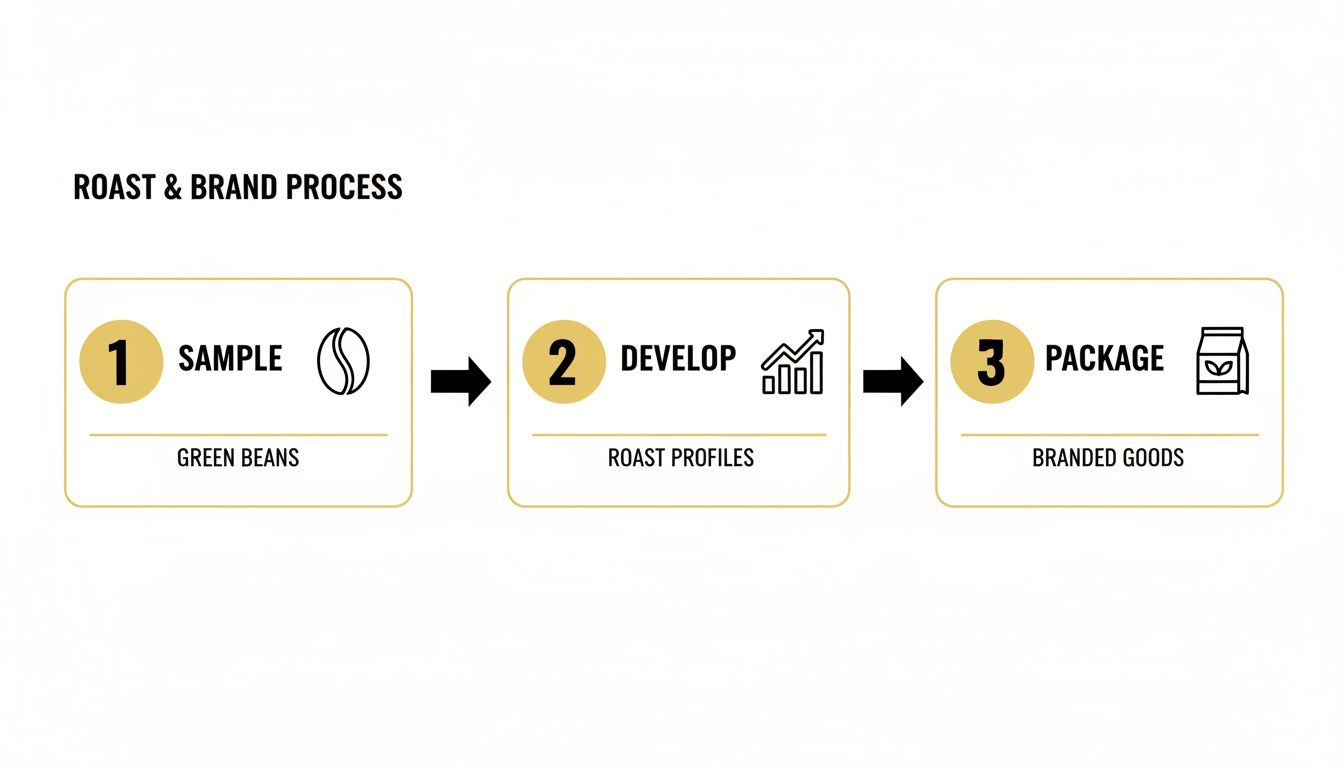
From that first sample roast to the final sealed bag, every step is a chance to ensure the coffee is perfect. This relentless focus on quality is what will set you apart.
Landing Your First Wholesale Accounts
Resist the urge to blanket every café in your city with samples. With a coffee as special as Yemeni Mokha, your ideal partners are the true specialty shops—the ones that geek out over origin and story, not just the price per pound. You're looking for cafés where the baristas get genuinely excited to share something unique.
Start by building a hit list. Go visit these potential partners, buy a coffee, and get a feel for their vibe, their menu, and their customers.
Make it Personal: When you make your approach, don't just leave a sample and run. Explain why your specific Yemeni coffee would be a fantastic addition to their menu. Connect the dots for them.
Be a Partner, Not Just a Supplier: Offer to train their staff. Teach them the history of Mokha and the best way to brew your beans. This adds huge value and guarantees your coffee tastes its best when it matters most.
Find Your Footing: Suggest starting as a featured single-origin on their pourover bar. It’s a lower-risk way to get in the door before pitching to replace their main espresso.
Pro Tip: Landing that first wholesale account is a massive win. It’s more than just a sale; it’s market validation from other professionals. That recurring revenue provides the stable ground you need to grow.
Building Your Digital Coffee Shop
While wholesale plants your flag locally, your e-commerce store is your passport to the world. A DTC website is non-negotiable for capturing better margins and building a tribe of loyal fans who love what you do. Your site is much more than just a place to click "buy"—it's where your brand story lives and breathes.
As your reputation grows, you'll naturally start thinking bigger. Exploring wholesale coffee distribution is the logical next step for getting your beans into more shops and new regions. Having a clear plan for these larger partnerships is what separates a small local roaster from a brand with serious reach.
Common Questions on Starting a Yemeni Coffee Business
Diving into the world of Yemeni coffee is a thrilling idea, but let's be honest, it brings up a lot of questions. Focusing on such a rare and premium origin isn't quite the same as opening a standard coffee roastery. I get asked these all the time, so let's walk through some of the most common ones.
How Much Capital Do I Really Need to Start a Small-Batch Roastery?
This is the big one, right? Realistically, you're looking at a starting budget somewhere between $25,000 and $75,000 for a lean, small-batch operation focused on Yemeni coffee.
Your biggest ticket items will be the roaster itself (plan for $10,000 - $30,000 for a solid small-capacity machine), your initial inventory of green coffee, packaging, and the necessary legal and licensing fees. If that number makes you sweat, you can start even leaner by exploring contract roasting. This means you use another roaster's certified equipment to roast your beans, which is a fantastic way to test the waters and build your brand before dropping serious cash on your own gear.
Is Focusing Only on Yemeni Coffee Too Niche to Succeed?
I hear this concern a lot, but I see it differently. In a market flooded with coffee brands, specializing in Yemeni coffee isn't a limitation—it's your greatest strategic advantage.
Being a niche expert is how you carve out a real identity. It lets you tell a powerful story, attract a very specific (and loyal) customer base, and justify a premium price point. The history and rarity of Mokha are built-in marketing assets that most brands would kill for.
Think of it this way: you can always start with a laser focus on Yemen to build your name. Later, you can introduce other incredible origins as "guest coffees" or limited releases. This broadens your menu without ever watering down the core brand you worked so hard to build.
What Are the Biggest Sourcing Challenges with Coffee from Yemen?
Sourcing from Yemen comes with a unique set of hurdles—there's no sugarcoating it. You'll face logistical headaches, a supply that can be inconsistent, and higher costs, all stemming from the geopolitical situation on the ground.
The secret to navigating this is to forge incredibly strong, trust-based relationships with reputable importers or direct-trade partners. You need people who have established, reliable operations in Yemen. My best advice? Be ready for longer lead times than you're used to. When a great lot becomes available, plan to buy more than you think you need. This helps you weather any supply chain disruptions and keep that amazing coffee flowing to your customers.
Ready to turn your passion for heritage coffee into a thriving business? The expert consultants at AQEEK Coffee provide end-to-end support, from sourcing authentic Yemeni beans to designing high-performance cafés. Learn how we can help you build your dream roastery.
