
So, you’re thinking about opening a coffee shop. It's a fantastic dream, but turning that dream into a buzzing, profitable reality hinges on the steel, circuits, and carefully chosen tools you put behind the counter.
Let's be honest: staring at an empty space and trying to figure out what you need can feel completely overwhelming. What most people see as a simple shopping list is actually the core blueprint for your entire operation. It dictates your efficiency, your quality, and ultimately, your success.
Building Your Cafe Dream, One Machine at a Time
This guide is designed to be your roadmap. We’re going to walk through your future cafe, station by station, from the all-important espresso bar to the back-of-house essentials. Our goal is to demystify the process and help you choose gear that truly fits your specific vision, workflow, and—let's not forget—your budget.
We'll break down the big, scary decisions into manageable steps, making sure every single item you buy is a smart investment in your cafe’s quality and bottom line.
From Blueprint to Reality
Think of your equipment list as the architectural plan for your day-to-day operations. You wouldn't build a house without a blueprint, and you shouldn't buy a single machine without first mapping out how everything will work together.
A solid plan considers a few key things:
Workflow Efficiency: Picture your busiest Saturday morning. How do your baristas move from the grinder to the espresso machine to the milk fridge? The right equipment and layout are the difference between a smooth service and a chaotic bottleneck.
Menu Ambition: Your needs will change dramatically based on what you want to serve. A simple drip coffee and pastry setup is worlds away from a cafe that’s slinging blended drinks, grilling paninis, and baking in-house.
Customer Experience: Every piece of equipment touches the customer in some way. The gleaming display case making your pastries look irresistible, the intuitive POS system that makes ordering a breeze—it all shapes their perception of your brand.
Your equipment isn't just a pile of assets; it's a living ecosystem. A top-of-the-line espresso machine is only as good as the grinder it's paired with or the bar layout it sits in. Everything has to work in harmony.
Let's start building your dream from the ground up. A great place to start your search is by exploring a curated selection of professional-grade coffee shop equipment designed to handle the rigors of a busy cafe.
The Heart of Your Operation: Espresso and Brewing Gear
Every coffee shop has a soul, and it’s forged in the heat, pressure, and precision of its brewing equipment. Your espresso machine and grinders are the powerful engine driving your entire business, directly shaping the quality of your drinks, the speed of your service, and ultimately, the loyalty of your customers.
Choosing this core gear can feel intimidating, but getting it right is a foundational decision that sets the stage for everything that follows. Let's break down the machinery that turns beans into revenue, ensuring every cup you serve is a testament to your commitment to quality.
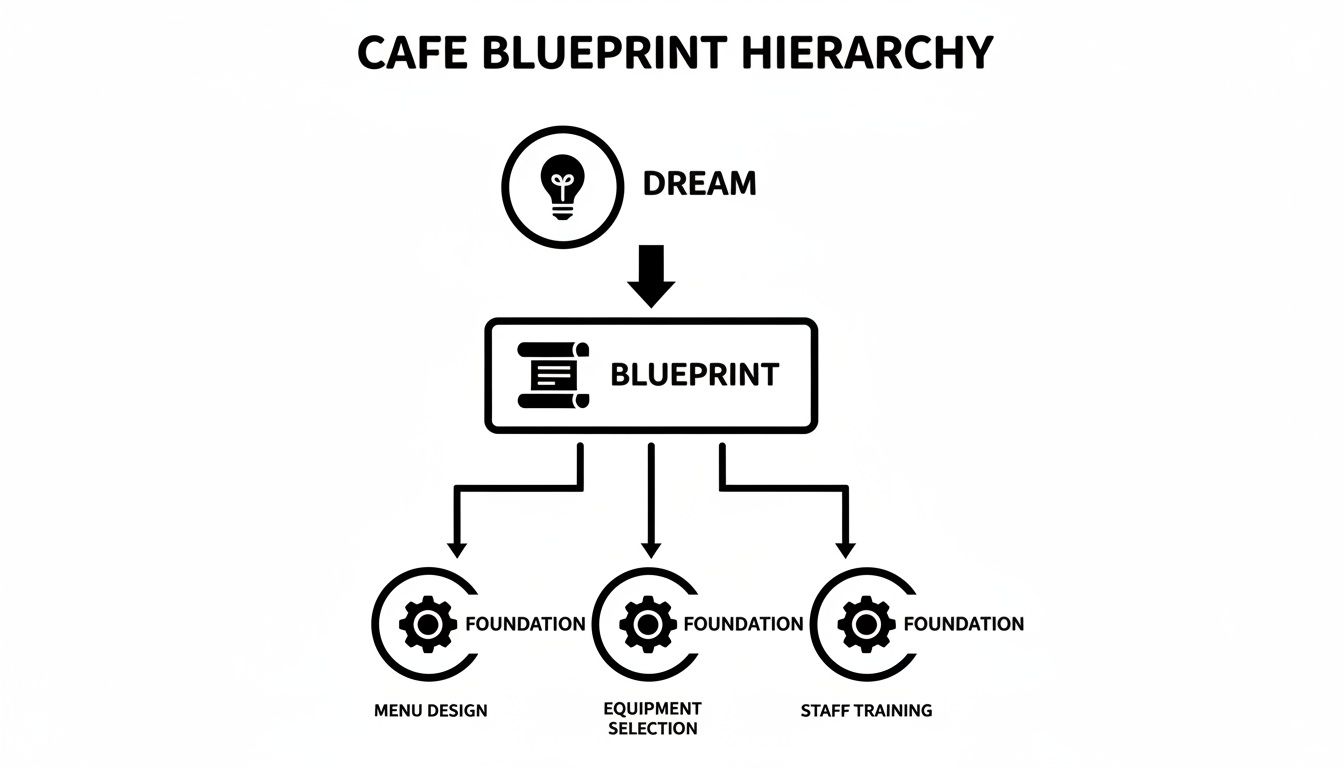
As this shows, a successful cafe is built by translating a creative vision into a detailed plan, which then informs the selection of your foundational equipment. It all has to connect.
Choosing Your Commercial Espresso Machine
The espresso machine is the undeniable centerpiece of your bar—a significant investment that acts as both a workhorse and a statement piece. It’s where your most popular and profitable drinks come to life. The real choice here boils down to a classic balancing act: barista control versus operational consistency, especially when things get busy.
Think of it like choosing between a manual and an automatic transmission in a car.
A semi-automatic machine gives a skilled barista precise control over every shot, allowing them to adapt to the nuances of the coffee. This is the perfect fit for specialty shops where the craft of espresso is front and center.
On the other hand, a volumetric (or automatic) machine uses pre-programmed water volumes to pull shots with push-button simplicity. This guarantees that every espresso is consistent, no matter which barista is on duty. For a busy cafe focused on speed and reliability, this is often the smarter choice, as it dramatically reduces the chance for error during a morning rush.
To help you decide, here's a quick look at how the different types of machines stack up.
Choosing Your Espresso Machine: A Quick Comparison
This table compares key features, ideal use cases, and typical budget ranges for different commercial espresso machines to help you choose the perfect fit for your cafe's concept and volume.
Machine Type | Level of Barista Control | Best For | Estimated Cost Range |
|---|---|---|---|
Semi-Automatic | High | Specialty cafes focused on craft, lower-volume settings, highly trained baristas. | $5,000 - $15,000 |
Volumetric (Automatic) | Medium | High-volume cafes, shops prioritizing speed and consistency, teams with varying skill levels. | $8,000 - $25,000+ |
Super-Automatic | Low (Push-Button) | Offices, self-serve environments, quick-service restaurants where coffee isn't the primary focus. | $12,000 - $30,000+ |
Ultimately, your machine should be a direct reflection of your service model. Prioritize artisanal control if your brand is built on craft, but lean toward automated consistency if your goal is to serve a lot of people quickly and efficiently.
The Non-Negotiable Burr Grinder
Let's be clear: an exceptional espresso machine is practically useless without an equally capable grinder. This is not an area to cut corners. A commercial burr grinder is absolutely essential for achieving the fine, uniform coffee grounds needed for a balanced espresso extraction.
Blade grinders, the kind you see in home kitchens, chop beans into inconsistent pieces, which leads to a terrible-tasting, bitter or sour shot of espresso. You'll need at least two grinders to get started:
One dedicated espresso grinder for your main espresso beans.
One for drip coffee or decaf, which requires a different (coarser) grind size.
A quality grinder gives your team the power to make tiny adjustments throughout the day, compensating for things like changes in humidity or the age of the beans. This level of control is fundamental to maintaining shot quality from your first customer to your last.
Batch Brewers for Speed and Volume
While fancy espresso drinks often get all the attention, a reliable batch brewer is the unsung hero of many successful cafes. It’s for the customer who just wants a great cup of drip coffee without the wait.
A good commercial brewer can produce several liters of high-quality coffee at once, keeping it hot and fresh in thermal carafes for hours. This ensures you can serve customers in a flash during peak times, preventing a long line from forming while baristas are busy steaming milk. It’s an efficiency tool that serves a huge segment of the coffee-drinking public and is a must-have for just about any shop.
For a deeper dive into the smaller but equally critical items you'll need, check out our comprehensive guide on essential espresso tools that complement your main machinery.
The global coffee machine market was valued at $12.2 billion as of 2025 and is projected to hit $12.77 billion by 2026. This competitive market means you have access to more reliable and feature-rich equipment than ever. Modern machines, representing investments from $5,000 to over $20,000, now come with advanced temperature stability and user-friendly controls that make a real difference in a busy cafe.
Powering Your Workflow with Refrigeration and Food Prep
Sure, the espresso machine gets all the glory, but it's the supporting cast of equipment that really keeps a coffee shop humming. The gear that keeps your milk cold, your food fresh, and your dishes clean is the invisible engine driving your whole operation. This section covers the essential workhorses that make a smooth, profitable workflow possible.
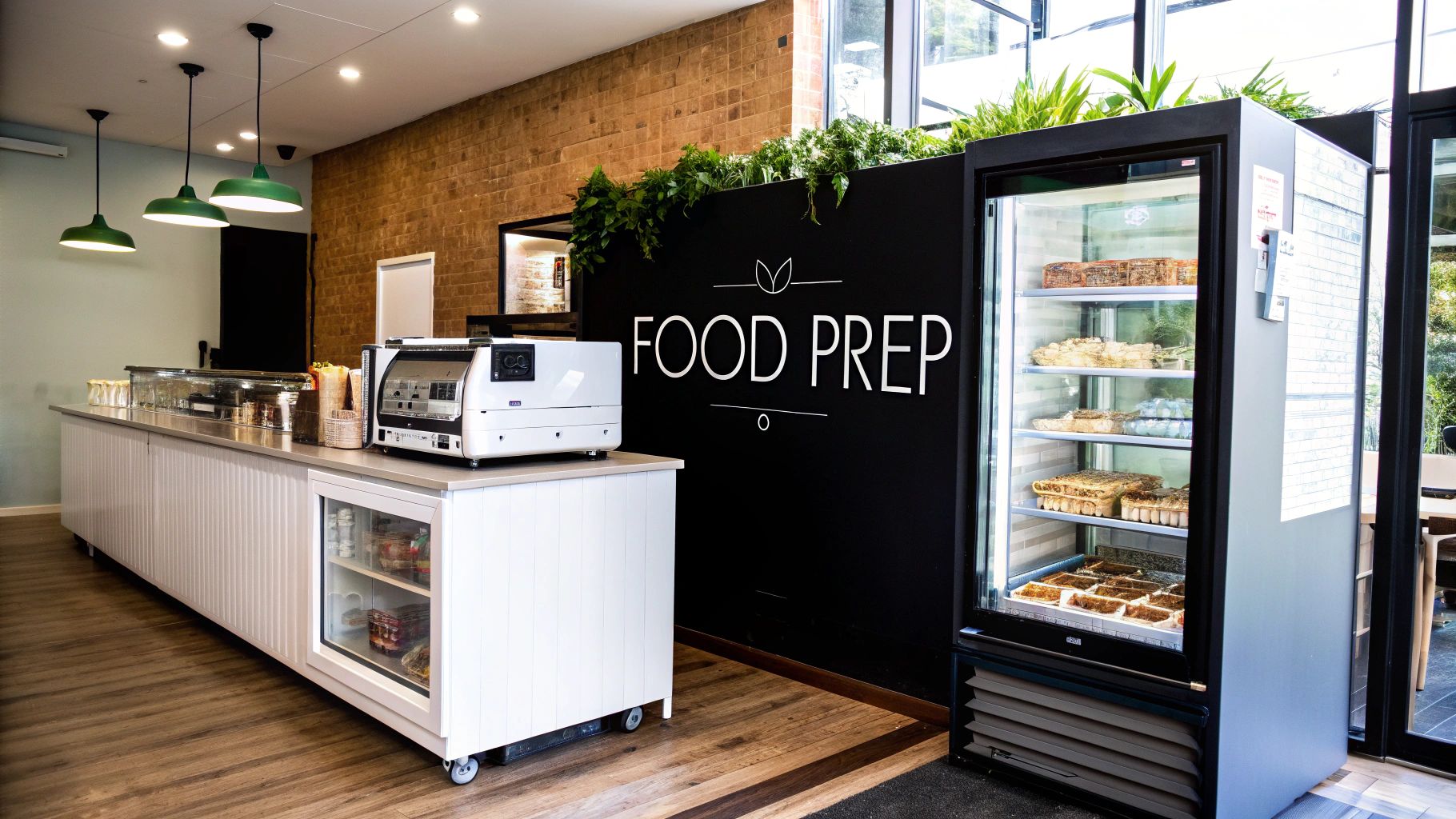
Without dependable refrigeration and a smart prep area, even the best baristas will eventually fall behind. Let's break down the equipment working behind the scenes to make every shift a success.
Keeping Cool Under Pressure with Commercial Refrigeration
Good cold storage isn't just about food safety—it's about speed and efficiency. The right refrigeration units don't just keep you compliant with the health department; they shave precious seconds off every single order.
Your first priority should be at least one under-counter refrigerator tucked right into the espresso station. This simple placement gives your baristas instant access to milk and non-dairy alternatives. No more walking to a back room just to grab a carton. For a shop with steady traffic, a two-door model is a great place to start.
Next up, a glass display case is one of your best sales tools, hands down. When you place it near the register, it turns pastries, sandwiches, and bottled drinks into easy impulse buys. It’s a silent salesperson that can seriously boost your average ticket size.
Think of your display case as more than just a fridge—it's a marketing tool. It works all day, every day, turning visual appeal directly into revenue.
For your back-of-house needs, a standard reach-in commercial refrigerator and freezer are absolute musts. These are the workhorses that hold your bulk inventory, from cases of oat milk to frozen fruit for smoothies, keeping everything organized and safely stored.
Equipping Your Food Preparation Station
The equipment you need here is dictated entirely by your menu. If you're just serving pastries and coffee, your needs will be minimal. But if you're aiming for a full lunch menu, you'll need to invest more substantially. Your choices here will determine whether you can capture that lucrative lunch rush.
Think about adding these key pieces based on your food program:
Commercial Blender: A powerhouse for high-margin items like smoothies and frappes. I always recommend looking for a model with a sound-dampening cover—it keeps the blender's roar from ruining your shop's chill vibe.
Panini Press: This compact tool is incredibly versatile for making grilled sandwiches, wraps, and even quesadillas. A dual-press model can literally double your output during a busy lunch service.
Convection Oven: If you plan on baking anything in-house or reheating food, a commercial convection oven is a game-changer. It provides fast, even heat that a standard oven just can't compete with.
Investing in this support gear is just as critical as choosing your espresso machine. While your coffee equipment often feels like the biggest spend—with machines and grinders running anywhere from $5,000 to over $20,000—it’s the reliability of your entire setup that protects that investment. You can find more great tips for managing these kinds of operational hurdles in this guide to navigating café challenges.
The Unsung Hero of Your Cafe: Warewashing
A clean, sanitary operation is the bedrock of customer trust and, well, staying in business. Your warewashing station is what keeps you from drowning in dirty pitchers, mugs, and utensils during a rush.
At the bare minimum, the health department will require a three-compartment sink for the classic wash, rinse, and sanitize process. This is the non-negotiable cornerstone of your back-of-house. You'll also need dedicated hand-washing sinks nearby to stay compliant.
If you plan on serving drinks in ceramic mugs, a high-temperature commercial dishwasher is worth its weight in gold. These machines can power through a full rack of dirty dishes in just a couple of minutes, ensuring you never run out of clean mugs on a busy Saturday morning. It's an investment in speed and safety that pays for itself in no time.
10. The Smallwares & Supplies That Actually Run Your Cafe
It's easy to get excited about the big-ticket items—the gleaming espresso machine, the powerhouse grinders. They're the stars of the show, no doubt. But the real workhorses of your coffee shop are the small, everyday tools and supplies. Think of them as the stage crew in a theater; without them, the main actors can't do their thing.
These smallwares are the backbone of your workflow, ensuring everything runs smoothly, consistently, and professionally.
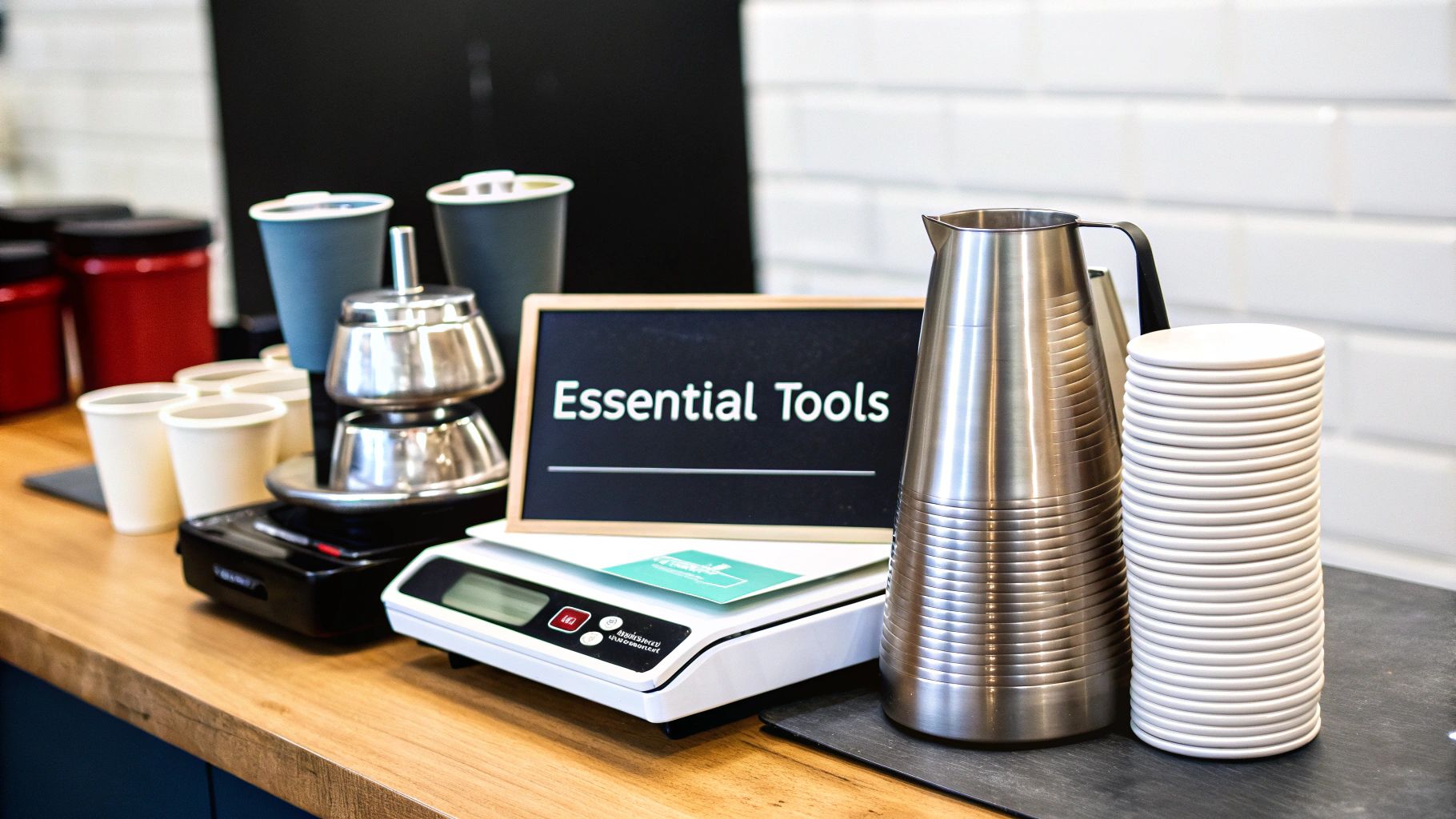
One of the most common mistakes new owners make is under-budgeting for these seemingly minor items. It adds up fast, so let’s build a solid checklist to make sure your team is ready for action on opening day.
Behind the Counter: Your Barista's Toolkit
These are the high-precision instruments your baristas rely on for every single drink. This is not the place to cut corners. Investing in quality, commercial-grade tools is non-negotiable because they directly affect your coffee's quality and consistency. Flimsy, home-use gadgets just won't survive the relentless pace of a busy morning rush.
Here’s what every professional barista station needs:
Digital Gram Scale: Forget guesswork. This is the only way to guarantee a consistent recipe by weighing espresso doses and pour-overs every single time. Precision is everything.
Tampers & Tamp Mats: A high-quality, comfortable tamper is crucial for getting that even compression needed for a perfect extraction. The mat is just as important—it protects your counters and your expensive portafilters from getting banged up.
Milk Steaming Pitchers: You’ll need a few different sizes (like 12oz, 20oz, and 32oz) to minimize milk waste when you're making lattes and cappuccinos of varying sizes. Stainless steel is the industry standard for a reason: it's durable and a breeze to clean.
Knock Box: It’s a simple concept—a sturdy container for banging out used espresso pucks—but it's absolutely vital for keeping the bar clean and the workflow moving quickly.
Shot Glasses & Thermometers: These are your tools for calibration and training. They let you visually check the quality of your espresso shots and ensure milk is steamed to that perfect, sweet temperature without scalding.
A well-equipped barista is a confident and efficient barista. Giving them the right tools is like handing a chef a perfectly sharpened set of knives. It empowers them to execute their craft with precision and speed, which translates directly into a better, faster experience for your customers.
Customer-Facing: Supplies and Organizers
The items your customers touch and see are just as critical. The feel of the cup, the sturdiness of the lid, and the tidiness of the condiment station all send a message about your brand and your attention to detail. This is where you make a direct, tangible impression.
You'll need a steady inventory of the following:
Cups and Lids: This covers both your "for-here" ceramic mugs and your "to-go" paper or plastic cups in various sizes (8oz, 12oz, 16oz are standard). Pro tip: always test your chosen cups and lids together to guarantee a secure, leak-proof fit. Nothing ruins a customer's day faster than a coffee-stained shirt.
Cup Sleeves and Stirrers: Branded sleeves are a fantastic, low-cost marketing opportunity. Stir sticks are a simple but necessary convenience for your customers.
Condiment Station Organizers: A clean, well-stocked station with proper dispensers for sugar, sweeteners, napkins, and lids just looks professional. It prevents clutter and shows you care about the details.
Budgeting properly for these "small" things is a huge part of your overall coffee shop equipment list. For baristas who want to master their craft, understanding each tool's purpose is key. Seeing how commercial-grade tools like a professional 20oz frothing pitcher can make a real difference in daily operations is a great place to start.
The Brains of Your Cafe: POS Systems and Customer Experience
It’s easy to think of a Point of Sale (POS) system as just a high-tech cash register, but in a modern coffee shop, it’s so much more. Think of it as the command center for your entire operation. This is where every transaction happens, where you keep an eye on your inventory, and even where you start building relationships with your regulars.
A good POS system is the digital backbone that connects everything, turning a flood of daily sales data into information you can actually use. It coordinates the chaos, from the front counter to your back office stockroom. Picking the right one isn't just a tech decision; it's a business decision that will directly affect how smoothly your shop runs and how profitable you become.
What to Look for in a Modern POS System
A truly great POS system does more than just take money—it actively works for you, almost like another employee. As you shop around, focus on finding a system with a solid set of features that genuinely make your day-to-day life easier. The whole point is to find something that cuts through the complexity, not add to it.
Here are the non-negotiables for a fast-paced cafe:
Inventory Management: You need a system that automatically subtracts ingredients from your stock every time a drink is sold. One latte sold? The system should deduct the right amount of milk, a shot of espresso, and that pump of vanilla syrup. This gives you a live look at what you have, so you never run out of oat milk during the morning rush again.
Sales Reporting and Analytics: Good data is your best friend. Your POS should give you easy-to-read reports showing your top-selling drinks, your busiest hours of the day, and your average customer spend. This is gold when you're deciding whether to add a new pastry, tweak your staffing schedule, or run a promotion.
Customer Relationship Management (CRM): A built-in loyalty program is one of the best tools for turning a first-time visitor into a regular. Look for the ability to track customer visits and offer simple rewards. It’s a small touch that goes a long way in building a loyal community.
A POS system isn't just about processing payments; it's a data-gathering machine. It tells you what your customers love, when they're coming in, and how you can serve them better. Honestly, it’s one of the most strategic investments you'll make.
Essential POS Hardware and Peripherals
The software might be the brain, but you still need the physical tools to make it all work. Your hardware needs to be tough enough to handle the daily grind of a busy cafe, with a small, clean footprint that doesn't clutter up your valuable counter space.
Your basic hardware setup will look something like this:
A primary terminal, which is usually an iPad or a dedicated touchscreen monitor.
A secure credit card reader that can handle everything: tap-to-pay, chip cards, and swipe.
A sturdy cash drawer for the folks who still prefer paying with cash.
A thermal receipt printer for fast, quiet printing that won't disrupt the cafe's vibe.
Crafting the Customer Ambiance
Finally, let's talk about the gear that shapes how your shop feels. This is where the personality of your brand really shines through. The furniture, lighting, and decor you choose are just as critical as your espresso machine in creating a space where people genuinely want to hang out.
Invest in durable tables and comfortable chairs that fit your cafe's overall look. Add some strategic retail shelving to display bags of your house-roasted beans, cool mugs, and other merchandise—this is an easy way to add another revenue stream. And don't forget clear, well-designed menu boards. Whether you go with a classic chalkboard or sleek digital screens, make sure ordering is simple and visually appealing.
When your tech and your ambiance work together, you create a seamless and memorable experience for every person who walks through your door.
Budgeting and Sourcing Your Coffee Shop Equipment
You've got your detailed equipment list. Now comes the real test: turning that list into a smart investment strategy. This is the moment you translate your vision into a functional cafe, making the financial decisions that will lay the groundwork for long-term success.
Think of it like outfitting a ship for a long voyage. You have your absolute essentials—the gear you can't set sail without—and then you have the upgrades you can add later. Smart budgeting means locking in those essentials first, so you can open your doors with total confidence.
New, Used, or Leased Equipment?
One of the first big questions you'll tackle is whether to buy new, hunt for used gear, or lease your equipment. Each option has its own set of pros and cons, and honestly, the best approach is usually a mix of all three. This hybrid strategy lets you put your capital where it will have the biggest impact.
Buying New: For the heart of your operation—the espresso machine and grinder—buying new is almost always the right call. You get a manufacturer's warranty, predictable performance right out of the box, and the latest tech. Think of it as insurance against the kind of breakdown that can shut you down on a busy Saturday.
Buying Used: You can seriously cut down on initial costs by sourcing used equipment. Things like stainless steel prep tables, sinks, and even some refrigeration can often be found in great condition. The key is to buy from reputable suppliers and inspect everything carefully to make sure you're not just inheriting someone else's headache.
Leasing Equipment: Leasing is a fantastic route for expensive items that aren't central to your coffee quality, like ice machines or commercial dishwashers. It keeps your upfront cash investment low and often includes maintenance, converting a potentially massive, unpredictable repair bill into a steady, manageable monthly expense.
Accounting for the Hidden Costs
So many new owners get tripped up by underestimating the costs that go beyond the sticker price of the equipment. If you don't plan for them, these "hidden" expenses can wreck an otherwise solid budget.
Your budget isn’t just about the price tag of a machine. It's about the total cost of ownership. This includes the price of installation, the hours spent training your team to use it, and the ongoing expense of keeping it in peak condition.
Building these extra costs into your financial plan from the start gives you a much more realistic picture. Make sure you have line items for professional installation, initial staff training, and a fund for preventative maintenance. Being proactive here will save you from the kind of surprise expenses that can derail a new business.
The global coffee market is expected to hit nearly US$227.18 billion by 2032, which shows just how much opportunity is out there for operators who plan well. In such a bustling market, strategic sourcing and thorough budgeting are what separate the success stories from the rest. You can dig deeper into these trends by exploring the global coffee market growth at StellarMR.com.
Frequently Asked Questions About Cafe Equipment
Stepping into the world of commercial coffee gear can feel overwhelming, and it’s natural to have a lot of questions. We get it. To help you feel confident as you build out your coffee shop, we’ve put together straight-to-the-point answers to the questions we hear most often from new cafe owners.
Think of this as your personal cheat sheet for making smart decisions on your equipment, budget, and layout. Let’s dive into the big ones.
What Is the Single Most Important Piece of Equipment?
Hands down, your espresso machine and its dedicated grinder are the most critical investments you'll make. This pair is the heart and soul of your entire operation, directly responsible for the quality of the very product your business is built on.
A dependable, high-quality espresso machine—ideally a volumetric model that guarantees shot consistency—teamed up with a precision burr grinder is what allows you to serve fantastic coffee, cup after cup. This setup is absolutely non-negotiable. While you need other things to run the shop, if this core duo fails, your business literally can't function.
Should I Buy New or Used Coffee Shop Equipment?
This is a classic budget question, and the answer is usually a smart mix of both. Buying used can be a fantastic way to slash your startup costs, especially for things like stainless steel prep tables, sinks, and even some refrigeration. It's a savvy move that helps your capital go further.
But when it comes to your core coffee equipment—the espresso machine and grinder—buying new is almost always the right call. A new machine comes with a warranty, reliable support from the manufacturer, and the latest tech to keep you efficient. A used espresso machine, on the other hand, can be a Pandora's box of hidden issues, leading to surprise repair bills and costly downtime you just can't afford in the early days.
The best strategy? Protect your quality by investing in new, critical brewing gear, and hunt for deals on less essential items from reputable used suppliers.
How Much Should I Budget for All My Cafe Equipment?
For a small to medium-sized coffee shop, a realistic starting budget for equipment will land somewhere between $30,000 and $80,000. Where you fall in that range really depends on the complexity of your menu, your sales goals, and how much you decide to buy new versus used.
To give you a clearer picture, here’s how some of the major costs break down:
Espresso Machine & Grinder: $10,000 - $25,000+
Refrigeration & Ice Machine: $5,000 - $15,000
POS System & Hardware: $2,000 - $5,000
Warewashing & Sinks: $3,000 - $8,000
The rest of that budget will be soaked up by batch brewers, blenders, food prep gear, and all the small but essential tools. The key is to create a detailed list for your specific concept and start getting quotes to build a truly accurate budget.
Planning a coffee shop is a massive undertaking, but you don't have to figure it all out on your own. The team at AQEEK Coffee provides complete consulting services—from sourcing the right equipment and designing your workflow to certified barista training—to set your cafe up for success. Start your journey with an expert partner by your side.
