

Yemeni coffee is more than a flavor trend. It's a complete café experience built on origin, spice, hospitality, ceremony, and the aqeek, the social coffee shop where conversation, welcome, and business meet around a shared pot. Yemen's connection to global coffee history runs through Al Mokha, a major export hub that helped give “Mocha” its enduring name, while coffee cultivation adapted to mountain terraces and Yemen's arid climate through both rainfed and irrigated farming, according to the FAO assessment of Yemen's coffee value chain.
That heritage matters commercially because Yemeni coffee remains rare in global trade. Yemeni exports represented about 0.02% of global coffee trade, while premium pricing increased from $5.73 per kilogram in 2017 to $7.15 per kilogram in 2019, according to UNDP's analysis of Yemen's coffee value chain. A modern café can turn that rarity into hospitality without reducing the culture to decoration.
The seven specialty coffee drink recipes below treat each beverage as both a recipe and an aqeek-inspired service ritual. The focus is practical, including preparation, sensory balance, daypart placement, staff storytelling, scaling, and menu testing. For operators building a Yemeni identity, the work may also include consulting, barista training, menu development, equipment sourcing, and SOP design through AQEEK Coffee. If you're also refining related brewing skills, compare the ritual and grind principles with this guide to the authentic Turkish coffee method.
1. Qahwa Sada Pure Arabian Coffee
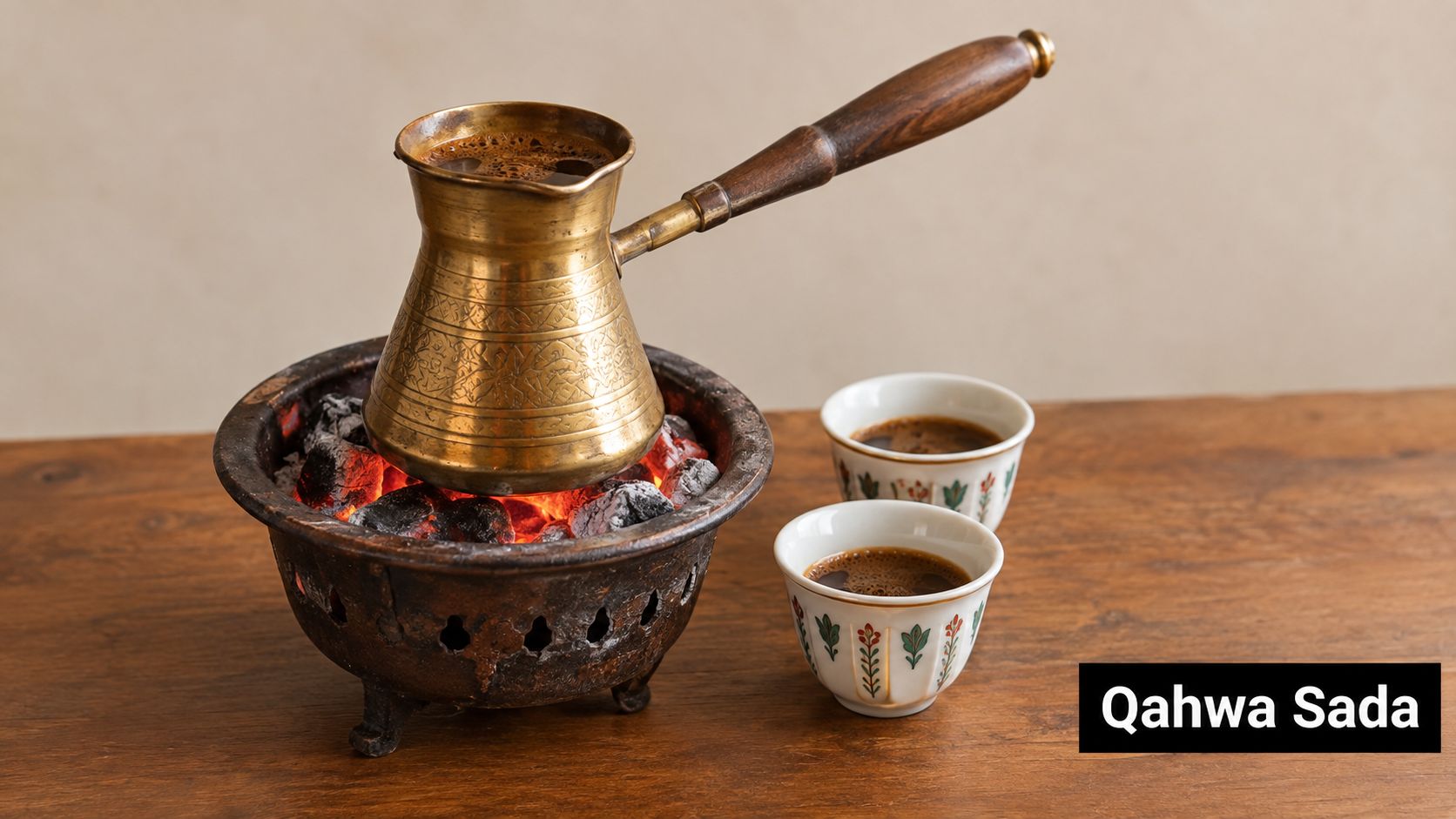
Qahwa Sada should be the café's clearest test of Yemeni coffee discipline. Lightly roasted beans, a coarse grind, cardamom, cloves, and optional ginger produce a delicate, aromatic brew in which the coffee's origin remains apparent. Serve it in small handleless finjals, carrying the pot to the guest and pouring as part of the welcome, rather than treating the drink as a standard takeaway order.
Yemen's coffee tradition is historically associated with the emergence of coffee houses in Sana'a during the 15th century. Qahwa Sada also gives an aqeek a ceremonial center. The qahwaji, or coffee maker, prepares the beverage while maintaining the rhythm of hospitality, welcoming guests and creating space for conversation and business.
For café service, begin with a batch small enough to protect freshness. Roast lightly to retain floral and spice notes, then brew with measured cardamom and restrained clove. Offer ginger as a variation, not as the default, so the foundational cup stays identifiable. Record the coffee dose, water volume, spice weights, holding time, and expected yield in the recipe sheet. Those details make the drink repeatable across shifts.
Build the welcome before the upsell
Train staff to explain the finjal sequence, the spices, and the drink's connection to Yemeni hospitality in a short script. One sentence about Al Mokha, one note about the roast, and an invitation to accept a second pour will usually serve better than a crowded menu description.
A visible roasting schedule can make aroma part of the café identity, but open-flame roasting requires ventilation, fire controls, and a trained operator. If the service model cannot support those conditions, roast in advance. Preserve the ritual through the brewing pot, finjals, carrying method, and controlled pouring sequence.
Practical rule: Keep Qahwa Sada simple enough to repeat daily. Extra garnish and syrup can obscure the coffee and weaken the clarity of the welcome.
Use AQEEK's guide to authentic Yemeni coffee brewing when documenting preparation for staff training. A menu version can be called “Mokha Experience” or “Heritage Ceremony,” but pricing should account for labor, vessel care, explanation, and service time, not the theatrical name alone.
Test the drink first as a welcome service, guided tasting, or opening daypart option. It can also anchor a brewing class if the café teaches the preparation respectfully, credits its cultural context, and avoids presenting the ceremony as a novelty.
2. Qahwa bi'l Zanjabeel Yemeni Ginger Coffee
Qahwa bi'l Zanjabeel earns its place on a Yemeni coffee menu through controlled warmth, fresh ginger, and cardamom. Some versions include black pepper. The cup suits the northern highland setting associated with warming drinks on cold mornings, while its ginger aroma gives the brew a lively, penetrating lift. Its cultural value also reaches beyond flavor, connecting coffee with Yemeni hospitality and traditional wellness practices.
The main service risk is ginger dominance. Fresh ginger changes in heat, moisture, and maturity, so “add ginger” is not a usable bar standard. Choose one repeatable method, such as uniform slices or a measured ginger infusion. Taste the finished coffee for balance. The target is a clear ginger note that supports the coffee, not a cup built around aggressive spice.
Brew the coffee and spices together only after testing the extraction. Hard boiling or a long hold can make ginger sharp, and cardamom may lose aroma if it enters the pot too early. A separate ginger preparation usually gives the bar better control, particularly when several baristas must produce the drink across shifts.
Make wellness language responsible
Qahwa bi'l Zanjabeel may fit a wellness-oriented menu, provided the copy avoids healing promises, treatment claims, and guaranteed outcomes. Describe it as warming, aromatic, and rooted in Yemeni hospitality and traditional wellness culture. This keeps the story accurate and protects customer trust.
Freshness control: Receive ginger in quantities the team can use while its aroma remains clean and bright.
Spice calibration: Taste the coffee, ginger, and cardamom separately before combining them.
Daypart testing: Compare morning, afternoon, and colder-weather service instead of assuming one placement will suit every guest.
Milk variation: Test dairy and plant-based versions. Milk softens ginger heat and changes perceived sweetness.
A staff member can present the drink as the aqeek's warming cup for a guest seeking something more aromatic than plain coffee. That service line gives the beverage a human context without calling it “detox coffee” or attaching unsupported medical claims.
Operational testing matters as much as recipe testing. Grating fresh ginger for every order can slow the line and produce uneven doses. A measured ginger concentrate, prepared under a documented food-safety procedure, supports more consistent service while preserving the intended flavor.
Keep the serving compact and aromatic. A large, milk-heavy format can make the coffee indistinct, while a smaller spiced brew lets ginger remain a supporting note. The result should feel like a recommendation from a knowledgeable qahwaji, and the aqeek-inspired presentation can include a concise welcome, a deliberate pour, and an invitation to discuss the spice profile. A limited tasting or short menu trial can reveal whether guests accept the heat before the drink becomes a permanent fixture.
3. Qahwa bi'l Hilba Fenugreek Coffee
Qahwa bi'l Hilba earns its place on a Yemeni coffee menu through contrast. Toasted fenugreek seeds, known as hilba, bring earthy depth and a gentle maple-like sweetness that differs from the chocolate, caramel, and vanilla profiles many customers expect. That unfamiliarity makes the first explanation part of the recipe. Describe the aroma before serving, then let the guest decide whether the flavor suits them.
Fenugreek has a long role in Yemeni food and wellness traditions, including postpartum and lactation contexts. A café can acknowledge that history without presenting the drink as a medical product. Explain hilba's culinary and social use, keep health language out of the menu unless professional and regulatory guidance supports it, and preserve an open invitation for every customer.
Toast the fenugreek separately from the coffee. Apply enough heat to release its aroma, then stop before the seeds develop harsh bitterness. Grind carefully and document the intended blend. A dedicated scoop, labeled container, and written visual standard give each barista the same reference point, which matters because a fragrant cup and an aggressively bitter one can come from small preparation differences.
Give an unfamiliar flavor a low-risk entry point
A limited service or guided tasting gives customers a reason to ask about hilba before committing to a full menu order. The drink can also be presented as a women's heritage coffee in a café with a strong Yemeni community connection. Keep ordering language inclusive. Cultural specificity should inform the story, not restrict who may enjoy the cup.
Fenugreek coffee succeeds when the café explains its character before the customer tastes it. Without context, earthy sweetness may read as a defect. With context, it becomes the point of the drink.
A concise menu description should mention toasted fenugreek, gentle sweetness, and Yemeni heritage. Avoid promises about postpartum recovery or other health effects. Educational collaborations with midwives, doulas, or wellness practitioners may suit a community program, but review the language and intended audience before attaching those voices to sales material.
For retail, keep the spice blend separate from the coffee until the final packaging decision is made. This preserves control over freshness and lets wholesale partners choose between a traditional blend and hilba as an optional component. In the bar, label the grinder or blend clearly. Fenugreek aroma can linger and influence neighboring recipes, especially during busy service.
Hilba needs a quieter launch than a lineup of sweet seasonal drinks. Hold a staff tasting, give the team a concise service story, and test the roast and spice balance with customers before making it permanent. Use their comments to adjust intensity and preparation, not to remove the ingredient that gives the drink its cultural and sensory identity.
The Yemeni kitchen spices collection from AQEEK Coffee can also help operators evaluate sourcing and maintain spice consistency while developing this drink.
4. Qahwa bi'l Qishr Coffee Husk Ceremonial Brew
Qahwa bi'l Qishr turns the coffee cherry into the centre of the cup. Dried husks, called qishr, can be brewed alone or combined with ground coffee. Expect a lighter, tea-like drink with sweet fruit, gentle spice, and less roasted intensity than a conventional coffee. That profile gives guests a direct taste of the fruit surrounding the seed.
The drink also carries a practical Yemeni history. Households saved and brewed dried husks instead of discarding them, particularly when coffee beans were reserved for honoured guests. In an aqeek-style service, that history supports a hospitality story based on care and resourcefulness, rather than ingredient expense.
Recipe testing should focus on extraction and holding. Brew slowly enough for the husk and spices to open, then taste the batch at set intervals. Cinnamon and ginger can become woody or excessively hot during extended holding. Test in the vessel used during service, record when the fruit character starts to fade, and set a refresh or discard point that meets both flavour and food-safety requirements.

Build the qishr service around pace and place
Qishr gives a café a clear way to explain the coffee cherry, farming, and the value of using more of the harvest. Keep the story precise. Describe the ingredient, its origin, and its role in Yemeni coffee culture without promising a farmer-income result that the supplier has not verified.
Serve it where the slower rhythm feels deliberate. An afternoon aqeek ritual, a seated service, or a small tasting flight can give the drink enough attention without sending it through the fastest queue.
Batch control: Brew for slower afternoon demand, or prepare a measured batch with a defined holding window.
Vessel: Use an ibrik or another distinctive serving pot that supports pouring and makes the ritual visible.
Menu wording: Describe the cup as fruity, spiced, and tea-like so guests do not expect espresso intensity.
Pairing: Offer Yemeni pastries or dates, and let the origin story replace heavy syrups.
Cafés evaluating sourcing can review the Yemeni gesher cascara offering from AQEEK Coffee while developing a qishr specification. Compare husk aroma, spice response, batch yield, and holding quality before fixing the recipe.
Qishr can become a signature afternoon drink because it gives baristas a slower, more conversational service moment. It also broadens the specialty-coffee story beyond intensity and crema. The trade-off is speed, so make the timing visible in the menu and build the preparation into the workflow rather than treating it like a fast brewed coffee.
5. Qahwa bi'l Aneesah (Anise-Infused Coffee)
Qahwa bi'l Aneesah suits evening service. Star anise, and sometimes fennel, gives the coffee a licorice-like aroma that feels gentler and more digestif-oriented than a morning cup of Qahwa Sada. Within the aqeek, that difference shapes the occasion. Guests can linger after food, rather than treating the drink as a quick caffeine order.
Recipe control starts with the spice. Star anise can dominate a small batch, and excessive roasting or infusion can push its flavor toward bitterness. Use whole, aromatic pieces and standardize their size or weight during development. Re-taste whenever the supplier changes, since freshness affects anise intensity.
Ane esah works well as a defined evening service window. During an “Evening Ceremony,” pair the coffee with a small Yemeni pastry and a short explanation of the social custom. The service should feel hospitable and informed, not staged.
Timing: Release the drink after daytime service has settled, when guests have time to sit.
Food pairing: Choose pastries with enough sweetness to soften anise without covering the coffee.
Staff language: Describe the cup plainly as aromatic, licorice-forward, and warming.
Quality check: Taste the first batch at opening and again later to monitor spice drift.
The drink also connects coffee service with dinner hospitality. A Middle Eastern restaurant could offer it after a meal, while a specialty café might pair it with poetry, conversation, or acoustic music. Use cultural references grounded in Yemeni traditions and community participation, rather than generic “Arabian night” styling.
Do not present Aneesah as a guaranteed digestive aid. Anise has traditionally been associated with after-meal service and digestive comfort, but the café's promise should remain centered on flavor and ritual. That boundary avoids wellness overreach while preserving the drink's place in the evening.
For menu testing, compare the unsweetened cup with a lightly sweetened version before setting the service format. The coffee should remain lighter and more aromatic than a dessert drink. Syrup can help first-time acceptance, yet it may erase the anise profile. Offer sweetness separately, perhaps with a small date or pastry, so guests can taste the coffee's structure before adjusting it. Record preparation time, repeat orders, and staff feedback during the trial, then scale the recipe only after the spice balance holds across the service window.
6. Qahwa Bayda White Coffee with Milk and Spices
Qahwa Bayda earns a premium place on the menu through controlled preparation, not decorative excess. This Yemeni milk-based coffee uses a light roast brewed with cardamom, then finished with warm whole milk and, in some versions, rose water or orange blossom water. The target cup is creamy and aromatic, with floral notes supporting the coffee instead of making it taste perfumed.
Its association with affluent aqeek settings and honored guests gives Bayda a clear service story. Brew the coffee and spices first, warm the milk separately, and add the milk last. That sequence preserves the drink's layered preparation and gives the barista a concise ritual to explain at the table.
Protect the coffee under the milk
Whole milk adds body, yet an excessive portion can flatten a light Yemeni roast. Set a restrained milk ratio, taste the finished drink, and adjust the recipe only after the coffee, spice, and dairy are working together. Plant-based alternatives can broaden access, but each changes texture, sweetness, and foam behavior. Test each option as its own recipe rather than treating substitutions as one-for-one swaps.
Floral water requires precise dosing. Measure every addition, record the batch method, and train baristas to identify the point at which a graceful aroma becomes soapy. Cardamom should remain clear in the finish while leaving room for the floral note.
Serve Bayda in a porcelain finjal, a silver-rimmed cup, or another vessel that lets guests follow the sequence. Present it as a Yemeni coffee with milk, spice, floral aroma, and hospitality, not as a version of European café au lait.
Service insight: The barista can narrate the preparation in one sentence: “We brew the coffee and cardamom first, then finish it with warm milk and a small floral note.” The explanation gives guests a reason to watch and wait.
Bayda suits weekends, seated service, and a guided “Royal Ceremony.” It is harder to execute during a rush if every order requires separate milk heating and careful floral dosing. A station may prepare the coffee base in controlled batches, while milk is heated close to service and discarded according to the café's food-safety procedures.
Menu testing should measure more than guest reaction. Track preparation time, milk waste, substitution requests, and whether the floral profile remains consistent across the service window. Confirm the recipe before adding it to faster service periods.
Allergen communication remains part of the ritual. List dairy, disclose plant-based substitutions, and identify nuts when a garnish or pastry pairing contains them.

7. Qahwa Dakhal Layered Coffee with Honey, Ghee, and Cardamom
Qahwa Dakhal earns its place as the collection's most indulgent drink through controlled richness, not sheer sweetness. Honey, ghee, cardamom, and coffee build a layered cup with a rounded body, warm aroma, and lingering finish. In an aqeek-inspired service ritual, that abundance communicates generosity and status. The café version still needs a clear coffee core.
Start with a coffee strong enough to stand beside ghee and honey. Brew it cleanly, then add the richer ingredients. A thin base disappears under the fat, while too much honey masks the cardamom and pushes the drink toward dessert.
Build the cup, then protect the ritual
Warm the serving vessel. Add measured honey and ghee, pour in the hot spiced coffee, and stir until the mixture emulsifies. Careful finishing can retain a visible layer, but separation alone is not a fault. The target is deliberate texture, without leaving oil floating on the surface.
Use ghee with a clean, lightly nutty aroma. Stale or strongly savory notes will dominate the cup. Honey differs by floral source, so record the supplier and product during recipe trials. Cardamom should sharpen the finish and keep the drink recognizably connected to Yemeni coffee, rather than turning it into a generic sweet latte.
A small ornate cup or shared pot suits the drink better than a large takeaway format. The vessel, pouring sequence, and measured additions make the service feel intentional.
For a busy bar, Dakhal needs a defined station routine. Portion honey and ghee before service, keep the coffee hot enough to combine without scorching the honey, and standardize the stirring motion. These controls limit variation without removing the visible preparation that gives the drink its character.
Staff must identify dairy-derived ghee and honey, and explain that the recipe is not vegan. A lightly sweet pastry is the safer pairing choice because it supports the coffee without competing with its richness.
The aqeek story is hospitality through abundance. It does not require claims about royal history or invented anecdotes. Let the rich ingredients, chosen vessel, pouring sequence, and concise explanation communicate the ceremonial role.
Test Dakhal beside Bayda and Qahwa Sada, but assign each drink a different job. Bayda brings floral creaminess, Sada gives clarity, and Dakhal supplies indulgence. Keep portions, dayparts, and service rituals distinct. If every drink arrives large with a sweet accompaniment, the menu becomes crowded. If each has a defined occasion, guests and staff can understand the choice quickly.
Comparison of 7 Traditional Qahwa Recipes
Drink | 🔄 Implementation complexity | ⚡ Resource requirements | 📊 Expected outcomes | 💡 Ideal use cases | ⭐ Key advantages |
|---|---|---|---|---|---|
Qahwa Sada (Pure Arabian Coffee) | Moderate, precise roasting & ibrik timing; ceremonial service | Low equipment (ibrik, brazier, finjals); quality cardamom/cloves | Strong cultural differentiation, premium pricing, slower throughput | Heritage ceremonies, welcome drink, demo roasting | ⭐⭐⭐⭐, authentic origin flavor, high margins, storytelling asset |
Qahwa bi'l Zanjabeel (Ginger Coffee) | Moderate, careful ginger grind/timing; longer brew (8–12 min) | Fresh ginger supply, medium-roast beans, spice grinder, staff training | Wellness positioning, seasonal sales lift, increased dwell time | Winter/wellness menus, functional beverage offerings | ⭐⭐⭐, perceived health benefits, warms/energizes, menu differentiation |
Qahwa bi'l Hilba (Fenugreek Coffee) | High, fenugreek toasting + grind; timing-sensitive (10–15 min) | Fenugreek sourcing, toasting equipment, trained staff | Niche loyalty, premium price, requires customer education | Women's wellness programs, limited‑availability specials | ⭐⭐⭐⭐, unique maple-like notes, strong cultural/health narrative |
Qahwa bi'l Qishr (Coffee Husk/Cascara) | Moderate–High, long, low-temp brew (15–20 min); meditative prep | Reliable cascara supply (specialty import), spices, ibrik, training | Strong sustainability story, high margins, new consumer education | Afternoon specialty, sustainability-driven menus, tasting events | ⭐⭐⭐⭐, sustainable, farmer-supporting, entirely distinct flavor |
Qahwa bi'l Aneesah (Anise-Infused Coffee) | Moderate, precise anise infusion (7–10 min); evening timing | Star anise/fennel sourcing, trained evening staff, ibrik | Memorable after-dinner upsell, limited daypart but high check | Evening ceremonies, restaurants, post‑meal service | ⭐⭐⭐, distinct licorice aroma, digestive benefits, experiential appeal |
Qahwa Bayda (White Coffee with Milk & Spices) | High, sequential brewing and milk incorporation (8–12 min) | Whole milk, cardamom, rose/orange blossom water, elegant vessels, training | Luxury positioning, high ticket price, strong visual/sensory appeal | Luxury cafés, prix‑fixe dinners, premium tasting experiences | ⭐⭐⭐⭐, creamy luxury profile, broad appeal beyond espresso drinkers |
Qahwa Dakhal (Layered with Honey, Ghee & Cardamom) | Very high, multi-layered assembly, temperature & texture control | Ghee, quality honey, cardamom, precise portioning, expert barista | High‑ticket specialty, strong experiential/ritual value, slower service | High‑end ceremonies, tasting flights, signature luxury offerings | ⭐⭐⭐⭐, opulent mouthfeel, distinctive signature drink, strong differentiation |
Turn Seven Heritage Drinks Into a Working Menu
Start with Qahwa Sada and Qahwa bi'l Qishr as the two heritage anchors. Sada introduces the finjal, spice, roast, and welcome sequence, while qishr explains the coffee cherry and Yemen's resourceful brewing culture. Together, they give customers two different ways to understand Yemeni coffee without requiring the café to launch every complex recipe at once.
Add Qahwa bi'l Zanjabeel or Qahwa bi'l Aneesah according to daypart. Ginger can suit a warming morning or seasonal service, while anise belongs naturally to an evening ritual after food and conversation. Test each drink in the actual station, not only in a development kitchen, because a recipe that tastes excellent in isolation may create delays, messy handoffs, or inconsistent spice dosing during a busy shift.
Reserve Qahwa bi'l Hilba, Qahwa Bayda, and Qahwa Dakhal for limited rituals, guided tastings, weekends, or premium experiences. Their unusual ingredients and more involved preparation make them valuable menu differentiators, but they also require stronger staff education. A café shouldn't use scarcity as a substitute for quality. The drink still needs a clear purpose, a repeatable recipe, and a customer who understands what they're ordering.
Document every recipe in operational language:
Ratios and sequence: Record coffee dose, water, spice quantity, milk or fat addition, and the order of preparation.
Prep-time checks: Measure how long a trained barista needs to produce the drink during realistic service.
Allergen review: Identify dairy, honey, plant-based substitutions, nuts, and cross-contact risks.
Wellness-language review: Describe cultural and culinary traditions without making unsupported medical promises.
Yield and waste tracking: Record batch output, holding loss, ingredient waste, and the point at which flavor declines.
Story practice: Give staff a short origin explanation that sounds conversational and doesn't flatten Yemen into a marketing slogan.
Specialty coffee has enough mainstream demand to reward thoughtful differentiation. The Spring 2026 National Coffee Data Trends report states that 58% of U.S. adults drank specialty coffee in the past week, and that figure was 9.4% higher than in 2022, according to the reported U.S. specialty coffee consumption data. That adoption creates room for drinks with a strong identity, but customers still expect consistency, transparent ingredients, and good service.
Yemeni coffee also benefits from careful espresso thinking when a café uses Yemeni beans in modern formats. Professional espresso recipes commonly begin around an 18 to 22% extraction yield, with a starting ratio such as 18 grams of coffee to 36 grams of beverage in 25 to 30 seconds. Light-roast espresso may extend toward a 1:2.2 to 1:2.5 ratio when the goal is clean sweetness and origin clarity, as outlined in this espresso yield and ratio guide. Use those as calibration references, then taste the Yemeni coffee in the finished drink.
Cold service deserves its own test plan. In 2026, 60% of specialty coffee drinkers reported having a cold specialty coffee in the past week, and 46% of people aged 18 to 24 had a specialty coffee drink within the past day, according to Daily Coffee News' report on U.S. specialty coffee consumption. If a café adapts Qahwa Sada, ginger coffee, or qishr for cold service, the team must test ice dilution, sweetness, milk choice, batch holding, and the point at which spice aromas fade.
Use customer feedback before granting any drink a permanent menu position. Ask what customers tasted, what confused them, whether the portion felt appropriate, and whether the story helped them understand the cup. Then review ticket times, ingredient waste, remake frequency, and gross margin with the same seriousness given to flavor.
AQEEK Coffee can support that process through recipe development, certified barista training, station and workflow optimization, equipment sourcing, and SOP creation. The coffee shop influencer playbook from Sup can inform promotion, but marketing should follow a tested service experience. A modern Yemeni coffee identity becomes credible when the story, recipe, station, and hospitality all agree.
AQEEK Coffee helps cafés develop Yemeni-inspired specialty coffee drinks, train baristas, refine workflows, source equipment, and build practical SOPs around Mokha heritage. Visit AQEEK Coffee to explore consulting, training, roasting, and menu development for your next Yemeni coffee program.
