
Create Yemeni Signature Coffee Drinks: The AQEEK Method
A guest takes one sip, pauses, and asks a question every café owner wants to hear. “What is this coffee?” That moment matters because a signature drink only works when flavor and story arrive together.
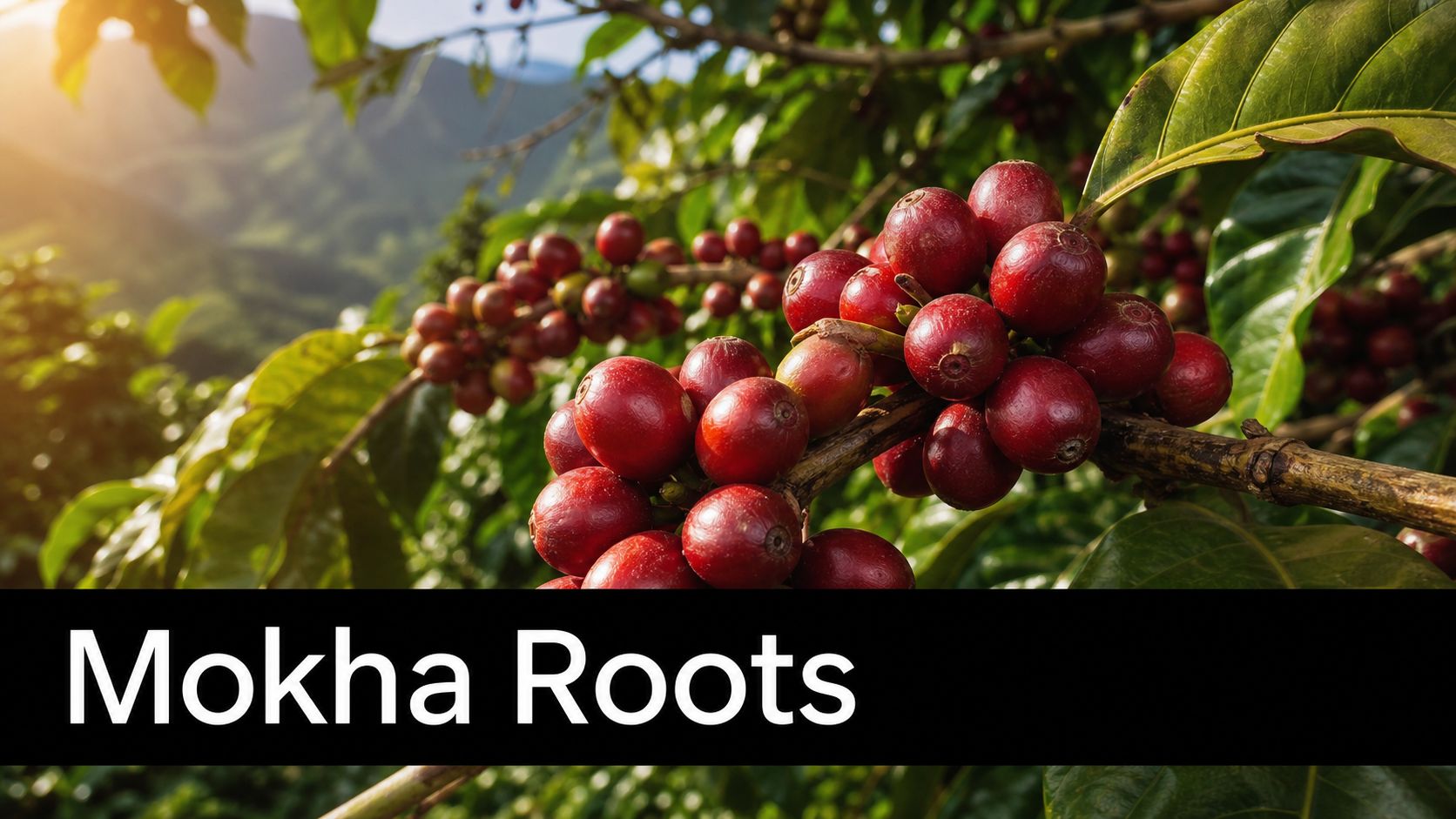
Most cafés try to stand out by adding another syrup, another topping, or another seasonal special. The stronger move is older than all of that. Build signature coffee drinks on Yemeni coffee, and you're not inventing a story from scratch. You're reconnecting the cup to Mokha, the historic port that helped shape coffee's journey into the world.
The Mokha Renaissance Your Cafe Needs
For many café owners, “signature” means novelty. For Yemeni coffee, signature should mean identity.
Yemen gives a café something rare in modern retail. It offers a product with deep agricultural heritage, distinctive sensory character, and a cultural narrative customers can feel in the cup. That matters in a market where espresso-based drinks already dominate customer preference. Cappuccino leads globally in 24 countries, espresso ranks second worldwide and is the top drink in 14 countries, and in the United States espresso is the leading choice in 28 states, according to Coffeeness research on coffee preferences by country and state.
That tells us two things. First, customers already trust espresso-based formats. Second, they don't need to be taught how to order a latte, cappuccino, or iced espresso drink. They need a reason to choose yours.
Why Yemen changes the menu conversation
A generic caramel latte competes on sweetness and convenience. A Yemeni cardamom latte competes on memory.
When a café uses Yemeni coffee well, the drink carries more than roast and milk. It carries place. Customers may not arrive asking for Mokha by name, but they respond when baristas present a beverage with a clear origin, intentional spice use, and a story rooted in real coffee history rather than invented branding.
Three menu advantages show up fast:
Clear differentiation. Many cafés can copy a flavor combination. Few can build an entire menu language around Yemeni coffee heritage.
Stronger storytelling. Mokha, heirloom cultivation, sun-dried processing, and traditional spice pairings give staff something concrete to explain.
Better brand cohesion. The drink, the menu description, the packaging, and the in-store atmosphere can all point to the same identity.
Practical rule: Don't treat Yemeni coffee as a novelty bean inside an otherwise generic menu. Treat it as the center of the menu's point of view.
What works and what falls flat
The cafés that benefit most from this renaissance don't force “traditional” onto every item. They translate Yemeni coffee into formats customers already understand.
What works:
Familiar format, distinct flavor. A latte with cardamom foam and date sweetness.
Simple naming. “Sana'ani Latte” works better than a long poetic title customers can't parse.
Visible cultural cues. Spices, glassware, and menu copy should support the drink without turning it into theater.
What fails:
Overdecorated drinks that bury the coffee.
History without execution. A beautiful backstory won't save a drink that tastes muddled.
Token origin language. If “Yemeni” appears on the menu, the cup has to express it clearly.
A Mokha renaissance in a café isn't nostalgia. It's a business decision. It gives the menu a point of difference that's hard to copy, because the strongest signature drinks don't just taste good. They tell the truth about where coffee began.
Unlocking the Flavors of Yemeni Coffee
Before you design a successful signature drink, you need to understand what Yemeni coffee already brings to the cup. If you skip that step, you'll build over it instead of with it.
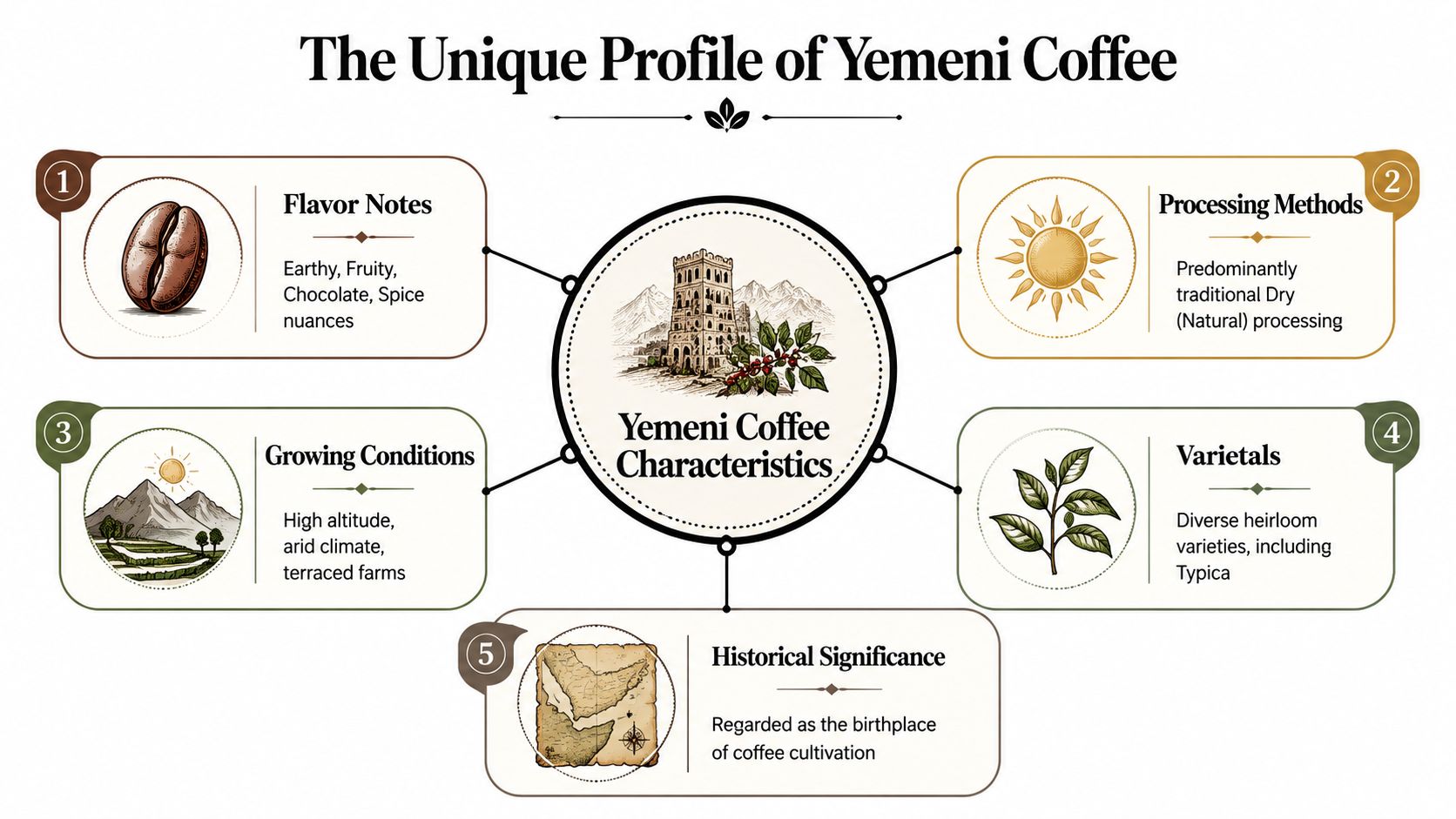
Yemeni coffees often arrive with layered fruit, dried sweetness, spice, cocoa depth, and a wine-like character that rewards restraint. They don't usually need heavy-handed flavoring. They need pairing discipline. In a specialty market estimated at USD 111.5 billion in 2025 and projected to reach USD 251.70 billion by 2033 with 10.8% CAGR from 2026 to 2033, premium and customizable drinks built on distinct origins have room to win, according to Grand View Research's specialty coffee market report.
Read the coffee before you flavor it
Start with the coffee in three passes.
First, taste it black. You're looking for dominant direction, not every possible note. Is it leaning toward dried fruit, cocoa, baking spice, citrus brightness, or deeper earthy sweetness?
Second, taste it as espresso and as a longer brew. Some Yemeni coffees become denser and more spice-forward as espresso. Others open up with more fruit and floral character in filter or immersion formats.
Third, decide what not to add. This is the point where many menus fail. If the coffee already carries natural spice and dried fruit, piling on cinnamon syrup, vanilla, caramel, and chocolate sauce usually makes the drink dull.
A good working grid looks like this:
Coffee expression | Best direction | Avoid |
|---|---|---|
Dried fruit and cocoa | Date, tahini, subtle milk textures | Loud berry syrups |
Wine-like acidity | Rosewater, citrus restraint, cold service | Thick sweet sauces |
Spice-forward body | Cardamom, ginger, light sweetness | Too many competing spices |
Traditional Yemeni cues that still work today
Yemeni coffee culture gives modern cafés real flavor tools, not just decorative references.
Cardamom brings lift and aromatic clarity. It works best when used precisely, especially in milk drinks and cold foam applications.
Ginger adds warmth and brightness. In the right amount, it sharpens the cup instead of overpowering it.
Cinnamon can support body, but it should stay in the background with Yemeni coffee unless the roast profile is especially chocolate-driven.
Qishr-inspired direction opens another path entirely. The traditional association of coffee and spice can inspire lighter, more aromatic menu items that don't depend on heavy espresso formulas.
For café owners who want a deeper grounding in origin, freshness, and handling, AQEEK's guide to Yemeni coffee history and standards is useful as a training reference.
Yemeni coffee usually rewards subtraction. If your first draft tastes busy, remove an ingredient before you add one.
How Yemeni coffee differs in menu development
Many cafés are used to building drinks on coffees that are intentionally neutral in milk. Yemeni coffee often isn't neutral. That's the opportunity.
Instead of asking, “What syrup should we add?” ask:
Which native characteristic should lead?
What texture supports it?
Which sweetener belongs culturally and sensorially?
Date syrup often fits better than generic vanilla. Rosewater can work better than hazelnut if the coffee has floral lift. A touch of sesame or cream-rich texture can support coffees with cocoa and dried fruit depth.
The result should still be recognizable as coffee. If the guest remembers the topping but not the bean, the drink missed the point.
Designing Your Yemeni Signature Drink
Strong signature coffee drinks aren't accidents. They're built through choices that hold up during rush, not just during a slow afternoon tasting.
A useful framework comes from six technical factors identified for signature beverage development: high-quality coffee, purpose, story, execution, glassware, and garnish. The same source notes that drinks with clearly defined stories see higher sales growth, and successful café portfolios often include 166+ crafted signature beverages, as discussed in Perfect Daily Grind's analysis of signature coffee beverage innovation.
Start with purpose, not ingredients
Many cafés begin with a pantry brainstorm. That's backward.
Decide what the drink is for. Is it your high-margin iced feature? Your premium after-dinner latte? Your bridge drink for customers who usually order flavored espresso beverages? Purpose narrows the design faster than flavor guessing.
A Yemeni menu often needs three different signature roles:
The gateway drink for customers who are curious but cautious
The coffee-forward drink for enthusiasts who want the bean to stay in focus
The indulgent drink that still preserves origin character
Build the story into the cup
“Yemeni” isn't a story by itself. The story has to explain why the drink exists.
A few examples work well:
Sana'ani Spiced Latte
Built for customers who already buy cappuccinos and flavored lattes. The coffee leads with cocoa and spice, while cardamom and date sweetness frame it rather than cover it.Jubani Cold Brew
Better for warm climates and afternoon trade. Use a colder, cleaner texture with restrained sweetness and aromatic lift so the drink feels modern while staying rooted in regional flavor logic.Mokha Rose Espresso Tonic
A sharper, more polarizing option. It won't be for everyone, which is fine. It gives the menu a point of view and attracts customers looking for something outside standard café formulas.
The six factors in practice
A simple checklist helps baristas and owners evaluate a drink before launch:
Coffee quality
If the coffee tastes flat on its own, no garnish will save it.Purpose
Name the moment of consumption. Morning comfort, afternoon refreshment, dessert replacement, or tasting flight item.Story
Keep it short enough for a barista to say in one breath.Execution
If a drink requires too many fragile steps, it won't survive peak volume.Glassware
Use a vessel that supports temperature, aroma, and visual identity.Garnish
Garnish must function as an ingredient. If it doesn't affect aroma, flavor, or perception, cut it.
A practical recipe development habit is to sketch two versions of every drink: one “ideal bar” version and one “rush-safe” version. If those two versions are too far apart, the concept isn't ready.
For operators who want a recipe starting point library, AQEEK recipe resources can serve as one practical input alongside in-house tasting and service testing.
The right signature drink feels inevitable after the first sip. The wrong one feels like a concept.
What usually goes wrong
The common failures are predictable.
One is ingredient stacking. Yemeni coffee already has complexity, so adding rose, pistachio, saffron, chocolate, and cinnamon into one cup usually creates confusion.
Another is borrowed luxury language. Words like “royal,” “ancient,” and “exclusive” don't create value if the drink itself tastes unfocused.
The best Yemeni signature coffee drinks are disciplined. They choose one lead idea, one supporting texture, and one clear story.
Standardizing for Consistency and Profit
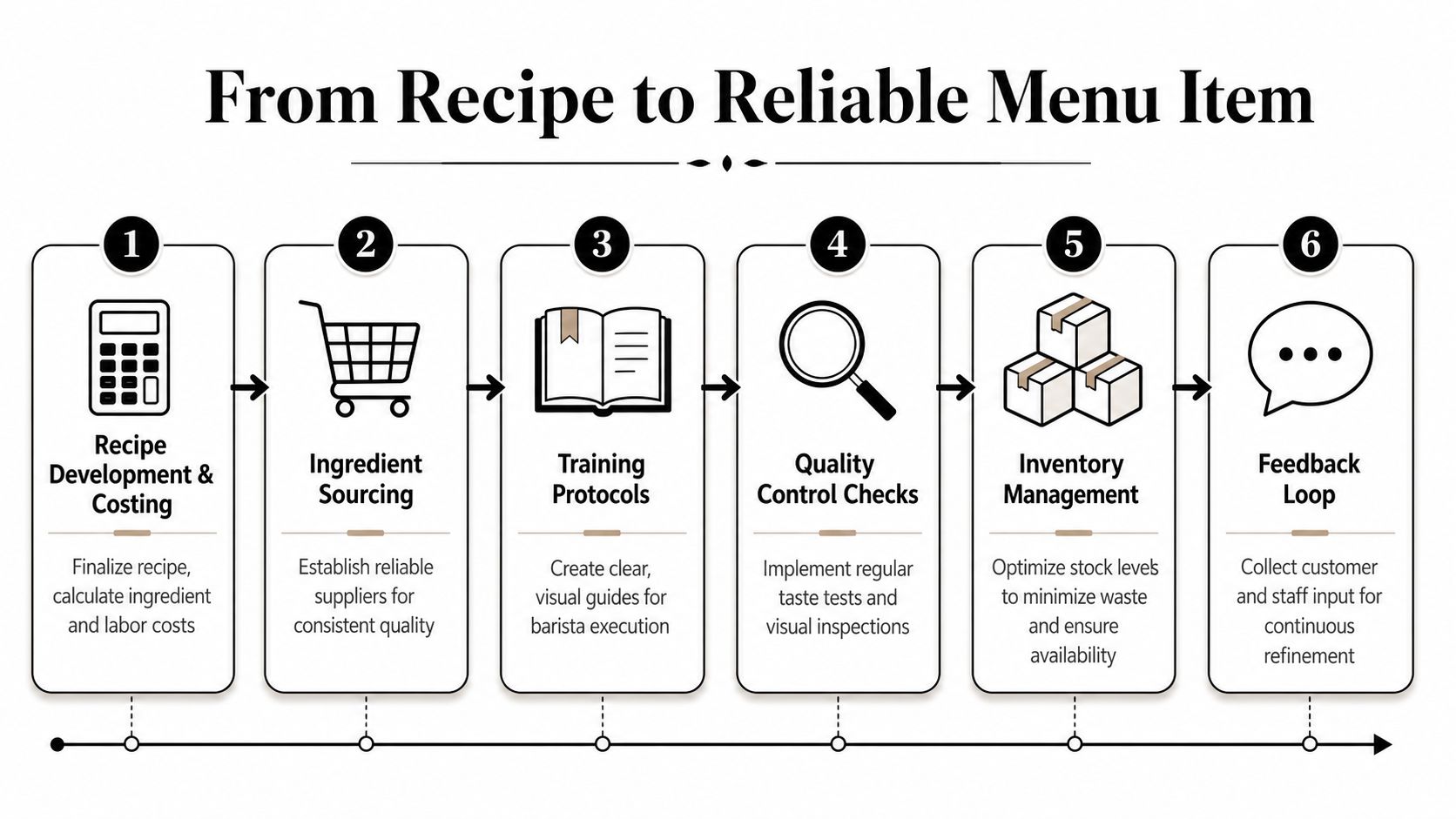
A café can lose money on a great drink faster than on a mediocre one. Complex drinks create hidden labor, ingredient waste, remake risk, and training drag. That's why standardization matters as much as creativity.
When teams use a structured development process that defines flavor profile first, limits the number of base ingredients, and aligns recipes with sensory targets like weight, texture, and finish, café operations can see 25–40% efficiency gains, according to Morgan Eckroth's guide to building balanced coffee drinks.
Cost the drink before you fall in love with it
Most owners price the final beverage after they've already committed emotionally to the concept. Reverse that.
A signature Yemeni drink should be costed in four layers:
Coffee input
Espresso dose or brewed coffee volume, including dial-in loss.Flavor system
Syrups, spice blends, foams, infusions, or specialty dairy alternatives.Labor load
Prep time before service and assembly time during service.Waste risk
Short shelf life items, garnish spoilage, and partial-batch leftovers.
If one beautiful foam requires separate blending every hour, the drink may still work at a high-touch bar. It may fail in a busy neighborhood café. Profit doesn't live in ingredient cost alone. It lives in repeatable execution.
Build an SOP that controls the sensory result
An SOP for signature coffee drinks shouldn't read like a generic recipe card. It should control what the customer experiences.
Include these fields:
SOP field | What to define |
|---|---|
Drink code and station | Where the barista builds it |
Cup or glassware | Exact vessel and size |
Recipe weights | Every measured ingredient |
Prep components | What's batched, how, and for how long |
Build order | Sequence from espresso pull to final garnish |
Sensory target | Sweetness, texture, finish, aroma |
Reject standard | When to remake immediately |
Many teams improve quickly through this process. They stop saying “make it creamy” and start saying “finish should feel silky, spice should arrive on aroma first, sweetness should land after the espresso.”
Station design decides whether the drink survives rush
A profitable drink has to fit the bar.
If date syrup is stored in one fridge, cardamom foam in another, and the garnish at pastry, your team will either slow down or skip steps. Both outcomes damage the menu. Put all drink-specific components inside one natural movement path.
One option operators use is AQEEK Coffee, which offers menu development, SOP creation, workflow optimization, barista training, and equipment planning for cafés built around Yemeni coffee. That kind of support is most useful when an owner has a strong concept but needs the bar to execute it reliably.
If the drink only works when your most talented barista is on shift, it isn't standardized yet.
A lean template for rollout
Use this progression before adding a drink permanently:
Pilot in training with exact measurements.
Run a live shift test during moderate volume.
Record remake triggers and guest comments.
Trim one friction point before launch.
Approve only the rush-safe version for the main menu.
That discipline protects both margin and reputation. Customers don't separate creativity from consistency. They judge the finished cup.
Training Baristas to Be Storytellers
A signature drink reaches the guest through the barista, not through the menu description. If the team can make the drink but can't explain it, half the value disappears.
That's especially true with Yemeni coffee. Customers already understand cappuccinos, iced lattes, and espresso drinks. Those formats anchor the menu because they're familiar. As noted earlier from the global preference data, espresso-based drinks dominate modern café habits. Differentiation comes from what you build on top of that familiar base, not from abandoning it.
Teach the why before the script
Baristas don't need a memorized speech. They need a working understanding of the coffee, the drink logic, and the guest's likely question.
Train in this order:
Origin first
What makes Yemeni coffee distinct in taste and heritage?Drink intent second
Why does this recipe use cardamom instead of vanilla, or date instead of caramel?Guest language third
How do you explain it to someone ordering in ten seconds?
A strong line sounds natural: “This is our Yemeni spiced latte. It uses date sweetness and cardamom to support the coffee's natural depth, so it drinks richer than a standard flavored latte.”
That's better than reciting a long history lesson at the register.
Turn tasting into service training
A lot of staff education stays trapped in the back room. Move it onto the floor.
Use side-by-side tastings:
Standard vanilla latte next to a Yemeni date-cardamom version
Plain espresso next to the same espresso with a matching garnish aroma
A balanced version next to an overbuilt version
This helps baristas feel the difference between support and overload. Once they taste that difference, they upsell more authentically and answer objections with confidence.
For teams building both technical skill and cultural fluency, AQEEK barista training classes focused on heritage and modern café skills show the kind of blend many Yemeni-focused cafés need.
Customers don't buy stories because they're told to. They buy them when the barista sounds informed, calm, and specific.
Give the team useful customer prompts
Skip fake enthusiasm. Use prompts that invite conversation without pressure:
“Do you usually like your coffee more spice-forward or more sweet?”
“If you like cappuccinos, this is an easy place to start.”
“This one highlights Yemeni coffee's natural character more than a typical flavored latte.”
That language does two jobs. It guides the order, and it protects the drink from being framed as a gimmick.
When baristas become interpreters instead of order-takers, signature coffee drinks stop being menu experiments. They become part of the café's identity.
Launching Your Drinks to the World
A strong launch makes the first order easier. That's the core job.
Customers are open to new drinks, but they still need cues. Recent coverage of café trends points toward bolder, more localized, and texture-driven beverages, while also warning that operators need market validation rather than social-media novelty, as discussed in Sprudge's look at emerging coffee drink directions. For Yemeni coffee drinks, that means the launch should prove repeat appeal, not just generate curiosity.
Start with the menu itself.
Put the drink where customers can choose it fast
Menu engineering matters more than most cafés admit.
A Yemeni signature drink should sit beside a familiar anchor, not in an isolated “specialty” corner. If a customer is deciding between a cappuccino and a Sana'ani Spiced Latte, the comparison helps. If the Yemeni drink is buried under an abstract seasonal heading, adoption slows.
Use descriptions that answer three questions quickly:
What format is it?
What makes it Yemeni?
What does it taste like?
“Espresso, steamed milk, date sweetness, and cardamom aroma” works. Long poetic copy usually doesn't.
Launch with tasting, not just posting
Digital promotion helps, but in-store trial closes the gap faster.
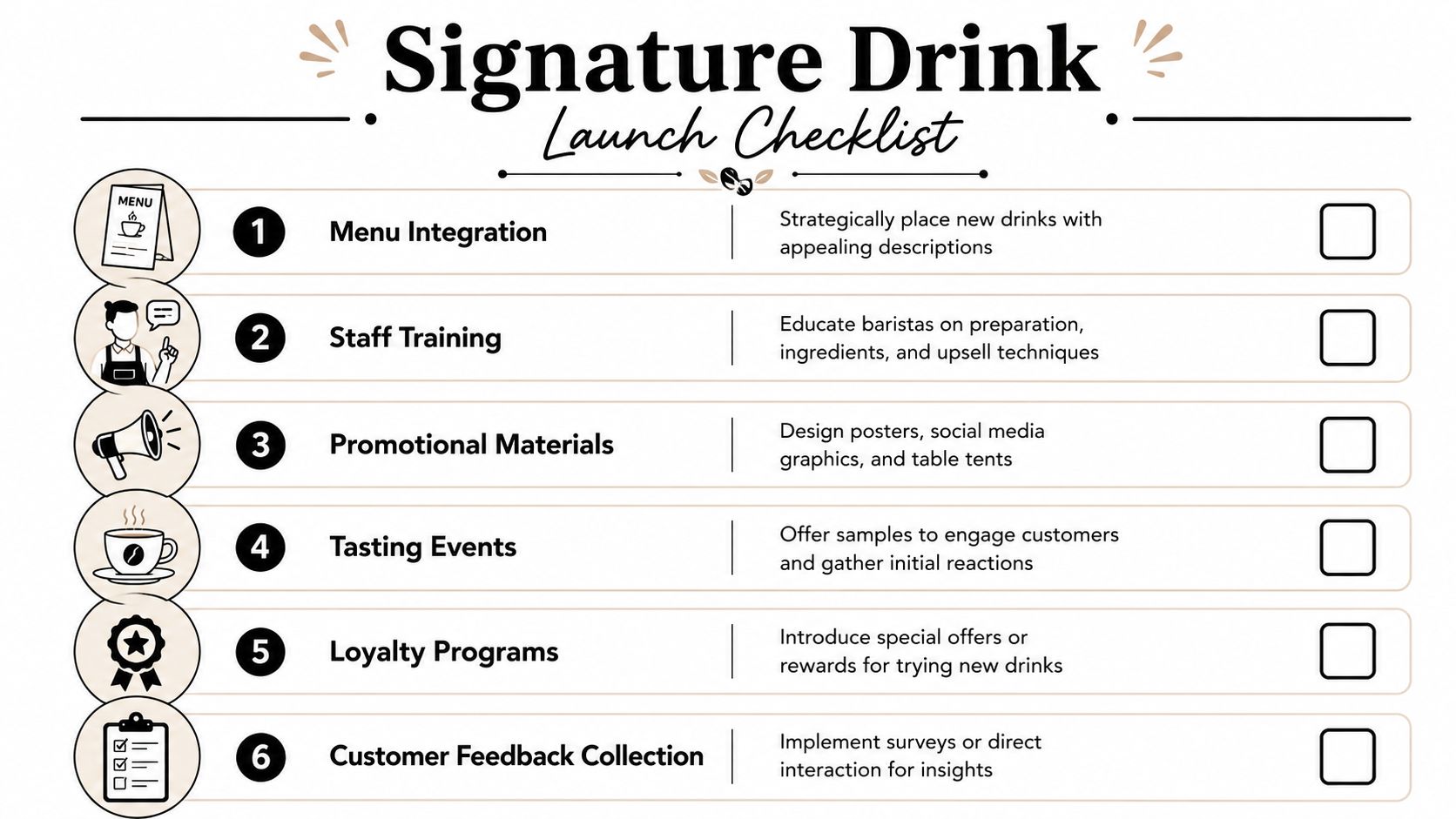
A practical launch checklist looks like this:
Train the recommendation line. Every barista should know which existing drink each new item resembles most.
Run guided samples. Small tastings during peak discovery hours reduce ordering hesitation.
Create one visual standard. The drink should look the same on the menu, on social, and across the bar.
Ask one feedback question. Don't overwhelm guests. Ask whether they'd order it again.
A short visual story can help customers connect the drink to place and process:
Measure what matters after launch
Don't judge the drink only by first-week buzz.
Look for:
Reorders from customers who tried it once
Barista confidence during busy periods
Modification patterns that reveal confusion or mismatch
Prep friction that slows service or causes inconsistency
If customers keep asking for extra sweetness, the recipe or menu description may be off. If staff tend to avoid recommending the drink, they may not trust its fit on the menu. Fix those signals early.
The strongest launch strategy is simple. Tie Yemeni coffee to familiar formats, make the story easy to retell, sample aggressively, and refine based on real guest behavior. That's how signature coffee drinks move from idea to fixture.
If you're building a café around Yemeni coffee or trying to turn heritage into a disciplined, profitable menu, AQEEK Coffee offers consulting, training, menu development, and operational support focused on modern café execution. The right signature drink doesn't just add a line item. It gives your shop a language customers remember.
