

If you want to master roasting for espresso, you have to start with the right bean. And for a truly standout shot, that journey often leads back to the very birthplace of coffee: the mist-covered mountains of Yemen. The beans grown here aren't just complex; they're the foundation for a remarkable espresso and the cornerstone of the AQEEK philosophy for modern coffee shops.
The Soul of Espresso: Roasting Yemeni Coffee
The pursuit of a perfect espresso isn't just about technique—it's about history. When you work with Yemeni Mokha, you're tapping into a legacy that shaped coffee culture for centuries. These beans have a character you won't find anywhere else, shaped by a unique combination of high-altitude terroir and an arid climate.
Those harsh growing conditions force the coffee cherries to mature slowly. This long, slow development concentrates the natural sugars and builds incredibly deep, intricate flavors. Unlike most coffees today, Yemeni beans are naturally processed (sun-dried) with the fruit still on the seed, imparting a signature profile that’s both wild and beautifully refined. This process is central to the history of coffee itself.
What Makes Yemeni Coffee Ideal for Espresso
As a roaster, when you get your hands on Yemeni greens, you’re starting with a bean that’s practically built for espresso. The unique qualities translate directly into a phenomenal, concentrated shot.
Here’s what you can expect:
A Symphony of Flavor: You're not just getting "coffee" flavor. Think winey, with rich notes of dark chocolate, dried berries, and a subtle, warming spice. It’s a layered experience that keeps you coming back for another sip.
Incredible Body and Crema: The natural processing gives these beans a density that creates a heavy, viscous body in the cup. This is the secret to pulling shots with that thick, stable, and aromatic crema every barista dreams of.
Perfectly Balanced Acidity: While many high-altitude coffees can be sharply acidic, Yemeni varietals offer something different. The acidity is more of a balanced tartness that beautifully complements the deep, sweet notes in the coffee.
At AQEEK, we consider ourselves curators of this Mokha heritage. We don’t just supply beans; we offer a blueprint for modern cafés to build an entire brand around this authentic story. We’ve seen firsthand how focusing on a single, high-impact origin like Yemen can elevate a coffee shop from just another café to a true destination. You can dive deeper into this history by reading our guide on the art of Yemeni coffee.
The whole idea is simple: mastering how to roast these specific heritage beans is the first step toward true operational excellence. It creates an unforgettable experience for your customers and sets your café apart in a very crowded market.
This guide is designed to walk you through that exact process. We'll show you how to respect the bean's history while using modern roasting science to unlock its full potential. The goal is to turn every batch into a consistent, flavorful, and profitable cornerstone for your business.
It All Starts with the Green Bean: The Mokha Roasting Philosophy
Long before you hear the first crack in the roaster, the most important decision for your espresso has already been made. It happens when you select your green coffee. For us, especially when working with Yemeni coffee, this isn't just a transactional step. It's about respecting a legacy—honoring the bean's incredible journey from high, arid mountains right to your roastery.
The history of Yemeni coffee is a story of resilience. These plants don't grow in lush, easy climates; they fight for survival in harsh conditions. That struggle creates something extraordinary: smaller, incredibly dense beans packed with concentrated sugars and complex organic acids. Those are the raw materials for an unforgettable espresso.
Understanding Yemeni Varietals
When we source for espresso, we’re looking for specific heirloom varietals that have grown in Yemen for centuries. Two of the most incredible are Ja'adi and Dawairi. They're both fantastic, but they offer two different paths to that perfect shot.
Ja'adi: This is your classic Mokha profile. Ja'adi beans are typically small and dense, and they produce a cup with a heavy, almost wine-like body. Think pronounced notes of dark chocolate and a rich, fruity sweetness like dried cherries or raisins.
Dawairi: This varietal can be a bit different, sometimes even larger than Ja'adi. It tends to create a brighter, more aromatic cup. You’ll find complex spicy and floral notes layered on top of that foundational chocolate and fruit.
So, what’s the goal for your espresso? Are you after a deep, comforting, chocolate-forward shot? Or do you want something with a bit more aromatic pop? Both hold up beautifully under the intense pressure of an espresso machine, all thanks to their natural density.
The AQEEK Sourcing Standard
We don’t just buy coffee at AQEEK; we build real relationships with the farmers and the communities who grow it. This direct line gives us the full story behind every lot. We’re not just evaluating the green beans for technical quality—we’re looking for character. This is the foundation of the AQEEK model: connecting coffee shops directly to the source of this rich history.
Our philosophy is simple: a great roast can only come from a great green bean. When we meticulously evaluate each batch, we aren't just screening for defects. We are listening to what the bean has to tell us about its origin, its journey, and its potential.
This commitment is what allows a café to build its entire brand on a single, spectacular Yemeni espresso. When you know that every single shot is built on a foundation of excellence, you create rock-solid consistency and trust. You can dive into our curated selection and find your café's next star performer in our guide on the best coffee beans for espresso.
Practical Steps for Evaluating Green Beans
Sizing up green Yemeni coffee is both an art and a science. Here’s a peek into how we approach it.
First, we check the moisture content, aiming for a sweet spot between 9.5% and 11.5%. If it's too dry, the beans will roast way too fast and taste flat. Too wet, and you're risking mold or a grassy, undeveloped flavor in the cup.
Next is density. Higher density is the calling card of top-tier, high-altitude coffee. Denser beans can take more heat during the roast, which is exactly what you need to properly develop the sugars for a rich, complex espresso.
Finally, we screen for defects by hand-sorting our beans. This is about more than just pulling out broken pieces or stray stones. We’re hunting for "quakers"—those unripened beans that give off a papery, peanut-like taste—and any signs of insect damage. Only the most perfect beans make the cut.
This rigorous selection is more important than ever. The global espresso coffee market is set to grow by an astounding $5.19 billion between 2026 and 2030, and North America's café culture is driving 46.7% of that expansion. This boom is fueled by a demand for bold, memorable roasts, and Yemeni coffee is perfectly poised to deliver. Its unique profile lets roasters hit that sweet spot—developing fruity notes before the second crack while still achieving the deep, caramelized boldness of a world-class espresso. You can read more about these market trends on Technavio.com. By starting with truly exceptional green beans, you're setting yourself up to serve a product that stands out in a crowded field.
Mastering the Roast Profile for Yemeni Espresso
This is where the real work—and the real magic—happens. Roasting espresso beans from Yemen isn't just a technical process; it's a conversation with one of coffee's most ancient origins. You're trying to coax centuries of history out of a small, dense bean and translate it into a single, perfect shot. This isn't about slapping on a generic "espresso roast" profile. It’s a delicate dance of heat and time, tailored specifically for the unique character of Yemeni Mokha.
At AQEEK, this is our bread and butter. We don’t just roast coffee; we build profiles that honor the bean’s heritage while also being consistent and repeatable for a busy café. A great roast is the foundation of your brand's flavor, and it has to be something you can nail every single time.
The Challenge of Roasting Dense Yemeni Beans
The first thing you'll notice about the heirloom Yemeni varietals we source is that they are small and incredibly dense. This density is key—it means they handle heat very differently from other, larger beans. If you hit them with too much heat too early, you'll scorch the outside long before the inside has had a chance to develop. It's a classic rookie mistake.
The goal is to gently ease the bean into the roast, building momentum slowly. This careful approach is what protects those delicate, winey aromatics and deep fruit notes that make Yemeni coffee so special. It takes patience and a close eye, especially as you approach the most critical stages of development.
The secret to a truly profound Yemeni espresso is stretching out the Maillard reaction just a bit. This is that magical phase where sugars and amino acids combine to create deep, savory flavors. Nailing this part of the roast is what separates a good coffee from an unforgettable one.
In our own roastery, we’ve found that extending the Maillard phase by as little as 20-30 seconds can completely transform the final cup. It builds a deeper body, rounds out any sharp acidity, and unlocks those rich notes of dark chocolate, molasses, and warm baking spices we're all chasing.
A Roaster's Blueprint for a Classic Mokha Roast
Let’s get practical. Here’s a look at the baseline profile we use for a classic, rich Yemeni espresso that shines both as a straight shot and in milk drinks.
Below is a sample table outlining the key targets for our Yemeni Mokha espresso. This isn't a rigid formula, but a proven starting point to guide your roast.
Sample Roast Profile for Yemeni Espresso Beans
Roast Phase | Target Temperature (°F) | Duration | Sensory Cues & Goals |
|---|---|---|---|
Drying | Turnaround to ~300°F | 4-5 minutes | Slow, even moisture removal. Beans turn from green to pale green. Goal: Avoid papery tastes by not rushing. |
Maillard | ~300°F to First Crack | 4-5 minutes | Beans turn yellow, then brown. Sweet, bready aromas emerge. Goal: Develop sweetness and body; 45-50% of total roast time. |
First Crack | ~390°F - 405°F | 1.5 - 2 minutes | Audible cracking begins. Reduce heat to slow momentum. Goal: Control the rate of rise to avoid tipping or baking. |
Development | Post-First Crack | 20-22% of total time | Beans expand, surface smooths out. Watch color closely. Goal: Balance acidity and body for a classic espresso profile. |
Think of these numbers as your map. Your specific roaster and batch size will require adjustments, but the core principles—a gentle start, an extended Maillard, and a controlled development—remain the same.
The following infographic puts the demand for these kinds of specialty coffee experiences into perspective.
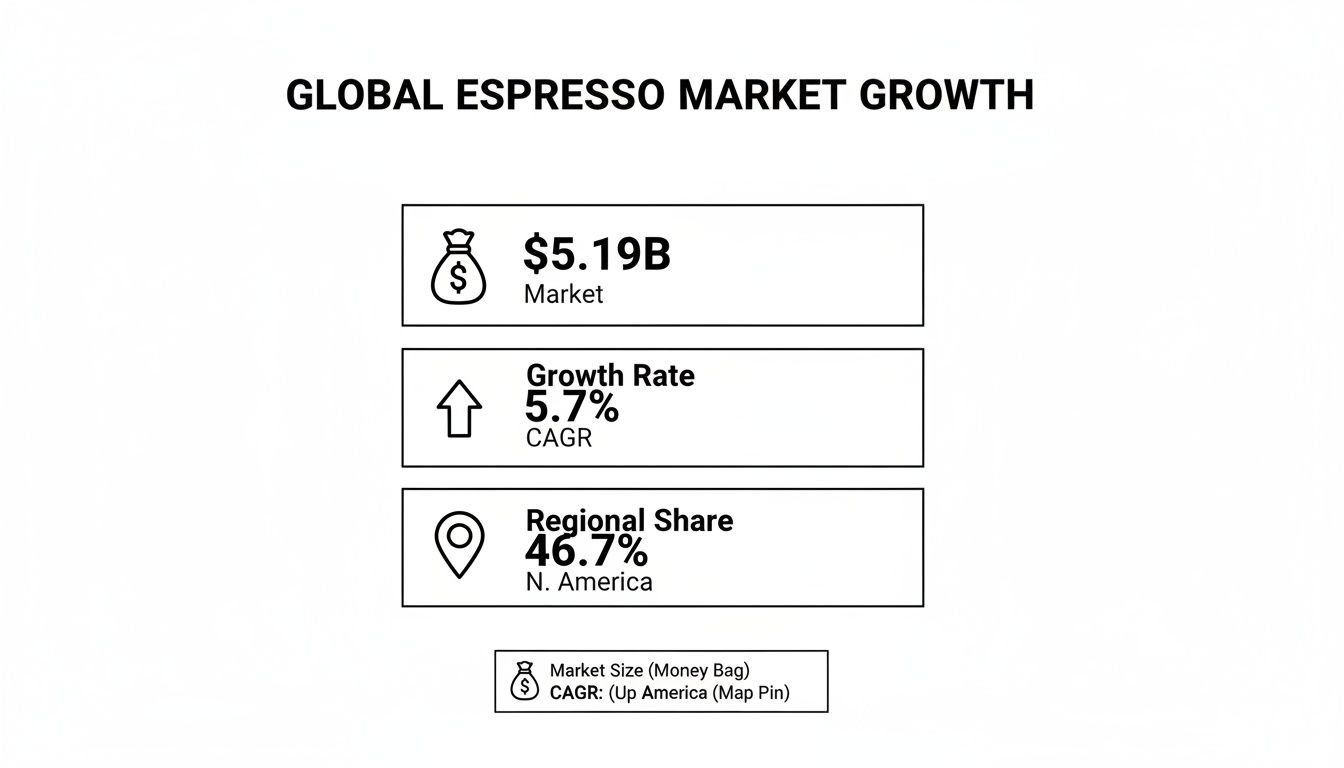
The data speaks for itself. The espresso market is booming, particularly in North America. Consumers are actively looking for higher-quality, authentic coffee, which creates a huge opportunity for cafés willing to showcase unique, heritage beans like Yemeni Mokha.
The Power of a Well-Executed Dark Roast
Think about the coffees that dominate the espresso market. They are often darker roasts, prized for their bold, caramelized flavors that punch through milk in lattes and cappuccinos. The market data backs this up—the global deep roast espresso market was valued at around $110 billion recently and is projected to climb toward $150 billion, growing at a steady 5.5% CAGR. You can find more details in this deep roast market analysis.
This is where Yemeni coffee truly excels. By skillfully extending the roast, you can develop those deep, roasty notes the market craves without completely sacrificing the bean's natural complexity. It’s a fine line to walk, but getting it right means you have an espresso that is both commercially smart and genuinely special. This is the heart of what we do at AQEEK: we blend market appeal with uncompromising quality. Master this roast, and you can build your entire brand on a single, incredible coffee.
The Post-Roast Rush: Cooling, Degassing, and Why Patience Pays Off
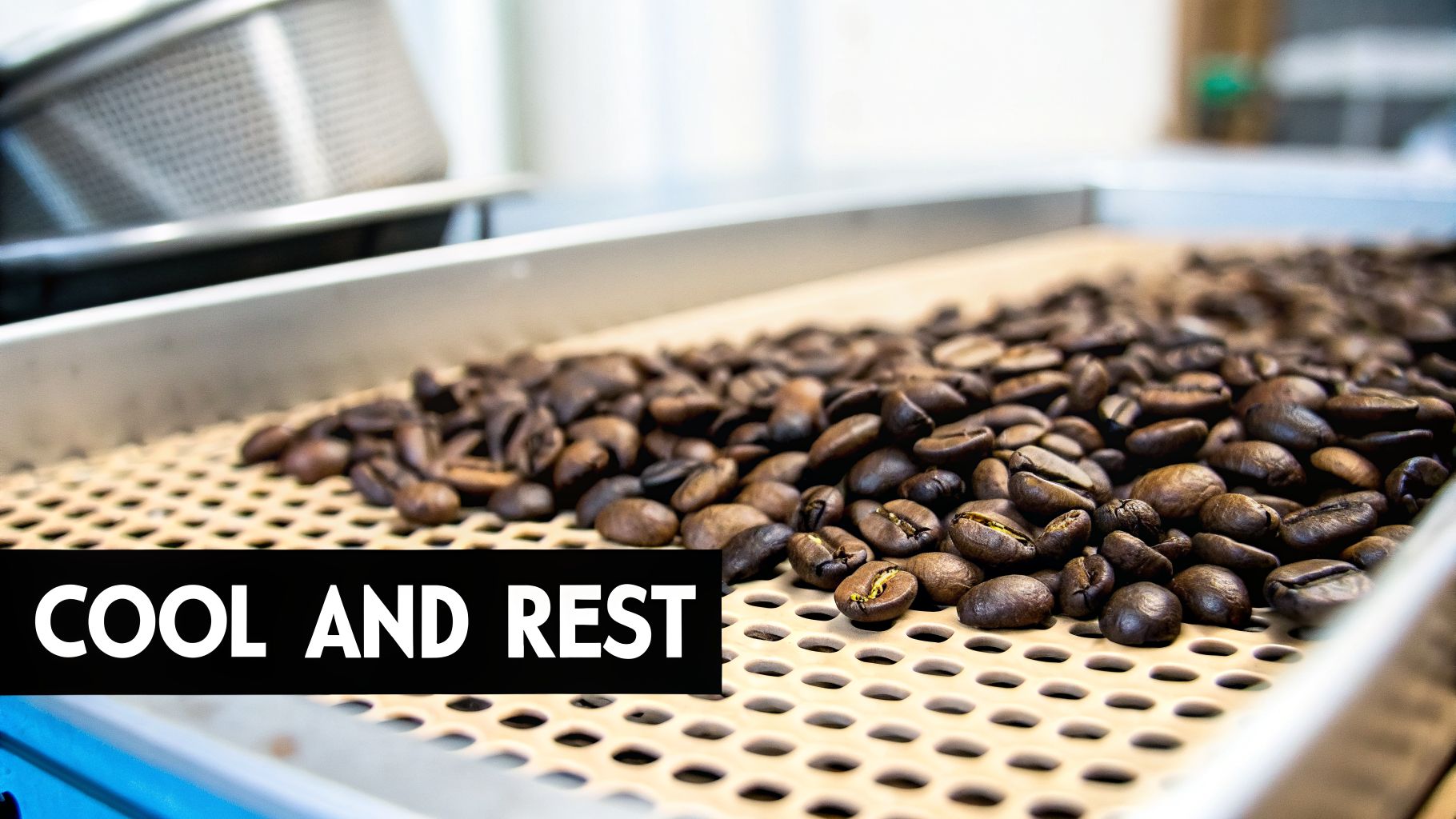
The moment you drop those Yemeni beans from the drum, the roast isn't over. Not by a long shot. You've just spent precious minutes hitting every mark—drying, Maillard, first crack—and now you have to slam on the brakes. This is cooling, and you have to get it right.
Think about it: those beans are still incredibly hot, packed with thermal energy. If you just let them sit, they'll keep right on baking. That slow, coasting heat is a flavor killer. It will absolutely flatten the bright, winey acidity and turn that deep chocolate complexity into something disappointingly generic. You need to cool your beans fast to stop the chemical reactions cold and lock in all the flavor you worked so hard to build.
The Problem With "Too Fresh" Coffee
Once the beans are cool to the touch, they might look and smell perfect, but don't even think about putting them in a grinder yet. They're not ready for an espresso machine. Freshly roasted coffee is pumping out a huge amount of carbon dioxide (CO2), a byproduct of all those reactions you just created. This degassing phase isn't optional; it's a mandatory rest period that makes or breaks your shot.
When you roast espresso beans, especially a dense and complex coffee like a Yemeni, a lot of pressure gets trapped inside. If you try to pull a shot too soon, all that CO2 escapes violently during extraction and creates a mess.
I've seen it a thousand times at the bar. Here's what happens when you brew with under-rested beans:
The Crema-cano: You get a ridiculous, bubbly crema that looks like a science experiment. It’s huge, airy, and gone in 30 seconds.
Chaotic Extraction: The CO2 release blows tiny holes in your puck, a problem called channeling. Water rushes through these channels, leaving the rest of the coffee under-extracted. The result is a sour, thin, and wildly inconsistent shot.
Muted Flavors: The carbonic acid from all that CO2 in the cup just tramples all over the delicate flavors you’re trying to showcase.
For a coffee with the heritage and depth of a Yemeni Mokha, letting it rest is about showing respect for the bean. You need to give it time for the harsh, gassy compounds to blow off so the true character can finally shine through.
At AQEEK, if there's one thing we've learned from working with our 67+ partner cafés, it's that patience during degassing is the final, most important ingredient. We’ve dialed in the exact timeline these unique beans need to hit their peak.
Our Proven Resting Protocol for Yemeni Espresso
After years of trial and error in real-world café environments, we've developed a non-negotiable standard for our Yemeni espresso. It's a simple rule, but it’s a core part of the Standard Operating Procedures for every single café we work with.
We insist on a rest period of at least 7 to 10 days before any Yemeni beans touch an espresso grinder.
This is the magic window. Before 7 days, the coffee is just too gassy and aggressive. You'll waste beans and frustrate baristas trying to dial it in. But somewhere between 7 and 10 days, the coffee settles down beautifully, delivering peak flavor clarity and incredible shot-to-shot consistency.
This isn't just about taste—it's about smart operations. A barista working with properly degassed coffee can dial in their shots quickly, wastes less product, and serves a consistently great cup. It’s a small act of patience that ensures every customer gets to experience the true soul of Yemeni coffee: that rich, chocolatey, wine-like history in a cup.
From Roast to Revenue: The AQEEK Café Model
So, you've taken your Yemeni beans through a perfect roast, carefully managed the cooling, and given them the proper time to rest. Now what? This is where the craft of roasting transforms into the engine of a profitable business. A brilliant roast is only half the battle; its true value is realized when it creates revenue and builds a loyal following. That’s the entire philosophy behind the AQEEK Café Model.
We’ve seen this model help launch over 67 successful coffee shops. The concept is surprisingly simple but incredibly powerful: build your entire brand and menu around a single, flawlessly executed Yemeni espresso roast.
The Power of a Single, Perfected Roast
Many new cafés make the mistake of trying to be everything to everyone, offering a dozen different origins and roasts. This often just dilutes the brand and confuses customers. The AQEEK model flips that script. We champion the idea of perfecting just one thing.
By pouring all your energy into a signature Yemeni espresso, you create an identity that's impossible to ignore. This one roast becomes the solid foundation for an incredibly diverse—and profitable—drink menu. In fact, from this single espresso base, we’ve developed recipes for over 166 unique beverages. You can serve a traditional shot that sings with the bean’s heritage one moment, and a complex, layered signature drink that commands a premium price the next.
The AQEEK model isn’t just about making great coffee; it's about building a high-performance business. By standardizing your core ingredient, you create a system that is efficient, scalable, and incredibly profitable. This is how cultural authenticity meets measurable success.
Operational Efficiency Through Roast Consistency
In any café, one of the biggest silent killers of profit is inconsistency. Think about it. When baristas are constantly fiddling with the grinder, pulling shot after shot just to dial in a new or unpredictable coffee, you're bleeding resources. You lose time, you lose product, and you lose money.
This is where a consistently roasted and properly rested bean becomes your operational superpower. Our partner cafés report an immediate 25-40% boost in operational efficiency right after they adopt our standards for Yemeni espresso.
That’s a huge jump, and it comes from a few key places:
Faster Service: Baristas get their grinders dialed in fast, which dramatically speeds up the workflow, especially during that morning rush.
Reduced Waste: Consistent beans mean far fewer "sink shots." This directly cuts down on coffee waste, a saving that can add up to thousands of dollars a year.
Predictable Quality: Every customer gets the same fantastic experience, every single time. That’s how you build trust and turn first-time visitors into regulars.
This efficiency isn't magic. It's the direct result of mastering the roast and respecting that crucial degassing period. The science you apply in the roastery has a direct, measurable impact on your business's bottom line.
Turning Heritage into a High-Performance Business
The demand for exceptional coffee isn't going anywhere. This is a space where the science of roasting—dictating everything from crema thickness to flavor concentration—meets the art of hospitality. The global roasted coffee market hit a massive $35.6 billion in 2024 and is on track to hit $51.8 billion by 2034, with espresso's dark roasts leading the way. Remember, during roasting, those beans lose 15-20% of their weight as moisture evaporates, which is what helps create that velvety body we all chase in a great espresso. You can find more data on the growing roasted coffee market on intelmarketresearch.com.
The AQEEK model gives you a unique way to tap into this market. You’re not just another café; you're offering an authentic taste of Yemeni coffee culture, delivered with modern, razor-sharp precision. Your passion for the history and flavor of Mokha becomes your biggest business advantage.
You stop selling a simple commodity and start offering an experience—one rooted in centuries of tradition but perfected for today's palate. Customers will come for the story but stay for the incredible flavor. If you're ready to build a brand like that, start with the right foundation. You can explore our Yemeni green coffee beans available by the pound and begin connecting your passion for the perfect roast directly to your revenue.
Yemeni Espresso Roasting: Your Questions Answered
Roasting coffee from a place as legendary as Yemen isn't just another day at the office. You’re working with a piece of history, and that often raises some great questions, especially when you're trying to pull a perfect espresso shot from these ancient beans. Based on our work here at AQEEK, we've pulled together answers to the most common things we hear from fellow roasters and cafe owners.
The character of Yemeni coffee is a direct result of its harsh, arid homeland and traditional natural processing. This gives you an incredible opportunity for amazing flavor, but it also comes with a bit of a learning curve. If you understand what makes these beans tick, you can unlock something truly special.
How Does Yemeni History Influence Roasting Today?
The story of Yemeni coffee is one of resilience. For hundreds of years, these plants have grown on stunning, high-altitude terraces and been dried with the whole cherry intact, right under the sun. This natural processing is the key to everything. It’s where the coffee develops that unmistakable winey body and deep, fruity sweetness you just don’t get from a washed coffee.
This history has a direct impact on how we roast. A naturally processed Yemeni bean has so much going on inside; it's not like a clean, predictable washed coffee where you can just aim for a specific temperature and call it a day. The real art is in coaxing out that inherent fruit and spice without letting the roast itself take over. That means you have to be really tuned into the Maillard reaction and manage a steady, controlled development after the first crack begins.
Why Do Coffee Shops Struggle with Consistency?
So many cafes, even ones with incredibly talented baristas, fight to keep their espresso consistent. More often than not, the problem isn't the barista—it's the beans. If the coffee hasn't been properly rested, you're setting your team up for a frustrating shift. Freshly roasted coffee is packed with CO2, which causes havoc at the espresso machine: wildly inconsistent shot times, channeling, and a sharp, sour taste.
The roaster's job doesn't end when the beans are bagged. A huge part of our role is showing cafes how to best use the finished product. In our work with over 67 partner shops, the single biggest game-changer for flavor and consistency was establishing a strict resting period for our Yemeni espresso.
This is non-negotiable for dense, naturally processed beans from Yemen. They need a longer degassing period—a bare minimum of 7 to 10 days—to really hit their stride. Once a café team understands and respects this timeline, dialing in shots becomes quicker, waste drops, and every customer gets that same amazing cup. It’s a simple change that makes a world of difference.
What Is the Role of AQEEK in Modern Coffee Shops?
At AQEEK, we don't think of ourselves as just coffee suppliers. We're partners in building a unique brand. Our job is to connect Yemen's ancient coffee traditions with the real-world needs of a modern, high-volume cafe. We do that by offering a complete system built around a single, exceptional Yemeni espresso.
Here’s what that partnership looks like:
Sourcing and Roasting: We source incredible heirloom Yemeni varietals and craft roast profiles that are not only delicious but also consistent and easy to work with behind the bar.
Training and Menu: We offer certified barista training and have developed over 166 unique signature drink recipes that show just how versatile our coffee is.
Operational Support: We help our cafe partners fine-tune their workflow and bar layout, often leading to efficiency gains of 25-40% that directly boost their bottom line.
In short, we provide the blueprint for a cafe to build its entire brand around the compelling story and unforgettable taste of real Mokha. It’s about taking a passion for authentic coffee and turning it into a successful, culturally rich business.
Ready to build your café’s brand on a foundation of authentic heritage and unparalleled flavor? AQEEK Coffee provides the beans, training, and operational support to turn your vision into a high-performance business. Discover how we can help you start your Mokha Renaissance by visiting our website.
