

If you ask a seasoned barista for an espresso recommendation, you'll likely hear a consensus: stick with medium to dark roasts that have a gentle, low acidity. Beans from places like Brazil or those crafted in a classic Italian style are fantastic starting points. They consistently deliver those rich, bold chocolate and caramel notes that define a great shot, complete with a thick, velvety crema. This profile is wonderfully forgiving, making it a reliable choice for home enthusiasts and bustling cafés alike.
What Makes a Coffee Bean Great for Espresso?
Finding the best coffee beans for espresso isn’t about discovering one "perfect" bean. It's about understanding which coffee characteristics can handle the intense environment of an espresso machine. Unlike drip or pour-over methods that gently coax out flavor, espresso is a high-pressure, high-speed affair that magnifies every single quality of the bean.
Think of it as putting a microphone to the coffee's soul—every nuance, good or bad, gets amplified.
The goal is a concentrated shot that’s sweet, balanced, and full-bodied, without the harshness of sour or bitter notes. This balance is tricky to achieve. A bean that produces a delicate and floral pour-over might turn into a sharp, unpleasantly acidic espresso. That’s why roasters dedicate so much effort to selecting and blending beans specifically to shine under pressure.
The Core Elements of Espresso Beans
As more people chase that perfect café-quality shot at home, understanding these details has become crucial. The global espresso market hit USD 10.8 billion and is expected to climb to USD 19.5 billion by 2032. With North America holding a 35.5% market share, it’s clear that consumers are serious about premium coffee.
To pull a shot that lives up to that demand, you need to focus on three key pillars:
Roast Profile: This is your number one consideration. Medium-dark to dark roasts are ideal because the extended roasting time caramelizes the bean’s natural sugars. This process dials down acidity and develops those deep, comforting flavors of chocolate and toasted nuts.
Body and Mouthfeel: A truly great espresso has a heavy, almost syrupy texture that coats your tongue. This satisfying weight comes from the bean’s density and the natural oils that are more present in these roast profiles.
Flavor Complexity: Low acidity doesn't mean boring. You're still looking for depth and character. The best espresso beans offer notes of rich caramel, dark chocolate, and roasted nuts, sometimes with a subtle hint of dark fruit to keep things interesting without adding any sharpness.
This diagram helps visualize how these crucial factors—flavor, roast, and body—all work together.
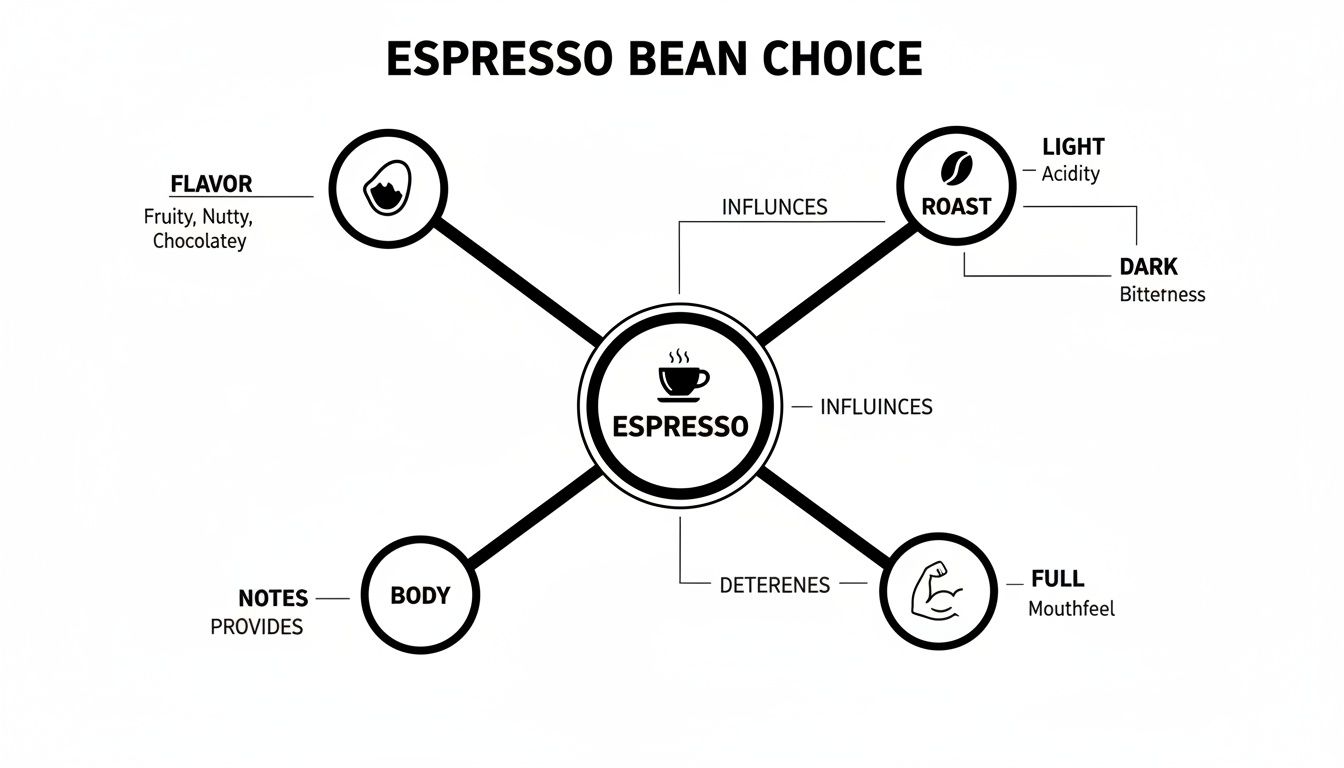
As you can see, each element is connected. Adjusting one will inevitably impact the others, ultimately shaping the final taste and feel of your espresso. Getting these fundamentals right is the first big step toward pulling consistently delicious shots and is central to understanding what is specialty coffee and what makes a bean truly great.
Key Characteristics of High-Quality Espresso Beans
To make things even clearer, here’s a quick-reference table that breaks down the essential qualities to look for when you're buying beans for your espresso machine.
Characteristic | What to Look For | Why It Matters for Espresso |
|---|---|---|
Roast Level | Medium-dark to dark | Reduces acidity, enhances sweetness, and develops rich, deep flavors like chocolate and caramel. |
Acidity | Low to moderate | High acidity becomes harsh and sour under the pressure of espresso extraction. |
Body | Full and viscous | Creates the signature syrupy, mouth-coating texture that defines a well-pulled shot. |
Flavor Profile | Notes of chocolate, nuts, caramel | These flavors are classic for a reason—they produce a balanced, crowd-pleasing, and comforting espresso. |
Freshness | Roasted within the last 2-3 weeks | Freshly roasted beans retain the CO2 and volatile oils essential for a thick, stable crema and vibrant flavor. |
This table serves as a solid checklist. Whether you're a home barista or a café owner, keeping these five characteristics in mind will guide you toward beans that are set up for success from the start.
How Roast Profiles Shape Your Espresso Shot
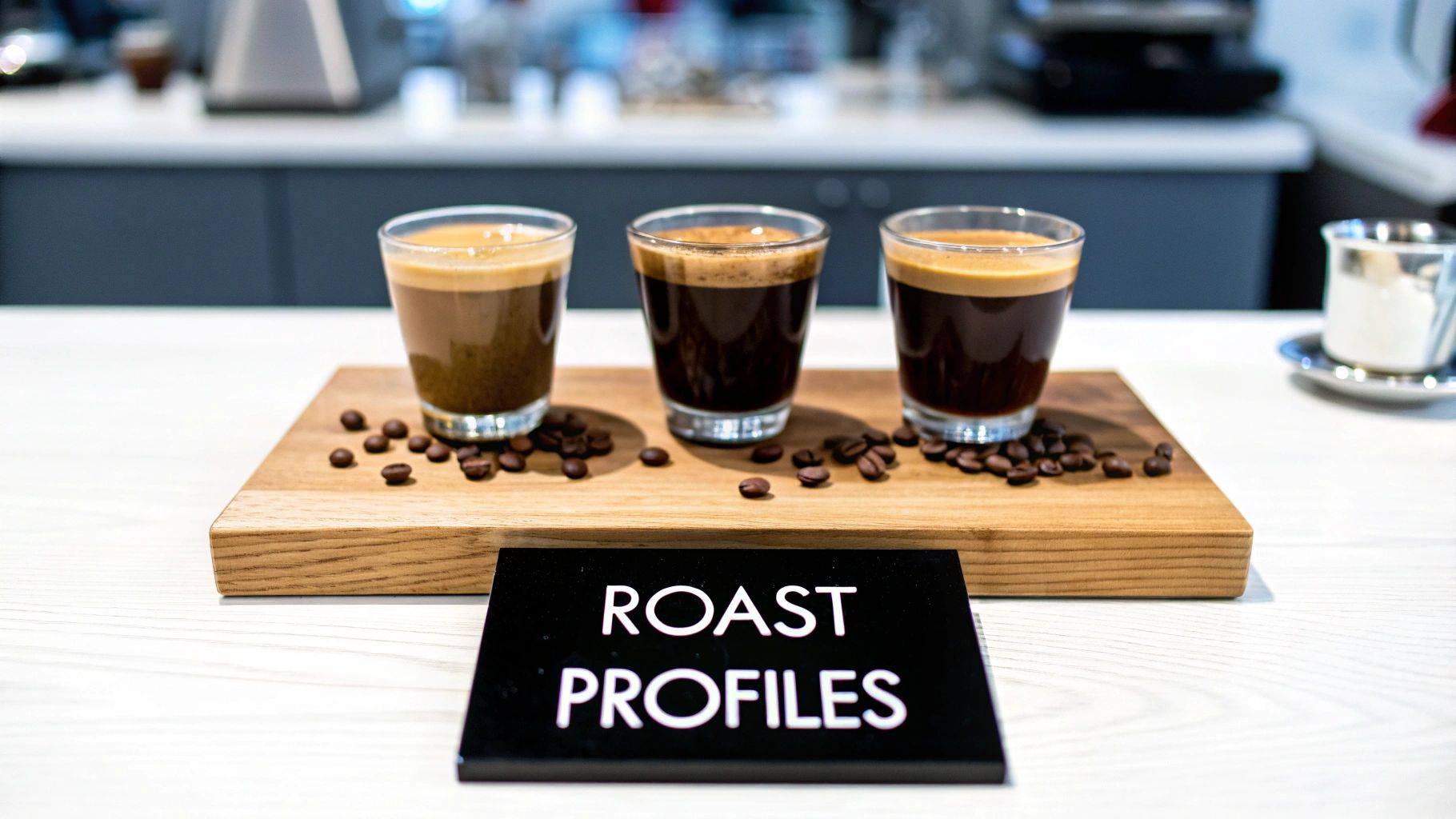
The roast level is, without a doubt, the single biggest factor in how your espresso will taste. Think of it like cooking a steak. A light roast is like a rare steak—it showcases the inherent, nuanced flavors of the origin. You get all the bright, complex, and acidic notes of the bean itself.
But under the intense pressure of an espresso machine, that brightness can quickly turn into aggressive sourness if your technique isn't spot-on. It’s a high-wire act. Pulling a great light roast shot is incredibly rewarding, but it demands serious skill and the right gear.
A dark roast, on the other hand, is like a well-done steak. The roasting process has caramelized the sugars, mellowed out the acidity, and developed those deep, rich flavors we all know and love: chocolate, caramel, and toasted nuts. This process also coaxes the bean's natural oils to the surface, which is the secret ingredient for that thick, stable, and beautiful crema we chase.
Why Medium to Dark Roasts Are the Classic Choice
For years, the gold standard for espresso has been a medium-dark or dark roast. And for good reason. It's not just about tradition; it’s about practicality, especially if you want consistent results, whether you're a home barista or running a busy café.
Simply put, these roasts are much more forgiving.
Their lower acidity and increased solubility mean they extract easily and evenly. You can get a beautifully balanced, sweet shot even if your grind is a little off or your tamp isn't perfect. This reliability is why they're often considered the best coffee beans for espresso for anyone who wants a dependable, crowd-pleasing cup.
Here’s why these traditional roasts just work:
Rich and Stable Crema: The oils on the surface of darker beans are essential. During extraction, they emulsify to create that thick, lasting layer of crema that looks and tastes amazing.
Balanced Flavor: They consistently deliver those classic, comforting espresso notes of dark chocolate, toasted nuts, and deep caramel that most people expect and enjoy.
Milk-Friendly: The bold flavors are a perfect match for milk. They slice right through it in lattes and cappuccinos, so the coffee flavor never gets lost.
The whole point of a traditional espresso roast is to create a coffee that’s soluble, low in acidity, and full-bodied. This ensures that under 9 bars of pressure, the shot extracts smoothly, giving you a sweet, syrupy coffee and avoiding that sharp sourness that plagues underdeveloped shots.
The Rise of Light Roast Espresso
Lately, the specialty coffee world has gotten hooked on the challenge of light roast espresso. Top baristas and coffee nerds are chasing the unique, vibrant flavors you can only find in lighter roasts—we're talking bright citrus, delicate florals, and juicy berry notes. These are the flavors that get roasted away in darker profiles.
But pulling a great shot of light roast espresso is a completely different ballgame. These beans are physically denser and less porous, which makes them tougher to grind and extract properly. It’s a real technical challenge.
To get a light roast espresso that isn't just a sour mess, you generally need a few things:
A High-Performance Grinder: You need something that can grind incredibly fine and uniformly without creating a lot of heat, which can ruin the flavor.
Advanced Machine Control: The ability to play with pre-infusion, pressure profiles, and water temperature isn't a luxury here; it's a necessity to coax out sweetness.
Precision and Patience: Dialing in a light roast takes time. You have to be willing to tweak your dose, yield, and shot time meticulously to find that sweet spot.
When you nail it, a light roast espresso is an unforgettable experience. It’s a pure expression of the bean's origin. But it’s a different philosophy—one that prioritizes terroir and complexity over the classic, comforting profile. For most people, starting with a forgiving medium-dark roast is the smartest way to get delicious results without all the frustration.
The Role of Origin and Bean Variety
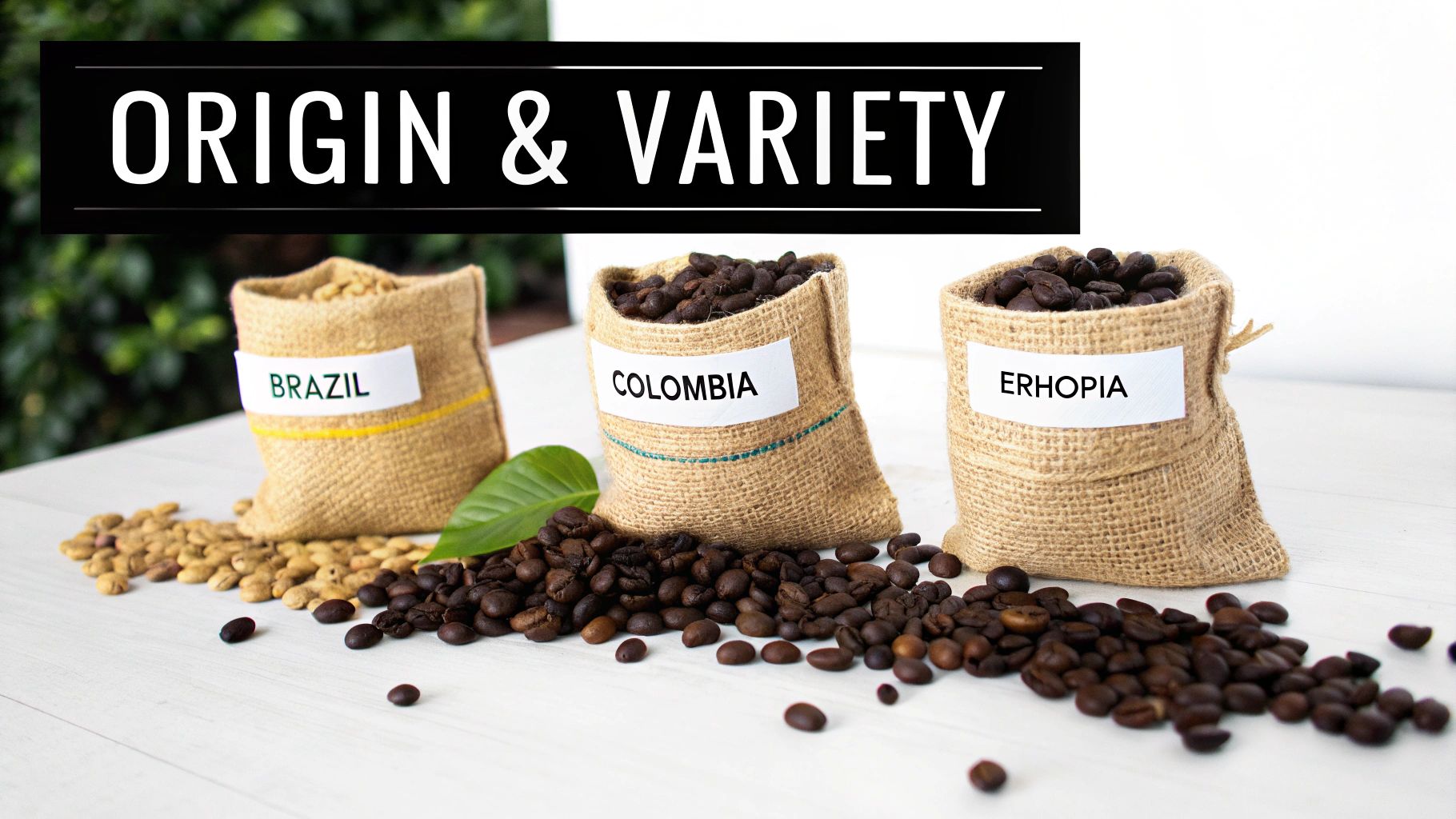
Just like the soil and climate shape the taste of a great wine, a coffee bean is a direct reflection of its home. We call this concept terroir, and it’s the single biggest reason why beans from different corners of the world taste so incredibly different. The origin listed on your bag of coffee isn’t just a location—it’s a preview of the flavors waiting inside.
A bean grown in the high-altitude volcanic soils of Guatemala will have a completely different personality than one harvested in the sprawling, sun-drenched fields of Brazil. Everything from the rainfall patterns to the specific minerals in the earth contributes to the final taste. Choosing the best coffee beans for espresso often begins by simply figuring out which of these regional "personalities" you enjoy most.
This geographic influence is then shaped by the bean's genetics—its variety. The two big players on the world stage are Arabica and Robusta, and their differences become crystal clear when put under the intense pressure of an espresso machine.
Arabica: The Flavorful Heart of Espresso
When you imagine a specialty coffee bursting with complex aromas of fruit, flowers, or rich sweetness, you're thinking of Arabica. This is the variety that dedicated cafés and roasters build their entire espresso programs around.
Arabica beans love high altitudes. The cooler temperatures slow down their growth, giving the coffee cherries more time to develop complex sugars and acids. This results in a cup that’s far more aromatic, nuanced, and sweet. As global coffee production is set to hit a record 178.8 million bags, it’s no surprise that Arabica makes up around 69% of that total. Its superior flavor profile, ranging from deep chocolate to bright berries, makes it the gold standard for quality espresso. You can dig deeper into global coffee production trends from Verena Street.
In an espresso shot, this translates to a layered and fascinating experience. You might taste rich dark chocolate from a Brazilian Arabica or vibrant, jammy notes from an Ethiopian one. Its lower caffeine content and smoother body make it the perfect choice for a straight shot where flavor is the main event.
Robusta: The Powerhouse of Crema
If Arabica is the nuanced artist, Robusta is the powerhouse athlete. Grown at lower altitudes in hotter climates, Robusta beans are known for their bold, potent, and straightforward character. They pack nearly double the caffeine of Arabica and are, as their name suggests, far more resilient plants.
In the world of espresso, Robusta’s superpower is its incredible ability to produce a thick, stable, and long-lasting crema. This happens because it has fewer oils (lipids), which allows the foam to hold its structure beautifully. This is exactly why traditional Italian espresso blends often include a small amount of high-quality Robusta, typically around 10-20%.
Robusta's role in an espresso blend is strategic. It adds a deep, earthy body, a powerful caffeine kick, and that iconic, picture-perfect crema. While rarely used as a single origin for specialty espresso, its contribution to a classic blend is undeniable.
The flavor is often described as rubbery or intensely chocolatey, with a distinctly bitter finish. While that might not sound appealing on its own, a little bit goes a long way. It adds a satisfying punch and a syrupy body that gives classic espresso blends their signature kick, cutting through milk perfectly in a latte or cappuccino.
A Journey Through Key Growing Regions
To see how origin truly shapes your shot, let's take a quick tour of some of the world's most influential coffee-growing regions. Each one brings something unique to the table, especially when brewed as espresso.
This guide provides a starting point for exploring the distinct personalities of single-origin beans.
Espresso Bean Origin Flavor Profile Guide
Origin/Variety | Primary Flavor Notes | Acidity Level | Body | Best For |
|---|---|---|---|---|
Brazil | Chocolate, Toasted Nuts, Caramel, Toffee | Low | Heavy | A classic, reliable base for blends; smooth, crowd-pleasing shots |
Colombia | Caramel Sweetness, Red Apple, Citrus | Medium | Medium | Balanced, smooth, and versatile shots that work well with milk |
Ethiopia | Blueberry, Strawberry, Jasmine, Bergamot | High | Light | Bright, vibrant, and complex straight espresso shots |
Yemen (Mokha) | Dried Fruit, Red Wine, Dark Chocolate, Spices | Medium-High | Syrupy | A truly unique, unforgettable shot with deep complexity |
Each origin offers a distinct fingerprint of flavor. By understanding these profiles, you can move beyond just buying "espresso beans" and start intentionally selecting coffees that will create the exact kind of shot you love.
Choosing Between Single Origin and Blends
When you're hunting for the best coffee beans for espresso, one of the first crossroads you'll hit is the choice between a single origin and a blend. Think of it like deciding between a solo artist and a full orchestra. Each gives you a completely different performance, and the right one really depends on what you want the final show in the cup to be.
A single-origin coffee is that solo artist. Every bean comes from one specific farm, cooperative, or region. Its entire purpose is to put the spotlight on the unique, unfiltered flavors of that one particular place—its terroir. Pulling a shot of a single-origin Ethiopian, for instance, is all about celebrating its signature blueberry and jasmine notes. It's a pure, transparent taste of origin.
A blend, on the other hand, is the symphony. Here, a skilled roaster acts as the conductor, hand-picking beans from different origins and weaving them together. The goal isn't just to highlight one flavor, but to create a final product that’s more harmonious, balanced, and consistent than any single bean could be on its own.
The Case for Espresso Blends
For most cafés and even home baristas, a good espresso blend is the dependable workhorse. It's the rock-solid foundation for a great coffee menu. Roasters craft blends for one main reason: to deliver a specific, repeatable flavor profile all year long.
Remember, coffee is a seasonal fruit. The flavors of a single-origin lot can shift from one harvest to the next. By blending, a roaster can swap out different components as new crops arrive, all while keeping that signature taste you rely on. For a café, that consistency is everything. A customer wants their favorite latte to taste just as good in December as it did in July.
Blends are also strategically built for balance. A classic espresso blend might be constructed like this:
A Brazilian Bean: For a heavy, chocolatey base and low acidity.
A Colombian Bean: To add layers of caramel sweetness and a touch of fruit.
An Ethiopian Bean: For a pop of bright, floral aromatics on the finish.
This teamwork creates a shot that is balanced, sweet, and complex. It's also engineered to shine in milk drinks, where those bold, foundational flavors have the muscle to cut through the richness of the milk without getting lost.
The Allure of Single Origin Espresso
While blends bring consistency, single origins bring excitement. They’re an adventure in a cup. A single-origin espresso offers a direct, unfiltered taste of a specific corner of the coffee world, showcasing vibrant and sometimes wild flavors that would be smoothed over in a blend.
This is where you can truly educate your palate. Pulling single-origin shots lets you directly compare the zesty, citrus notes of a washed Kenyan coffee against the deep, wine-like fruit of a natural-processed Yemeni Mokha. It’s a purist’s game, one that celebrates the incredible diversity coffee has to offer.
The catch? Single origins can be finicky. Their brighter acidity and more delicate, nuanced flavors are often trickier to extract perfectly. They also don't always play as nicely with milk; their unique character can sometimes clash or just disappear completely.
For a café, single-origin espressos are the perfect "guest" or "featured" offering. They generate buzz, give regulars a reason to try something new, and let baristas share the story of a specific farm. That story adds a ton of value to the customer's experience.
Building a Balanced Espresso Menu
So, which path do you take? For most cafés, the smartest strategy is to walk both. This approach gives you the best of both worlds, appealing to different tastes and creating a more dynamic menu.
Your House Espresso: Make this a reliable, crowd-pleasing blend. It’s the backbone of your menu—the go-to for lattes, cappuccinos, and flat whites. Its consistency ensures every customer gets that same great experience, every single time.
Your Rotating Single Origin: This is your "wow" factor. Dedicate a grinder to a new single origin every few weeks. It keeps the menu fresh, engages curious customers, and gives your baristas a chance to geek out and share their passion.
By pairing a steady blend with a rotating cast of unique single origins, you build a coffee program that is both rock-solid and genuinely exciting. You’ll satisfy the loyal regulars and intrigue the coffee connoisseurs looking for their next great discovery.
Why Processing Methods Matter for Flavor
Long before a coffee bean ever tumbles into a hot roaster, its fundamental flavor has already been decided. It all comes down to the processing method—how the fruit of the coffee cherry is stripped away to get to the seed, or bean, inside.
Think of it like the difference between a fresh grape and a sun-dried raisin. They both start as the same fruit, but the journey they take creates two completely different flavors. Understanding these methods is crucial if you want to select the best coffee beans for espresso to match the taste you're aiming for. Each technique sets the stage for a unique performance in the cup.
Washed Processing: The Clean Slate
Washed, or wet, processing is all about precision and clarity. Right after being picked, the coffee cherry’s skin and fruity pulp are scrubbed off completely with water before the bean is dried. This thorough washing removes almost all of the fruit's direct influence, leaving behind a clean slate.
What you get is an espresso that showcases the pure, unadulterated flavors of the bean's origin and variety. Expect crisp acidity, bright floral notes, and a clean finish. This method lets the coffee’s inherent terroir shine through, with no fruity layers from the cherry to get in the way.
Washed processing creates a transparent flavor profile. It highlights the bean's intrinsic qualities, making it a favorite in regions like Colombia and Kenya, where producers want to showcase the unique, vibrant character of their high-altitude coffees.
Natural Processing: The Fruit Bomb
Natural processing, sometimes called the dry method, is the oldest and most direct approach. Instead of being washed, the entire coffee cherry is laid out on raised beds to dry in the sun, with the bean still tucked inside. Over several weeks, the fruit ferments and imparts its intense sugars and flavors right into the bean.
This creates a wildly different espresso experience. You can expect a heavy, syrupy body bursting with bold, jammy fruit flavors like strawberry or blueberry, often with a distinct wine-like sweetness. It’s a method that adds a ton of character, and you'll often find it used for beans from places like Ethiopia and Yemen.
The home espresso market is absolutely booming, with nearly 70% of global drinkers now brewing at home. This trend is fueling a huge demand for unique specialty beans—like naturally processed Yemeni Mokha, whose dense, wine-like profiles are perfect for a rich, complex espresso. This shift is a big deal in the coffee market, which is projected to reach $485.59 billion. Learn more about the growth of the specialty espresso market.
Honey Processing: The Perfect Hybrid
Honey processing strikes a beautiful balance between the washed and natural methods. The cherry skin is removed, but a specific amount of the sticky, honey-like mucilage is intentionally left on the bean as it dries. How much mucilage is left determines the final flavor, creating a spectrum from white and yellow honeys (cleaner) to red and black honeys (fruitier).
This nuanced approach yields an espresso with a lovely sweetness, a rounded body, and subtle fruit notes that are less intense than a natural but more present than a washed coffee. It's a fantastic example of the innovation that defines the industry, echoing the principles found in the 4th wave coffee movement.
Putting It All Together for Your Café
Choosing the right coffee beans is just the starting line. The real magic happens when you build a system to turn those incredible beans into a profitable and respected café program. This is where theory hits the daily grind—bridging the gap between great ingredients and a consistently fantastic product.
Think about it: the most amazing coffee in the world can be completely ruined by a poor setup or an untrained hand. On the flip side, a well-trained team can take a good, solid blend and make it sing.
A truly successful espresso program stands on three pillars: smart sourcing, relentless quality control, and serious barista training. Nail these, and every shot you pull will live up to the bean's potential and keep your customers coming back.
Building Your Sourcing Strategy
Your relationship with your coffee roaster should be a true partnership, not just another transaction on an invoice. A great roaster does more than just sell you beans. They’re a resource—offering insights on new origins, providing training support, and helping you tell a compelling story about what’s in your grinder.
When you’re vetting suppliers, look for transparency and a rock-solid supply chain. For your main house espresso, a reliable blend is almost always the smart move. It delivers the consistency people crave in their daily latte or flat white.
To keep things interesting, you can bring in a rotating single-origin as a "guest espresso." This creates a bit of buzz and shows off your shop's coffee chops, attracting those who are a little more adventurous with their coffee.
Daily Quality Control Is Non-Negotiable
Consistency is what separates the pros from the amateurs, and it doesn't happen by accident. It’s earned through strict daily routines. The first thing on your opening checklist, every single day, should be "dialing in" the espresso. This means fine-tuning the grind to hit that sweet spot for extraction time, usually somewhere between 25-30 seconds.
This daily ritual is crucial because so many things can throw off your grind, from the humidity in the air to the temperature in the café. Yesterday's perfect setting might not cut it today.
Quality control is a constant loop: weigh, grind, tamp, pull, and taste. Then do it all over again. Every single shot should be tasted, especially at the start of a shift. It's the simplest and most effective way to catch a problem before it ever reaches a customer.
The Critical Role of Barista Training
Investing in your baristas is a direct investment in your café's reputation. A skilled barista isn't just a coffee-maker; they understand the science of extraction and can adapt on the fly to get the best out of any bean. Their training needs to go way beyond pouring pretty latte art—it has to be a deep dive into the fundamentals.
Dosing and Distribution: Using the right amount of coffee every time and making sure it’s evenly distributed in the portafilter is step one for a balanced shot.
Tamping Technique: A firm, level tamp is essential. It creates a uniform puck of coffee for the water to pass through, preventing weak or bitter shots.
Extraction Monitoring: Great baristas watch the shot as it pulls. They look for visual cues—the color, the flow rate—and can diagnose problems in real-time.
When you combine this technical skill with great milk steaming, your entire menu gets an upgrade. For a deeper look into that side of things, check out our guide on selecting the best milk for latte art.
Ultimately, a well-trained team is more efficient, wastes less product, and creates an experience that turns first-time visitors into regulars.
Espresso Beans: Your Questions Answered
Diving into espresso is a fun journey, but it’s natural to have a few questions along the way. Whether you're a home enthusiast trying to perfect your morning shot or a café owner dialing in a new grinder, these are the answers to the questions we hear most often.
What Roast Level Is Best for Espresso?
Technically, you can pull a shot with any roast level. But for that classic, rich, and syrupy espresso experience, a medium-dark to dark roast is almost always your best bet.
Roasting to this level tones down the bright, sharp acidity and brings out deep, sweet flavors like chocolate, nuts, and caramel. These roasts are also more soluble and forgiving, making it much easier to pull a balanced shot without it tasting sour. Light roasts can make fantastic espresso, but they demand a high-end grinder and a lot of patience to get right.
Should I Use a Single Origin or a Blend for Espresso?
This really boils down to what you're after. Think of a blend as the reliable foundation of an espresso program. Roasters craft blends to deliver a consistent, balanced, and harmonious flavor profile that tastes great every single day, especially in milk drinks like lattes or cappuccinos.
A single origin, on the other hand, is an adventure in a cup. It’s all about showcasing the unique, distinct flavors from one specific farm or region—the terroir. These coffees are brilliant for straight espresso shots where you want that "wow" factor, but they can be a bit more finicky to work with and their flavor profile can change from season to season.
For most people, a well-crafted blend is the perfect starting point. It offers the consistency you need to hone your technique while producing a delicious, crowd-pleasing coffee that works beautifully on its own or with milk.
Do I Really Need an Espresso Grinder?
In a word, yes. If you’re serious about making great espresso, a proper grinder is non-negotiable.
Espresso extraction relies on forcing hot water through a tightly packed puck of coffee at high pressure. To create enough resistance for this to work, you need an incredibly fine and consistent grind. A standard blade grinder or a basic burr grinder just can't get you there—the particles are too uneven. Your shots will gush out, resulting in a thin, sour, and disappointing cup. A dedicated espresso grinder is probably the single most important investment you can make for your setup.
How Long Do Espresso Beans Stay Fresh?
Coffee is a fresh product, and its flavor peaks surprisingly quickly. For espresso, the sweet spot is typically between 3 days and 3 weeks after the roast date.
This window gives the beans just enough time to de-gas (release the CO2 built up during roasting) while still holding onto all the delicate aromatic oils that create amazing flavor and a thick, beautiful crema. Once you hit the one-month mark, you'll notice the beans start to taste flat and lifeless. Always check the "roasted on" date on the bag—not an expiration date—and buy smaller bags more frequently.
Ready to elevate your espresso program with beans that tell a story? AQEEK Coffee specializes in sourcing legendary Yemeni Mokha and providing end-to-end support for cafés, from certified barista training to signature menu development. Discover how our heritage beans and industry expertise can transform your coffee offerings at https://aqeek.com.
