
Today's coffee shops are more than just places to get a caffeine fix; they're becoming cultural hubs. Tapping into the ancient tradition of Yemeni coffee is a brilliant way to create a concept that feels both fresh and deeply rooted in history. By blending the heritage of Mokha with modern café culture, you're not just opening another coffee shop—you're building a destination with a story people will want to be a part of.
1. Crafting Your Yemeni Coffee Shop Concept & Brand
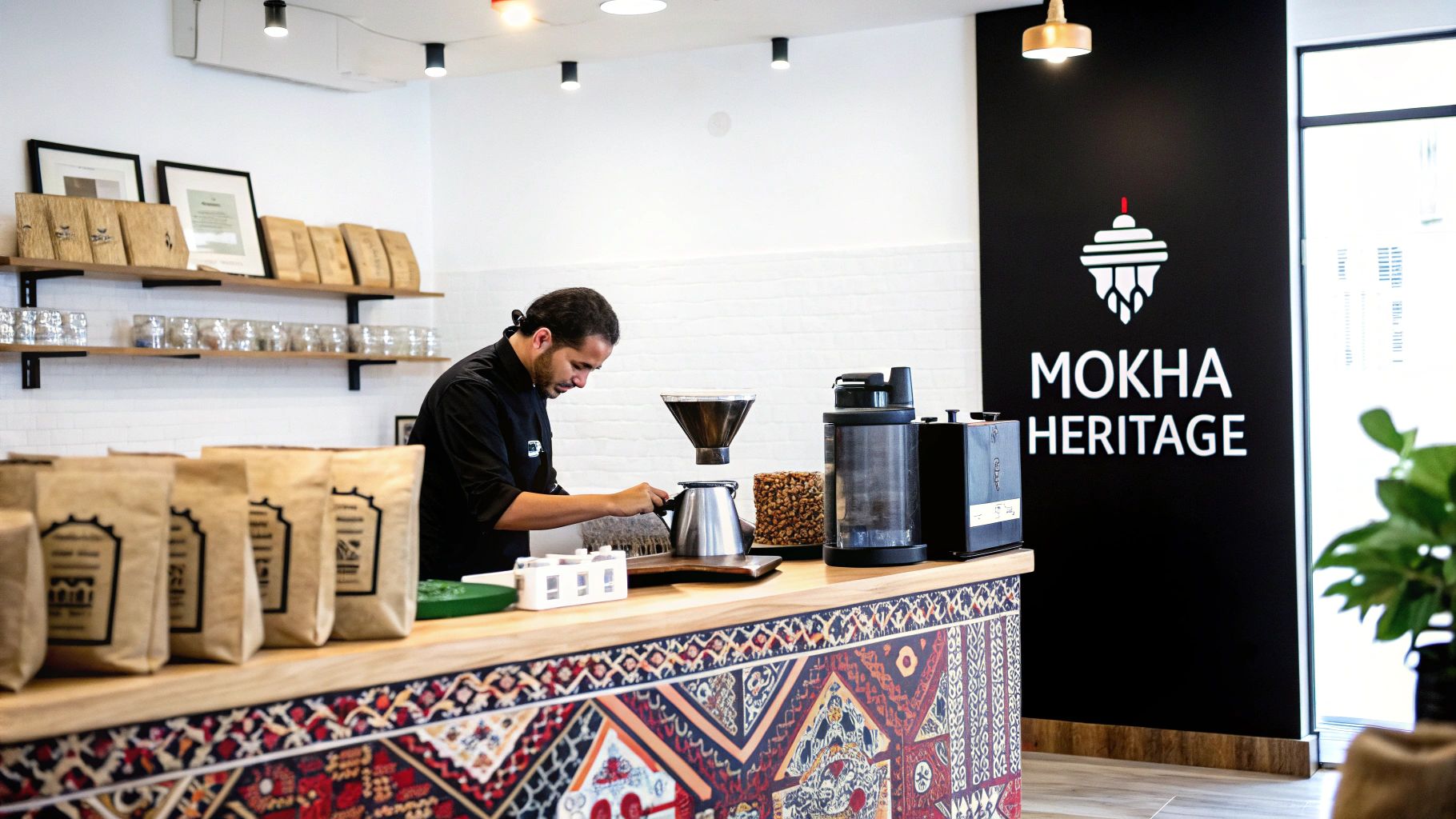
A killer coffee shop starts with a rock-solid vision. The market is flooded with cookie-cutter cafes, so a Yemeni-inspired concept immediately sets you apart. You're not just pouring coffee; you're sharing the legacy of Mokha, the world's original coffee port.
This story becomes the heart of your brand. It's the filter through which you'll make every decision, from the color of your walls to the text on your menu. The goal is to build a space that feels both timeless and perfectly suited for today, where age-old traditions meet contemporary tastes.
Who Are You Brewing For?
Before you pick out a single coffee cup, you need to know exactly who you're trying to attract. Your ideal customer isn't just grabbing an espresso on the run. They're curious, they value quality, and they're looking for an experience.
Think about who might walk through your door:
The Cultural Explorer: This person is hungry for authentic experiences. They want to hear about the specific farming regions in Yemen and learn the stories behind traditional brewing methods.
The Coffee Aficionado: Already deep into the world of specialty coffee, this customer will be fascinated by the rare and complex flavor profiles of Yemeni coffee—think dried fruit, wine, and exotic spices.
The Community Seeker: They're searching for a comfortable, inspiring spot to work, meet friends, and feel a sense of connection. For them, the vibe is just as important as the brew.
Knowing these people helps you design an experience that feels like it was made just for them, turning first-time visitors into loyal regulars.
Weaving Your Brand Story
Your brand story is what gives your shop its soul. It's the thread that connects your mission back to the Mokha renaissance and explains what makes your coffee so damn good. This narrative needs to be everywhere—on your website, in your social media, and in the way your baristas talk about the daily specials.
Frame your shop as more than a business. It's a cultural embassy, bringing the legendary taste of Yemeni coffee to a new audience. This transforms a simple cup of coffee into a meaningful experience.
The global coffee shop market is enormous, valued at USD 220.41 billion in 2024 and expected to hit USD 290.24 billion by 2032. This is great news for specialty shops. By focusing on a unique niche like Yemeni coffee, you can carve out a loyal following with a premium, story-driven offering and build a brand that truly stands out.
Designing a Space That Blends Heritage With Efficiency
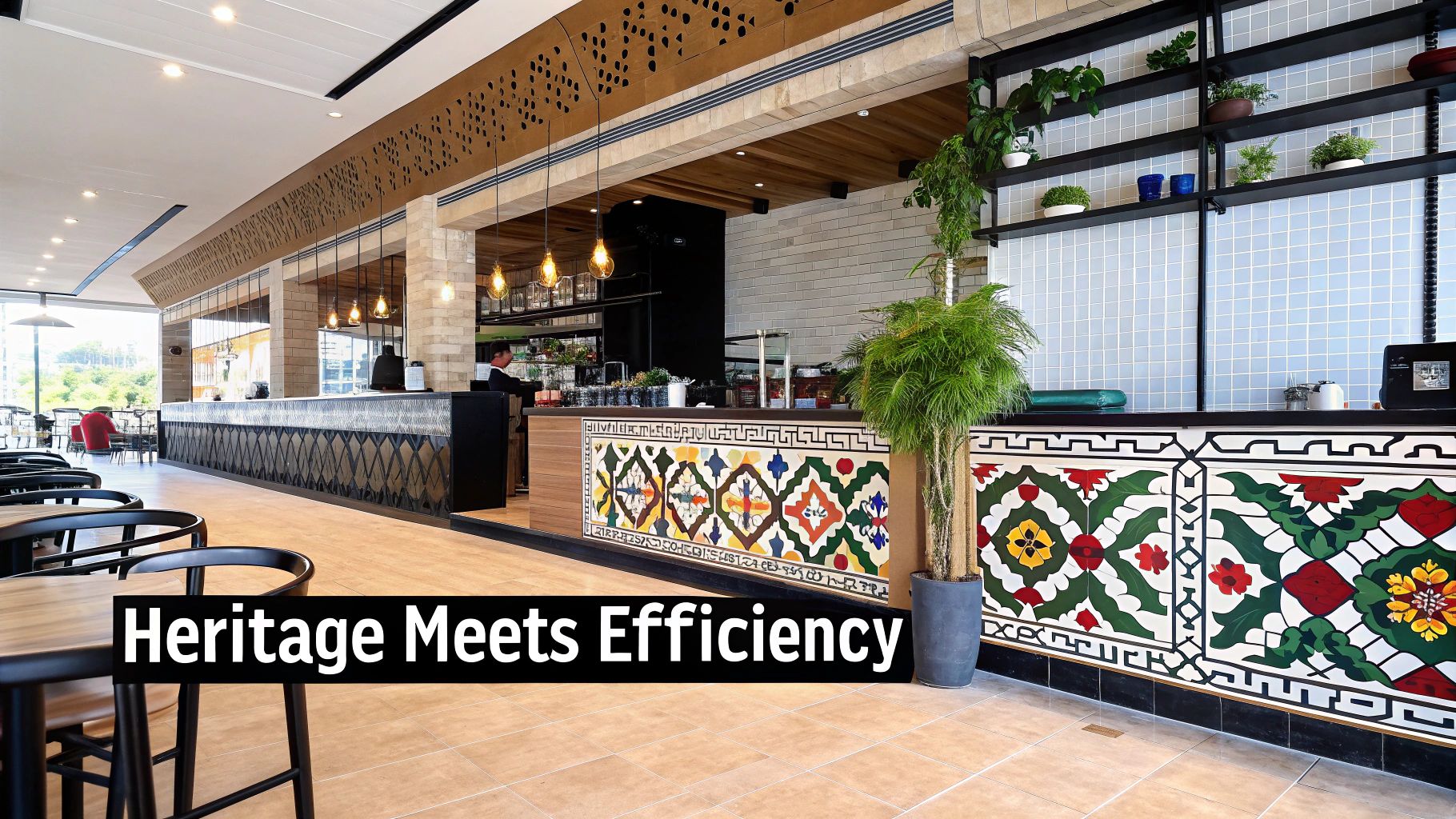
Your coffee shop's physical space is your brand story told in three dimensions. For a modern Yemeni coffee shop, the real challenge is creating an atmosphere that feels both ancient and contemporary. It's about designing a place where rich heritage meets the clean lines and operational hustle of today’s best cafes.
This isn’t about recreating an old souk; it's about translating cultural motifs into a fresh, inviting, and incredibly functional setting. The magic happens when you weave authentic Yemeni aesthetics into a modern design, creating a space that captivates people from the moment they walk in.
Infusing Yemeni Culture into Modern Design
The soul of your shop’s design is in the details. By thoughtfully choosing materials, colors, and patterns, you can evoke a sense of Yemeni culture without the space feeling dated or cluttered. The key is to strike a perfect balance, blending ornate traditions with minimalist sensibilities.
Here are a few core elements to get you started:
Earthy Tones and Textures: Build your color palette around warm, natural hues like terracotta, sand, and deep browns. Then, bring in pops of vibrant jewel tones—think sapphire blue or emerald green—as accents. Incorporate materials like raw wood, plaster-textured walls, and hammered brass or copper to add genuine depth and warmth.
Intricate Geometric Patterns: Use traditional Yemeni patterns, like qamaria stained glass or geometric tilework, as statement pieces. This could be a stunning tiled back bar, a laser-cut wooden screen separating seating areas, or even custom upholstery on your benches.
Warm, Layered Lighting: Stay away from harsh, uniform lighting. Instead, use a mix of ambient, task, and accent lighting to create mood. Ornate lanterns can cast intricate shadows, while modern spotlights can highlight the bar and retail displays, creating a cozy yet dramatic vibe.
Comfortable, Communal Seating: Traditional Yemeni gatherings are communal at heart. You can reflect this with a smart mix of seating, including low benches with plush cushions, large shared tables for groups, and intimate nooks for quieter conversations.
The goal is to create an immersive environment that transports your guests. It’s not just about aesthetics; it’s about crafting a feeling—a sense of place and history that makes your modern coffee shop a memorable destination.
Engineering an Efficient Workflow
Let's be honest: a beautiful shop is useless if it’s a chaotic mess behind the counter. The best modern coffee shops are masterpieces of efficiency, designed from the ground up to support baristas and ensure smooth service, even during the morning rush. An optimized layout directly impacts your speed, order accuracy, and frankly, your team's sanity.
The "barista triangle"—the path between the espresso machine, grinders, and POS system—needs to be tight and unobstructed. Everything a barista needs to complete an order, from milk pitchers to syrups and lids, has to be within arm's reach. This kind of intentional design shaves seconds off every drink, which adds up to huge gains over a busy day.
Creating Distinct Zones for a Better Customer Experience
A well-designed space naturally guides customers through their visit, preventing bottlenecks and improving the overall atmosphere. You need to think of your layout as a customer journey from start to finish.
The Arrival and Ordering Zone The entrance should flow directly to the ordering counter. Make sure there’s enough room for a line to form without blocking the door or creeping into seating areas. Your menu board should be big, clear, and easy to read from anywhere in the queue.
The Preparation and Pickup Zone This is critical. Designate a clear area for customers to wait for their drinks that is separate from where people are ordering. This "handoff plane" prevents a crowd from forming at the register and keeps the whole operation moving smoothly.
The Seating and Socializing Zone This is where you deliver on comfort and vibe. Offer a variety of seating to cater to different people—solo guests with laptops, small groups catching up, and larger communal tables. This is also your chance to create those "Instagrammable" corners with unique decor or perfect lighting that will get people sharing photos of your shop online.
Building Your Menu and Sourcing Key Equipment
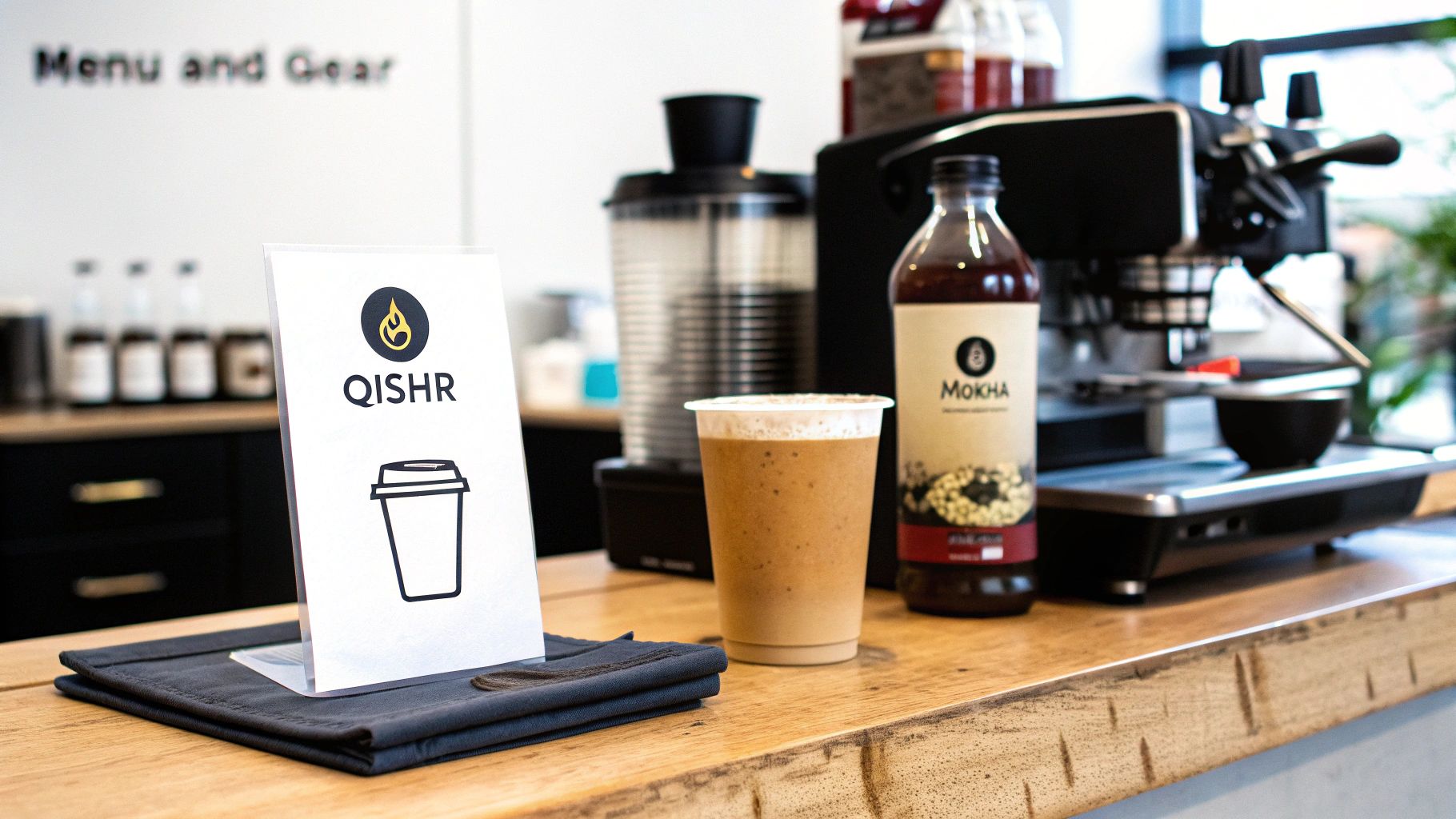
You’ve nailed down your concept and designed a space that feels right. Now comes the fun part—the heart and soul of your business. This is where you decide what you'll serve and how you’ll make it.
Your menu is where your brand story truly comes to life, turning the rich history of Yemeni coffee into drinks people will line up for. Just as crucial is the hardware behind the counter. The grinders, brewers, and espresso machines are the tools you'll use to transform those incredible beans into liquid gold.
It's this dual focus on creative menu development and smart equipment sourcing that separates the truly memorable modern coffee shops from the rest. You're respecting tradition while using the best tools available to deliver amazing quality, every single time.
Crafting a Menu That Tells a Story
A great Yemeni coffee shop menu is a curated experience. It needs to be inviting for newcomers but also satisfying for coffee lovers who know their stuff. The trick is to build a core menu that balances authentic Yemeni drinks with modern coffee classics that have a unique, regional twist.
Start with the essentials, the foundational pillars of Yemeni coffee culture:
Qahwa: This is the traditional, lightly roasted coffee infused with spices, central to Yemeni hospitality. Make sure you serve it in small, handleless cups (finjan) to give customers that authentic tasting experience.
Qishr: A completely different take, Qishr is made from the dried husks of coffee cherries and brewed with spices like ginger and cinnamon. It’s a lower-caffeine, tea-like drink with a flavor profile that’s a direct link back to the coffee fruit itself.
Mokha: The world might associate "mocha" with chocolate lattes, but your menu can reclaim its origin story. Offer a true Mokha made with Yemeni beans, highlighting their naturally complex, winey, and often chocolatey notes.
Your menu isn't just a list of drinks; it's a conversation starter. Each item is an opportunity to share a piece of history, explain a unique flavor, and deepen your customer's appreciation for what makes Yemeni coffee extraordinary.
Once you have this traditional base, you can start to innovate. Think about signature drinks that bridge the old and new—maybe a Cardamom Cold Brew or a Cinnamon Spiced Mokha Iced Latte. These familiar formats act as a gateway, inviting customers to explore the distinct spices and aromas of the region. Learning https://aqeek.com/blog/how-to-build-a-profitable-coffee-shop-menu-customers-crave is a critical next step to balance these creative ideas with high-margin classics.
Sourcing Your Essential Hardware
Yemeni coffee beans are special. They're often dense, small, and irregularly shaped because they’re grown at high altitudes and sun-dried. This means they demand specific equipment to get the best out of them. Your hardware choices will directly impact whether you can consistently extract their full, incredible flavor potential.
And the market is ready for it. Out-of-home coffee consumption is projected to hit USD 376.70 billion by 2025, blowing past at-home brewing. This trend highlights just how important it is to invest in reliable, high-performance equipment to capture your piece of the massive USD 380.22 billion pie that cafes are expected to command.
Essential Equipment for a Modern Yemeni Coffee Shop
Choosing the right tools for the job isn't just about buying the most expensive machine; it’s about choosing the right machine for your specific beans, menu, and workflow. This table breaks down some of the core equipment you'll need, comparing traditional methods with modern, high-efficiency options to help you decide where to invest.
Equipment Category | Traditional Yemeni Approach | Modern High-Efficiency Option | Key Consideration |
|---|---|---|---|
Coffee Grinder | Manual stone or hand-crank grinders for a coarse, uneven grind. | High-quality conical burr grinder (e.g., Mahlkönig EK43) with micro-adjustments. | Consistency is key. Yemeni beans are dense and varied; a precise grinder is non-negotiable for quality espresso and pour-over. |
Espresso Machine | Not traditionally used for Yemeni coffee preparation. | A dual-boiler, volumetric machine (e.g., La Marzocco, Slayer) for temperature and pressure stability. | You need a machine that can handle premium beans and deliver consistent shot volumes, especially during busy rushes. |
Traditional Brewer | Ibrik/Cezve pot, often heated over hot sand or an open flame. | A dedicated sand heater for ibriks to replicate the traditional brewing method safely and consistently. | This is an essential tool for authenticity. Offering sand-brewed coffee provides a unique theatrical and flavor experience. |
Manual Brewing | Basic filtering methods. | Modern pour-over drippers like the Hario V60 or Chemex. | Pour-over is perfect for showcasing the delicate, fruity, and floral notes of high-quality, single-origin Yemeni beans. |
Ultimately, having a mix of both traditional and modern equipment allows you to offer a full spectrum of experiences, from an authentic sand-brewed coffee to a perfectly pulled shot of espresso.
Forging strong relationships with trusted equipment suppliers is just as important as the gear itself. A good supplier isn't just a vendor; they're a partner who provides competitive pricing, installation, training, and reliable maintenance. That kind of support will be invaluable as your coffee shop grows.
Getting Your Daily Operations Down to a Science
Look, a killer concept and a drop-dead gorgeous interior are fantastic, but they don't mean a thing if the day-to-day execution is a mess. Your daily operations are the real engine of your coffee shop. This is where you turn that big, beautiful vision into a smooth, repeatable reality for every single person who walks through your door.
This is about so much more than just knowing how to pull a great espresso shot. It's about building a team that gets it, creating systems that guarantee consistency, and finding a rhythm that keeps the whole place humming, even when you've got a line out the door on a Saturday morning.
Train for the Craft, Not Just the Job
Your baristas aren't just making coffee; they're the storytellers, the ambassadors of this incredible coffee culture you're building. Their training needs to go way beyond basic latte art and grind settings. It has to be a deep dive into the history, the flavors, and the rituals that make what you're doing so special.
Think of this specialized training as the heart of your onboarding. It should cover:
The Origin Story: Every single person on your team should be able to confidently share the history of the coffee you serve, explaining what makes it different and why it matters.
Mastering Traditional Methods: If you're serving something unique like Qahwa or Qishr, your baristas need to master the art. They should know the specific spice blends, the proper brewing techniques, and the serving rituals by heart.
Talking About Taste: Get your team cupping coffee constantly. They need the right words to describe the unique notes—is it fruity, winey, spicy?—to customers who are curious and excited to learn.
When you invest in this level of training, you’re giving your team the tools to build real connections. A simple coffee order suddenly becomes a memorable experience.
Write Your Playbook
Consistency is everything in the coffee world. It's the non-negotiable foundation. The only way to nail it every time is by creating your Standard Operating Procedures (SOPs). This is your shop's playbook, the guide that ensures every drink, every interaction, and every task is done to your exact standard, no matter who's working the bar.
Think of your SOPs as the blueprint for excellence, not just a list of rules. They take the guesswork out of the equation, which cuts down on waste and frees up your team to focus on what really matters: incredible hospitality.
Your SOP manual should be a living, breathing document. Start by tackling these mission-critical areas:
Opening & Closing Checklists: Don't leave anything to chance. Create detailed, step-by-step lists for everything from calibrating the grinder in the morning to the final deep clean at night.
Recipe & Build Guides: Be hyper-specific. List precise measurements, exact grind settings, brew times, and presentation standards for every item. I highly recommend including photos of the finished product.
Customer Service Scenarios: Map out how you want your team to greet customers, explain the menu, handle common questions, and—just as importantly—resolve any issues with grace and professionalism.
This playbook is your secret weapon for quality control. It makes training new people a breeze and gives your entire team a clear standard to rally around.
Run Drills Like a Pro
Reading a manual is one thing. Performing flawlessly when the pressure is on is something else entirely. The best training programs I've ever seen all incorporate real-world simulations to get the team ready for the chaos of a real rush.
Before you open and as part of your ongoing training, run practice sessions. Seriously, have friends or other staff members act as customers. Have them order the most complicated drinks, ask tough questions, and even role-play a complaint. It might feel a little silly at first, but it's pure gold.
This is how your team builds muscle memory. It's how you spot bottlenecks in your workflow before they cost you money. It's how you build a crew that isn't just skilled, but confident, calm, and ready for whatever the day throws at them.
Integrating Tech and Retail for Sustainable Growth
To truly thrive, a modern coffee shop can't just be a place that serves great coffee. It has to be a brand that lives both inside its four walls and out in the digital world. This means getting smart with technology to make your operations smoother and building a solid retail program to tap into the massive at-home coffee market.
Ultimately, the goal is to evolve from a single-point-of-sale business into a multi-channel experience. Everything from your Point-of-Sale (POS) system revealing customer habits to your Instagram feed telling your shop's unique story works together to build a brand that’s both resilient and profitable.
Using Tech to Build Your Brand
The right tech isn't about just being faster; it's about being smarter. Think of your POS system as your command center. It gives you the real-world data on your busiest hours, which drinks are hits (and which are misses), and who your most loyal customers are. This isn't just trivia—it's gold. You can use it to fine-tune your staffing, keep the right inventory on hand, and create promotions that people actually want.
Beyond the counter, your digital presence is how you build a community. Platforms like Instagram and TikTok are tailor-made for showing off the Mokha renaissance. Post stunning photos of your unique brewing methods, the beautiful details of your shop's design, and the incredible journey your beans take from Yemen to the cup. When you lead with a story, you turn casual followers into dedicated customers who feel genuinely connected to your mission.
Your tech stack should do more than just process payments. It should give you the insights to make better business decisions and the tools to tell a story that captivates your audience, building a community that lasts.
The best shops run on well-defined systems. Having a clear, repeatable process for training, daily operations, and quality control is the secret to consistency. It’s what empowers your team to deliver excellence, every single time.
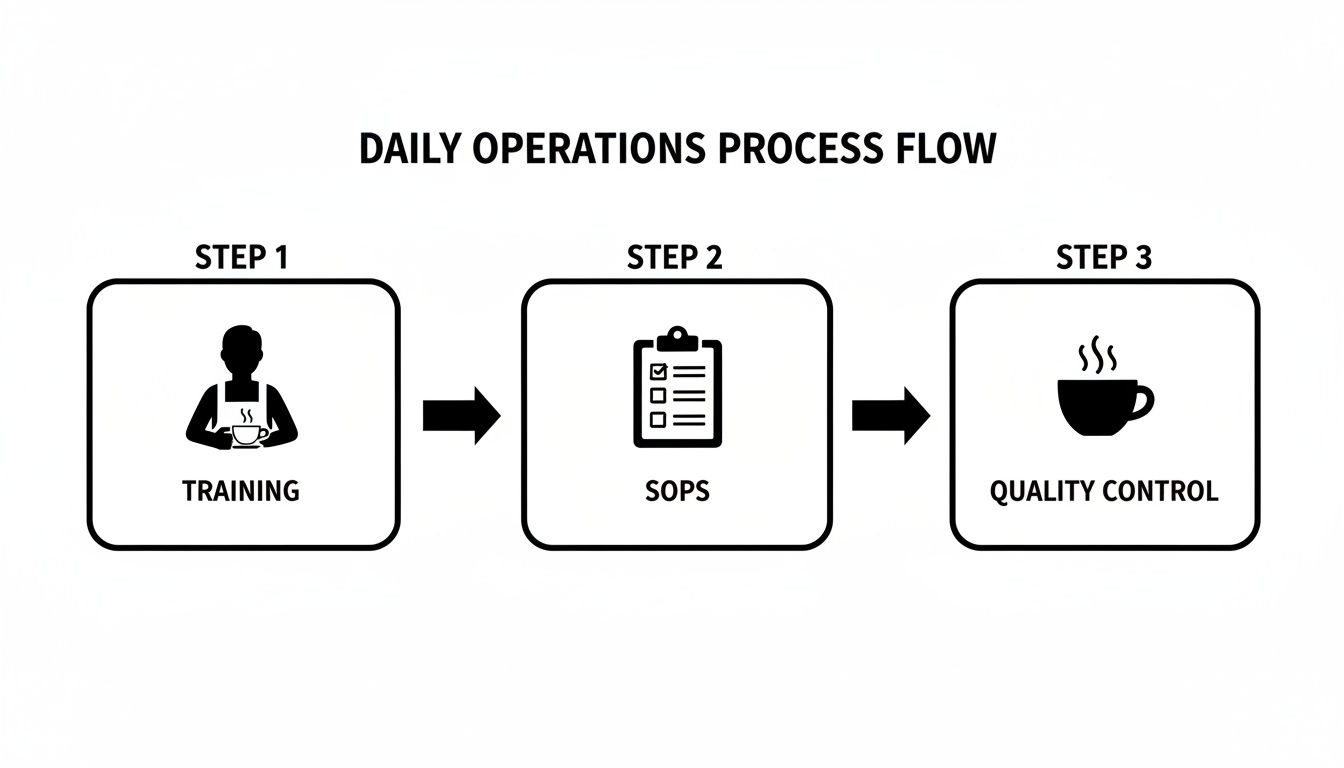
This kind of process flow shows that operational excellence doesn't happen by accident. It's the direct result of having strong systems in place.
Developing a Profitable Retail and Wholesale Program
Your retail shelf isn’t just a nice-to-have; it's a vital part of the brand experience. It’s your customers' opportunity to take a piece of your shop home, turning a one-off visit into a lasting relationship. The foundation of this, of course, is selling your own signature roasted Yemeni coffee beans.
Don't just slap a label on a bag. Invest in beautiful, high-quality packaging that tells a story. The design should echo your shop’s vibe and give customers the key info: the coffee’s origin, specific flavor notes, and a few recommended brewing methods. This level of detail transforms a simple bag of beans into a premium product people would be proud to gift.
Once your retail is dialed in, building a wholesale program is the natural next step to scale. The key is to start by partnering with other local businesses that care about quality as much as you do.
Local Restaurants: Offer to supply beans to restaurants that want to elevate their after-dinner coffee service.
Boutique Hotels: Work with hotels to become their in-room coffee provider or to be featured in their lobby cafe.
Gourmet Markets: Get your branded bags onto the shelves of specialty food stores where customers are actively seeking unique, high-end products.
This approach creates multiple streams of revenue. The global market for modern coffee shops is booming, with North America leading in premium spending and Europe being the fastest-growing market. We've seen this model work time and again—AQEEK Coffee, for instance, has helped with over 67 U.S. launches and trained more than 300 teams, proving that a strong concept can scale brilliantly.
Exploring a wholesale coffee partnership is a powerful way to get your brand into new spaces and in front of a much larger audience. The final piece of the puzzle is launching a simple e-commerce site to sell your beans and merchandise directly to customers anywhere, ensuring your business is built for long-term success both online and off.
Your Top Questions About Launching a Yemeni Coffee Shop
So, you're captivated by the idea of opening a Yemeni coffee shop. It's an incredible niche, steeped in history and flavor, but it’s definitely not your standard café venture. I've seen many entrepreneurs navigate this path, and the same crucial questions always come up. Let's break down what you really need to know.
How Can I Ethically Source Authentic Yemeni Coffee Beans?
This is the big one. Getting your hands on true, ethically sourced Yemeni coffee is the absolute foundation of your business. It’s not as simple as calling a major distributor; it’s about building real relationships with partners who live and breathe transparency.
Your first step is to find importers who specialize in Yemeni coffee. Don't be shy—ask them the tough questions. Who are the farmers? Can you provide traceability back to the specific region or even the farm? What are your logistics for getting beans out of the country? A reputable partner will have these answers ready.
The most critical part of this process? Always, always request samples for cupping. You need to taste the coffee yourself to verify the quality and flavor profile before you even think about placing a large order. Making ethical sourcing a non-negotiable part of your operation isn't just good for your conscience; it becomes the most powerful story your brand can tell.
What Are the Biggest Operational Hurdles for a Niche Coffee Shop?
The very thing that makes a Yemeni coffee shop special—its uniqueness—also creates some specific operational headaches that most modern coffee shops never face. From my experience, it boils down to three main challenges: staff training, inventory, and customer education.
Intensive Staff Training: Your baristas have to be more than just technicians; they need to be ambassadors. Training must go way beyond pulling a perfect shot. They need to understand the history of Yemeni coffee, master traditional brewing methods like the ibrik, and find the right words to describe flavors most customers have never experienced.
Complex Inventory: You can't just reorder beans and have them arrive in two days. Sourcing from a single, remote region means longer lead times and potential unpredictability. This forces you to be much more strategic with inventory, often holding more stock than you'd like and fostering rock-solid relationships with suppliers to mitigate delays.
Constant Customer Education: You're selling a premium, often more expensive, product. Your team's job is to gently and consistently explain why. From its ancient origins to its incredibly complex flavor notes, this education is what builds value in the customer's mind and justifies the price point.
Getting these right means committing to detailed Standard Operating Procedures (SOPs) and creating a culture where your team is always learning.
How Should I Market a Yemeni Coffee Shop to a Modern Audience?
Marketing a niche concept is all about storytelling and creating a sense of discovery. Your goal isn't just to sell coffee; it's to position your shop as a cultural destination people feel they have to check out.
Lean into highly visual platforms like Instagram and TikTok. Short, compelling videos are your best friend here. Show the mesmerizing process of sand-brewed coffee, the intricate spice-dusted latte art, the unique textures and details of your shop's interior. You're not just showing a drink; you're selling an entire experience.
Collaborating with local food and culture influencers can also be a game-changer. Find people whose audience truly values quality and authenticity. Invite them in for a private tasting, walk them through the history, and let them share their genuine excitement. It's one of the fastest ways to get your brand in front of the right people. Finally, bring the community to you with events like guided coffee tastings or brewing workshops to build a loyal local following.
What Is a Realistic Startup Budget for This Cafe Concept?
Alright, let's talk numbers. This is where things get real. A specialized concept like a Yemeni coffee shop requires a significant investment, typically ranging anywhere from $150,000 to over $500,000. Where you land in that range will depend entirely on your city, the size of your space, and how extensive the build-out is.
Your biggest expenses will be the commercial lease, architectural design, and construction. Because the aesthetic is so crucial to the experience, you should plan for a higher budget for custom finishes, authentic decor, and unique furniture that tells the story of Yemeni culture.
Your equipment list will also have some unique items. Beyond the top-tier espresso machine and grinders, you might need specialized gear like sand heaters for traditional brewing methods. And please, do not forget this part: have at least six months of operating capital tucked away. This safety net will cover rent, payroll, and inventory while you build your customer base and before you hit consistent profitability. A detailed business plan is non-negotiable.
Ready to turn your vision of a modern Yemeni coffee shop into a thriving reality? The team at AQEEK Coffee has spent nearly a decade perfecting the process, from concept to grand opening. With end-to-end support covering everything from certified barista training and menu development to equipment sourcing and operational consulting, we provide the blueprint for success. Explore how we can help you build your dream.
