

To truly understand Yemeni coffee, one must see it not as a mere beverage, but as a legendary treasure that literally shaped global trade and culture. Imagine coffee as an ancient, mystical commodity, born from the rugged highlands of a single nation. This is the profound legacy of Yemeni coffee—the true wellspring from which all coffee culture flows.
The Birthplace of Global Coffee Culture
Long before coffee shops became a modern staple, Yemen was the world's exclusive gateway to coffee. For centuries, its Port of Mocha was the bustling heart of a trade as valuable and prestigious as that of silk or spices. This historical dominance cemented Yemen's role as the cradle of coffee cultivation and commerce, a history that echoes in every cup.
Yemen's story with coffee is the stuff of legends. For nearly 200 years, until the late 17th century, it was the sole global source of coffee, with its highland regions dominating production and exports. Caravans laden with these precious beans journeyed from the iconic Port of Mocha to the Red Sea, and from there to cultural hubs like Cairo, Istanbul, and eventually Europe. The FAO Yemen Assessment Report on the coffee value chain offers a deeper look into this pivotal era.
The Mokha Renaissance
This rich heritage is not confined to history books. Today, a modern "Mokha Renaissance" is underway, connecting this deep history with the refined palates of the specialty coffee world. This movement is a dedicated effort to honor the traditions and stories packed into every single bean, ensuring the legacy of the world's original coffee thrives for a new generation.
At the forefront of this revival are organizations like AQEEK Coffee, which act as custodians of this heritage. Their role extends far beyond supply; they serve as consultants and storytellers, helping modern cafés build their brands around the authentic narrative of Yemeni coffee. AQEEK's mission is multifaceted:
Preserving Heritage: Working directly with farmers to protect ancient coffee varietals and time-honored cultivation methods.
Building Bridges: Forging transparent supply chains that link Yemeni farmers directly with coffee shops and enthusiasts across the globe.
Empowering Cafés: Providing training and operational support, giving coffee shop owners the tools to translate this ancient legacy into a distinctive and successful business.
This renewed focus on Yemeni coffee is a powerful fusion of history and ambition. It’s an effort to ensure the legacy of the world’s first coffee not only survives but thrives, offering an unmatched experience.
By acting as a bridge between ancient farms and modern cafés, AQEEK helps coffee shop owners understand that the history of Yemeni coffee is not just a backstory—it's their most valuable asset.
Growing Coffee Against All Odds
The story of Yemeni coffee is one of remarkable tenacity. It thrives in an unforgiving, arid landscape where most coffee varietals would perish. This agricultural miracle is a testament to centuries of human ingenuity, captured in the ancient terrace farms that cling to Yemen's rugged mountainsides.
These terraces are architectural wonders, carved into mountains over generations to prevent soil erosion and capture every precious drop of rainwater. This ancestral knowledge transforms steep, seemingly barren slopes into fertile ground, making coffee cultivation possible in one of the world's most challenging environments.
The infographic below highlights key milestones that cemented Yemeni coffee's legendary status.
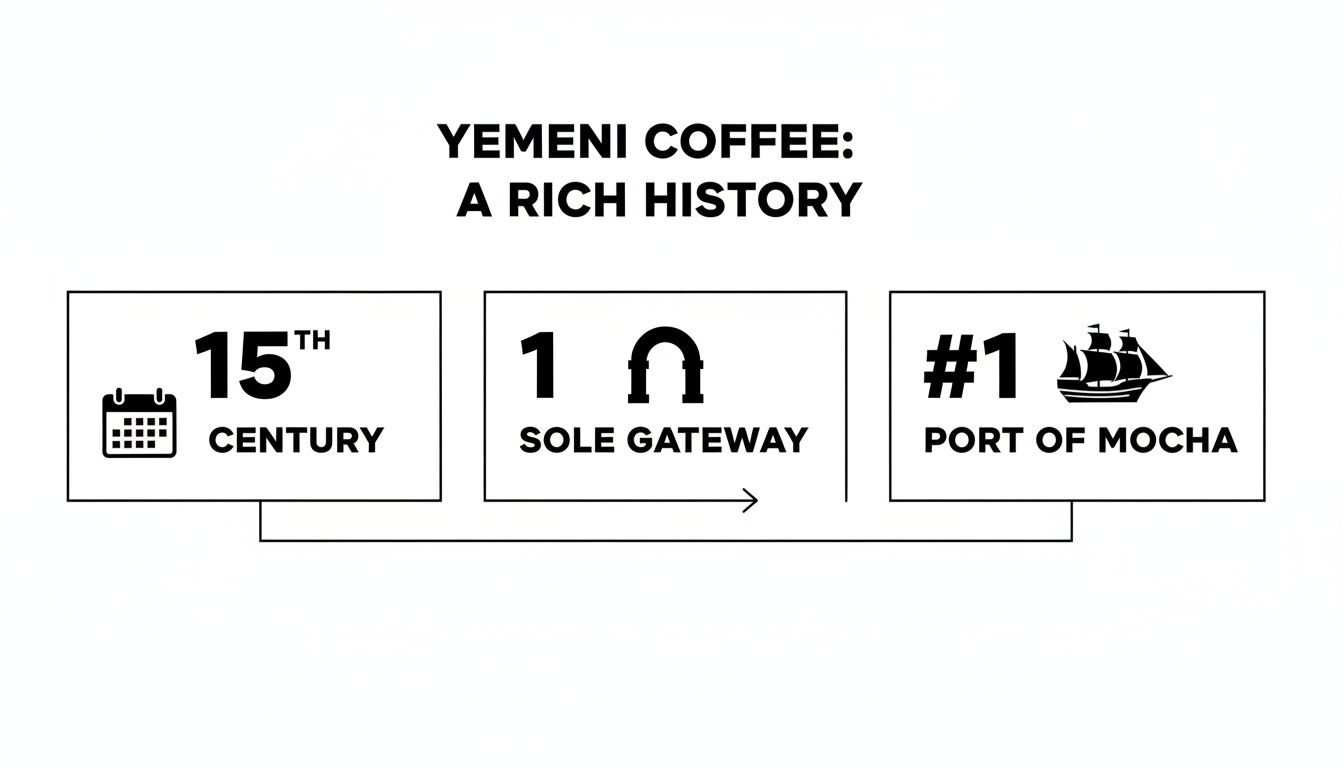
From its 15th-century beginnings to its global journey through the historic Port of Mocha, its deep roots in history are undeniable.
Guardians of an Ancient Tradition
At the heart of this story are Yemen's smallholder farmers. Their painstaking labor and deep connection to the land are the lifeblood of Yemeni coffee. The coffee sector involves over one million people, with women comprising an incredible 75% of the farming workforce.
They hand-pick cherished local varieties like Odaini, Tufahi, and Jaadi in a terroir that receives just 200-350 mm of rain annually—a fraction of what coffee typically needs. The Yemeni green coffee sector analysis offers great insights into the unique challenges they face. There is no industrial-scale farming here; it's all done by hand, with a level of personal care that is impossible to replicate in mass-market agriculture.
Yemeni Coffee Terroir vs Global Norms
To truly appreciate what makes Yemeni coffee so distinct, it helps to compare its unique growing conditions with more conventional specialty Arabica practices.
Attribute | Yemeni Coffee | Typical Specialty Arabica |
|---|---|---|
Altitude | Extremely high (1,500 - 2,500 meters) | High (900 - 1,800 meters) |
Rainfall | Extremely low (200 - 350 mm annually) | Abundant (1,200 - 2,200 mm annually) |
Farming Method | Ancient, rain-fed stone terraces | Modern monoculture plantations |
Soil | Nutrient-rich, but arid and rocky | Rich, loamy, volcanic soil |
Processing | Natural sun-drying (whole cherry) | Washed, honey, or natural methods |
Harvesting | Exclusively hand-picked by smallholders | Mechanical or selective hand-picking |
This table drives home how Yemeni coffee is a product of extremes. Every factor contributes to its one-of-a-kind profile.
The Art of Sun-Drying
The magic truly begins with the drying process. Unlike the common "washed" method, Yemeni farmers use an ancient, natural sun-drying technique. They spread the coffee cherries whole—fruit, skin, and all—on rooftops and raised beds to dry under the intense mountain sun.
This deliberate craft requires constant attention, as farmers turn the cherries by hand to ensure they dry evenly. As the fruit slowly desiccates, the bean inside absorbs all the sugars and complex flavor compounds from the surrounding pulp.
This sun-drying method is the secret behind Yemeni coffee's famously complex, fruity, and winey flavor profile. It's a taste that simply cannot be replicated by modern industrial methods.
The dried husk, known as qishr, is also a huge part of Yemen's coffee culture. It's often brewed into a fragrant, spiced tea-like drink, ensuring no part of the precious harvest goes to waste. This holistic approach reflects a profound respect for the crop and the land.
A Taster's Guide to Yemeni Coffee Flavors
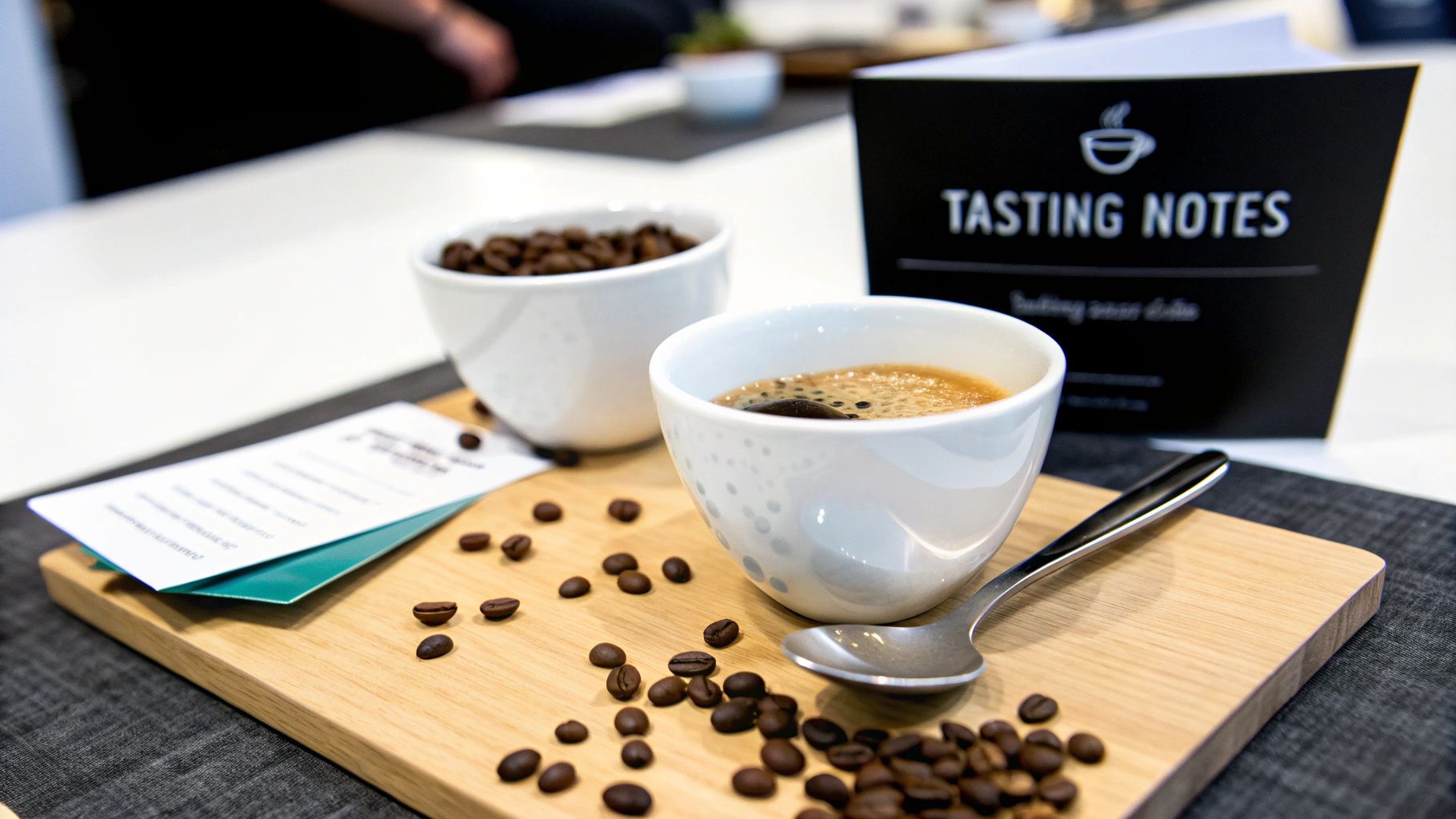
To taste true Yemeni coffee is to connect directly to the ancient, sun-drenched terraces where it begins its journey. If you’re used to the clean, bright acidity of a washed coffee, prepare for something entirely different. Yemeni beans offer a wild, complex, and deeply layered flavor profile that is utterly unique, a direct result of the traditional sun-drying process.
The Signature Yemeni Flavor Profile
When you first approach a cup of Yemeni coffee, expect a symphony of complex notes. While every harvest and micro-region has its own personality, several hallmark characteristics define the classic Yemeni cup.
Look out for these common tasting notes:
Dried and stewed fruits: A rich, jammy sweetness like raisins, dates, figs, and dried cherries.
Warming spices: Notes of cinnamon, cardamom, and even subtle hints of clove or nutmeg—a nod to the region's historic spice trade routes.
Rich chocolate and cacao: Ranging from dark baker's chocolate to sweeter notes of mocha.
Wine-like complexity: A distinct fermented, winey quality, similar to a full-bodied red wine, which gives it a sophisticated character.
This intricate profile is a direct product of Yemen's unique terroir and ancient traditions, concentrated into each bean by the high-altitude stress and meticulous sun-drying.
From Bean to Cup: The AQEEK Coffee Role
Understanding these flavors is one thing; consistently delivering them in a coffee shop is another. This is where a deep, personal connection to the source becomes essential. For a company like AQEEK Coffee, the mission goes far beyond importation; it’s about preserving the integrity of that flavor from farm to cup.
AQEEK’s role is to act as a bridge, translating the authentic story of Yemeni coffee for the modern coffee drinker. They work directly with farmers to protect quality and consult with cafés to ensure that quality is expressed perfectly. This translates into a rigorous focus on quality control and, most importantly, barista education.
A barista who can confidently describe the notes of dried fig and cardamom in a Yemeni pour-over isn't just selling a drink—they are sharing a piece of history and culture, elevating the customer experience from a simple transaction to a memorable discovery.
By training teams to identify and articulate these complex tasting notes, AQEEK helps coffee shops build a reputation for authenticity. They give baristas the language to explain why Yemeni coffee commands a premium price, turning its rarity and unique flavor into a compelling story.
Describing Yemeni Coffee to Your Customers
For cafe owners, learning to talk about Yemeni coffee is key. Use evocative language that tells a story and sparks curiosity.
Here are a few ways to frame the conversation:
Emphasize the Natural Process: "This coffee is naturally dried in the sun with the fruit still on the bean, which is why you'll taste those intense notes of dried cherry and raisin."
Connect to History: "You're tasting coffee from the oldest growing region in the world. That spice note you're getting reflects the ancient spice routes that crossed right through Yemen."
Use Relatable Analogies: "If you enjoy the complexity of a full-bodied red wine, you'll love the depth in this Yemeni coffee."
Mastering this narrative transforms a simple cup of coffee into a gateway to a rich cultural heritage, creating loyal customers who return for an experience they can’t find anywhere else.
The Art of Brewing Yemeni Coffee

Brewing beans as rare and complex as those from Yemen is the final, defining act. It’s about honoring centuries of tradition and coaxing out the rich fruit, spice, and wine-like notes that make this coffee legendary. A medium or medium-light roast profile is essential to preserve the delicate aromatics; roasting too dark would erase its unique identity.
Traditional Brewing: The Ibrik Method
In Yemen, coffee is a slow, deliberate social ceremony. The most classic method uses an Ibrik (or cezve), a small, long-handled pot, to create a rich, powerful, and unfiltered brew.
Grind: The beans are pulverized into an extra-fine powder, like flour.
Brewing: The coffee powder, water, and often spices like cardamom are combined in the Ibrik and gently heated until a thick foam forms, a process often repeated two or three times.
Serving: The coffee is poured into small cups, allowing the fine grounds to settle. The result is a strong, intensely flavorful, and almost syrupy cup.
This method delivers a direct taste of how coffee has been enjoyed in its homeland for generations. The traditional Yemeni coffee shop, or maqha, remains a cornerstone of social life, where stories are shared over strong, spiced coffee.
Modern Brewing: Pour-Over and Immersion
Modern methods like a V60 or AeroPress use a paper filter to produce a cleaner, brighter cup with stunning clarity, revealing subtle nuances. For a pour-over of Yemeni coffee, precision is key:
Grind Size: Start with a medium-fine grind, like table salt.
Water Temperature: Use water just off the boil, between 195-205°F (90-96°C).
Brew Ratio: A 1:16 ratio (1 gram of coffee to 16 grams of water) is a great starting point.
Technique: Pour slowly and evenly, allowing the coffee to "bloom" for about 30 seconds after the first pour to release trapped gases for a more even extraction.
For any café wanting to showcase these incredible beans, having the right setup is non-negotiable. This comprehensive coffee shop equipment list for new owners is a great place to start.
Weaving Mokha's Heritage into a Modern Café
How do you translate the ancient story of Yemeni coffee into a business that resonates with today's coffee lover? It requires building a brand that feels both timeless and fresh, honoring the legacy of the Port of Mocha while becoming a modern-day destination. Success isn't just about sourcing rare beans; it's about building an entire world around them.
AQEEK's Role: More Than Just a Bean Supplier
A thriving modern café built around Yemeni coffee needs more than a vendor; it requires a genuine partner. This is the philosophy behind the AQEEK Coffee method—a blueprint designed to build successful, distinctive café brands from the ground up by weaving the story of Mokha into the very fabric of the business.
AQEEK provides comprehensive support covering all critical bases:
Certified Barista Training: Equipping your team to be storytellers who brew Yemeni coffee with skill and share its history with passion.
Signature Menu Development: Helping you create unique drink menus that celebrate the coffee's complex flavors.
Workflow and Layout Optimization: Designing your physical space for effortless flow to improve the experience for staff and customers.
Sourcing and Quality Control: Guaranteeing every bean meets the highest standards for authenticity and taste.
Crafting a Signature Experience
A unique menu is your flag in the ground. The focus is on creating drinks that amplify the natural tasting notes of Yemeni coffee. AQEEK has developed a library of over 166 unique drink recipes designed to complement the rich, fruity, and spicy profiles of Yemeni beans. Imagine a "Sana'ani Spice Latte" or a "Harazi Fig Cold Brew"—these drinks become conversation starters.
The most successful cafés don't just sell coffee; they sell an identity. A bespoke menu steeped in Yemeni tradition builds a loyal following.
Cafés like Qahwah House masterfully blend tradition with a modern menu, offering classic Yemeni teas alongside innovative drinks like an Iced Strawberry Matcha. This clever mix appeals to both purists and new customers. You can explore a modern guide to ancient Yemeni coffee for cafés to dive deeper into these ideas.
The Science of an Efficient Cafe
An incredible story can fall flat if the customer experience is clunky. Optimizing your café’s layout and workflow is crucial. AQEEK starts with a deep dive into the physical space, eliminating bottlenecks to create a smooth, intuitive flow.
This methodical approach delivers measurable results. By fine-tuning layouts and implementing standardized operating procedures (SOPs), cafés can boost efficiency by 25-40%. This translates into faster service, reduced errors, and increased sales, as baristas have more time to connect with customers. By fusing the ancient art of Yemeni coffee with the modern science of operational excellence, AQEEK helps build a brand that is both culturally rich and consistently profitable.
Turning History Into a Brand Story
In a saturated market, a great story sets you apart. The incredible history of Yemeni coffee is a powerful tool for building a brand that connects with people. It means weaving the Mokha narrative into your menu, your staff's training, and your online presence to create an authentic experience that turns first-time visitors into loyal fans.
Training Your Team to Be Storytellers
Your baristas are your brand's ambassadors. When a customer asks, "What's so special about this coffee?" their answer can turn a simple sale into a lasting impression. This is why AQEEK's training is so crucial. We empower teams to be champions of Yemeni coffee culture.
Sharing the Origin: We train them to speak confidently about the ancient terraces, the sun-drying process, and the farmers who uphold this tradition.
Articulating Flavor: Baristas learn to describe the intricate notes of dried fruit, wine, and warm spices.
Connecting with Customers: This knowledge builds confidence, allowing staff to engage patrons and make genuine recommendations.
When your team is passionate and informed, that energy is infectious and builds a reputation for authenticity.
A well-trained team is key to transforming a coffee shop into an educational and cultural hub, building a community around your brand.
Designing a Menu That Sparks Curiosity
Your menu is the first page of your story. Instead of a generic "Yemeni Pour-Over," try naming it "The Harazi Mountain Brew" and adding a compelling description. Cafés that do this well, like Qahwah House, mix traditional drinks with inventive new ones, respecting heritage while appealing to a wide audience.
Developing signature drinks that highlight the coffee's natural notes creates something unique that people can't get elsewhere. To dive deeper into building a distinct brand, explore our roaster's guide to starting a Yemeni coffee business. Creating this authentic atmosphere is central to the AQEEK method, helping cafés translate the deep history of Yemeni coffee into a tangible, profitable brand.
Your Questions About Yemeni Coffee, Answered
Let's wrap things up by tackling some of the most common questions about Yemeni coffee.
Why Is Yemeni Coffee So Expensive?
It comes down to rarity, tradition, and labor. The yields from ancient, terraced farms are a tiny fraction of what modern plantations produce. The work is back-breaking and all done by hand, from picking each cherry to carefully sun-drying it. Add the difficult journey this coffee takes to leave the country, and you understand why it is a true agricultural treasure.
What’s The Difference Between Mokha And Yemeni Coffee?
This all comes back to history. For centuries, the port of Mokha was the world's coffee hub, and any bean shipped from there was called "Mokha." Back then, all coffee was Yemeni.
Today, the term Yemeni coffee refers specifically to coffee grown within Yemen's borders. While many cafés use "mocha" to describe a chocolatey latte, for coffee purists and roasters like AQEEK Coffee, the one true Mokha will always be the original coffee from its Yemeni motherland.
How Can I Be Sure I’m Buying Authentic Yemeni Coffee?
Your best bet is to buy from specialty roasters and importers who have a direct, transparent connection to farmers in Yemen. Look for roasters who share the story behind the beans—the specific region like Haraz or Bani Matar, the varietal, and the people who grew it. That level of traceability is the ultimate mark of authenticity and quality, guaranteeing that what you’re brewing is a true piece of Yemeni heritage.
Ready to bring the authentic story of Yemeni coffee to your customers? AQEEK Coffee offers complete consulting, training, and sourcing to help you build a distinctive and successful café brand. Learn how to turn this rich heritage into your greatest asset.
