

On a dawn terrace in Haraz, a farmer spreads red coffee cherries to dry while the air still smells faintly sweet from the fruit in its husk. By the time that same coffee reaches a modern espresso bar, it's carrying centuries of trade, loss, and reinvention in every cup.
A Cup That Traveled the World
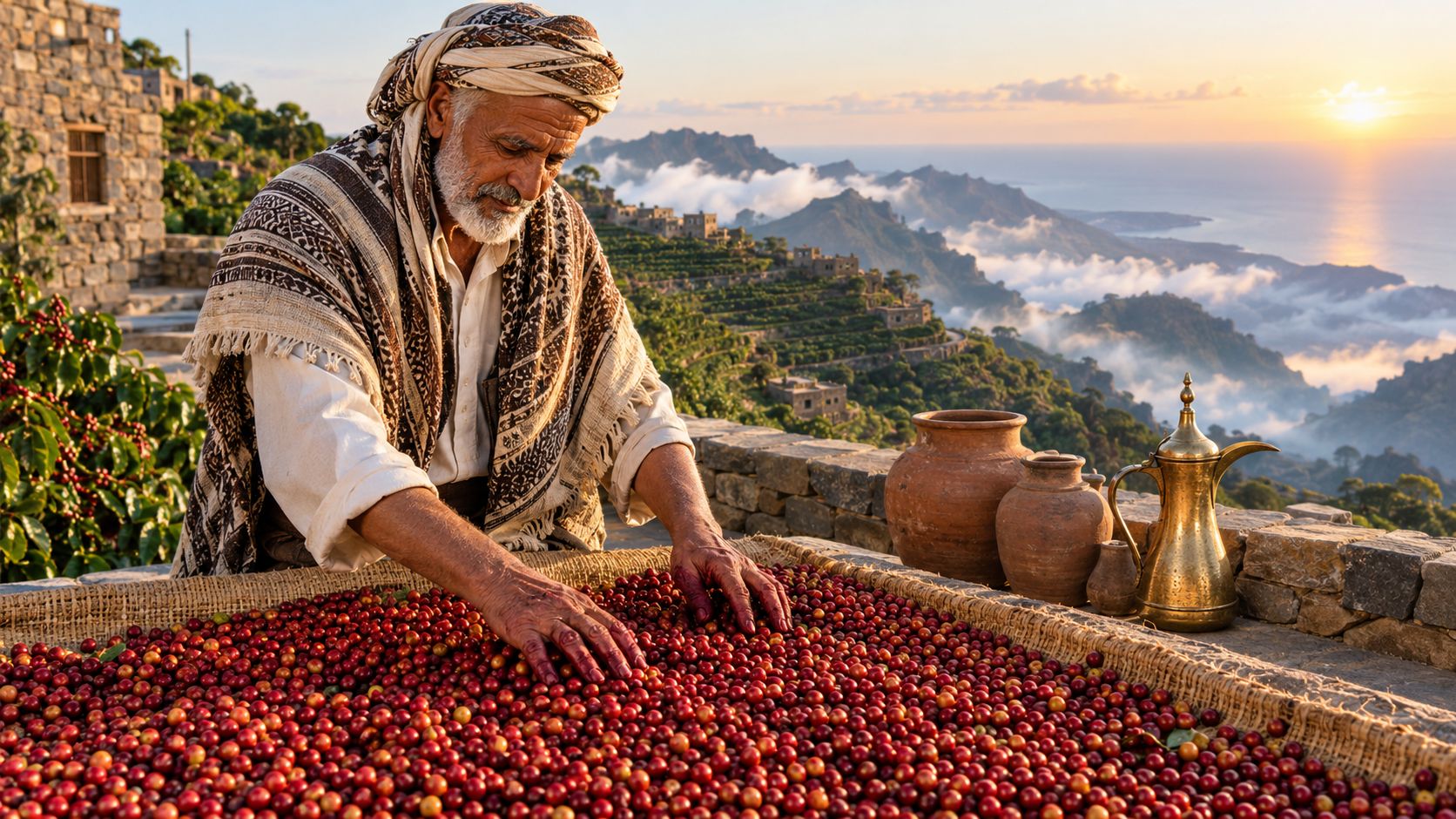
The first thing you notice in Yemen is the smell. Fresh cherries drying in the sun leave a sweet, wine-like scent on the terraces above the Red Sea, where the air feels dry and still, and the work looks older than the roads that reach it. That is the setting that gave Mocha its name, the port city that helped turn Yemeni coffee into a word people use everywhere Britannica.
The port that gave coffee its name
Mocha's rise was tied to the coffee trade that passed through it. Historical accounts place its peak influence in the 16th to the 18th centuries, when it served as the main gateway for coffee exports from Yemen to the Middle East and Europe Britannica. Other historical summaries describe it as the principal route through which the world's coffee moved, and that trade stamped its name onto language, drink styles, and even the Moka pot The Conversation.
The route itself was practical and rough. Coffee moved from mountain farms into sacks, then by caravan to the coast, then by dhow into Cairo, Istanbul, Amsterdam, and London. Each leg added risk. Each sack carried a price, a provenance, and a question about whether it would make it out of port at all.
The modern revival is being carried by specialty buyers and roasters who understand both sides of that story, trying to make the old route useful again for cafés that need coffee, not just myth.
Inside House of Mokha and Its Author
Dave Eggers' House of Mokha moves like a field report and reads like a rescue ledger. At its center is Mokhtar Alkhanshali, a Yemeni-American from San Diego's City Heights who goes back to Yemen to save his family's coffee and carry it into the specialty market while war closes in around him.
Why the book matters on the bar
The story keeps its tension because every mile has a cost. Mokhtar's path runs from bean buying in Brooklyn, to Yemen, to Aden under bombardment, and then to a New York judging table where Yemeni coffee has to earn attention cup by cup. That sequence matters because it turns Yemen from a distant origin story into a supply chain that has to survive logistics, quality control, and buyer doubt.
For café operators, the book is useful because it speaks in barroom terms, not museum language. It names flavors in a way staff can use, dates, chocolate, fermented stone fruit, and a dense syrupy body, which helps a team describe the coffee without flattening it into generic “specialty” talk. It also feels like a record of direct trade, because the story is not only rescue. It is the labor of getting traceable coffee into cups that can pay for the next harvest.
Practical rule: if a coffee story cannot be explained to a barista in one shift, it will not survive on a menu board.
A working map, not nostalgia
That is why the book belongs in coffee education, including training settings tied to the Specialty Coffee Association. It asks readers to treat Yemeni coffee as a premium origin that still depends on sourcing discipline, roasting skill, and a menu strategy that matches its intensity.
AQEEK Coffee uses that same logic in a café setting. The heritage matters, but it has to show up in sourcing choices, staff training, and how the coffee is framed on the menu. A strong origin story gets attention. A workable cup keeps it.
For operators building around origin-led menus, the value is practical. The book shows how narrative and procurement meet at the bar, where the roast must hold, the beans must arrive, and the cup must justify the story.
How Mocha Became the World's First Coffee Port
Mocha's story begins in the highlands and monasteries of Yemen, where coffee was tied to Sufi practice before it became a cargo. The city's link with Shaykh Shādhilī gave the port a spiritual gravity as well as a commercial one, and coffee moved from devotional use into the hands of traders who carried it down to the Red Sea coast Britannica. That route mattered. It connected terrace-grown beans to ships, buyers, and the first serious coffee markets outside Arabia.
The monopoly that shaped the name
Mocha's power came from control, not just location. Merchants based there managed access to coffee through licensing, pricing, and strict oversight of exports, which let Yemeni coffee command the trade while keeping rivals at bay. European buyers watched the port closely, then tried to weaken its hold by carrying live plants elsewhere and building their own plantations, a shift that changed the map of global coffee without erasing Mocha's name The Conversation.
That is why the word mocha still travels so easily. It outlived the port itself and became part of coffee vocabulary in kitchens, cafés, and menu boards far from Yemen. The old route also left a practical lesson for operators: origin stories stick when they are tied to a place customers can picture, a cup they recognize, and a name that already lives in the market.
The full arc from Sufi beginnings to trade power is traced in AQEEK's Yemeni coffee history and culture guide, which pairs well with this port story: Yemeni coffee history and culture.
For café teams, Mocha is more than a historical label. It is a reminder that menu language still carries the weight of old trade routes, from Mocha Java references to the Moka pot on the bar. A coffee term can survive long after the port behind it has changed, but the story behind the term gives it more depth when staff explain it to guests.
Why Yemeni Coffee Tastes Unlike Anything Else
A Yemeni cup often opens with dried fig, cocoa, and a fermented edge that lingers on the tongue. In Haraz and the highland terraces above it, that profile starts long before roasting. It begins with how the cherries are grown, picked, and dried.
What the farm and process do to the cup
Most Yemeni coffee is dry-processed, and the fruit is often sun-dried whole, a method that gives the coffee its dense, layered character Espresso Coffee Guide. Many lots also come from ancient heirloom Arabica, including Udaini-type material, grown on steep highland farms where the slower ripening supports complexity. The cup usually lands as winey, dense, and spice-forward, with less of the bright floral lift found in washed coffees.
A Hayma microlot makes that easy to taste. Coffee Review describes coffee grown at 2,150 to 2,300 meters and dried for 21 days, a combination that brought dark-fruit intensity, structure, and a long finish Coffee Review. The numbers matter because they show how altitude, heirloom trees, and natural drying shape the cup together.
What that means behind the espresso machine
On bar, Yemeni coffee behaves differently. A pour-over may need a finer grind change, a slower drawdown, or a different recipe than a washed Colombian lot, because the fruit weight can take over if the extraction runs too fast. In espresso, the same thing happens more quickly. Too coarse, and the cup tastes thin. Too hot or too aggressive, and the darker fruit can turn sharp.
Varietal | Typical Altitude or Region | Processing | Cup Signature |
|---|---|---|---|
Udaini | Central highlands and Haraz terraces | Dry-processed, sun-dried whole fruit | Dense body, dried fruit, spice |
Dawairi | Southern highlands and hill farms near Ibb | Dry-processed, sun-dried whole fruit | Winey acidity, layered sweetness |
Tufahi | Highland plots in western Yemen | Dry-processed, natural dried fruit | Dark fruit, cocoa, long finish |
Bura'ai | Mountain farms across northern Yemen | Dry-processed, often small-lot natural drying | Complex, fermented, structured |
The table is a simplification, but it shows why Yemeni coffee keeps standing apart. The cup is shaped by place, genetics, and drying method, so the barista's job is to respect all three.
The Modern Mokha Revival Through Cafes and Roasters
A café in Sana'a can pour the past and the present in the same shift. On one side of the bar sits a Yemeni lot with dried fruit and spice. On the other, a guest ordering a familiar espresso drink. The revival of Yemeni coffee now lives in that tension, and brands like AQEEK Coffee are turning heritage into a working café practice through sourcing, roasting, and service choices operators can use.
From farm relationship to cup side service
The first move is relationship work at origin. AQEEK describes its public mission as reviving Yemen's coffee heritage while linking it to modern café culture, and that framing matters because it treats Yemen as a living supply chain, not a souvenir AQEEK Coffee. In practical terms, that means traceable microlots, steady communication with growers, and roasting decisions that keep the cup recognizable from bag to bar.
The second move is staff preparation. A barista in a busy café does not need a lecture on history, but the team does need enough vocabulary to explain qishr, bunn, and traditional spiced pours without sounding rehearsed. In a café that gets this right, the cup carries the story because the staff can speak about origin, process, and flavor in plain language.
How cafés turn heritage into repeat orders
Some cafés keep the first Yemeni coffee experience simple. A single-origin pour-over sits beside a familiar house drink, so guests can try the origin without feeling pushed into a cup they do not yet know. That kind of menu placement helps heritage coffee stay visible on the board while leaving room for a more accessible entry point.
AQEEK's own café-oriented guide to ancient Yemeni coffee offers a useful reference for that approach: modern guide to ancient Yemeni coffee for cafés.
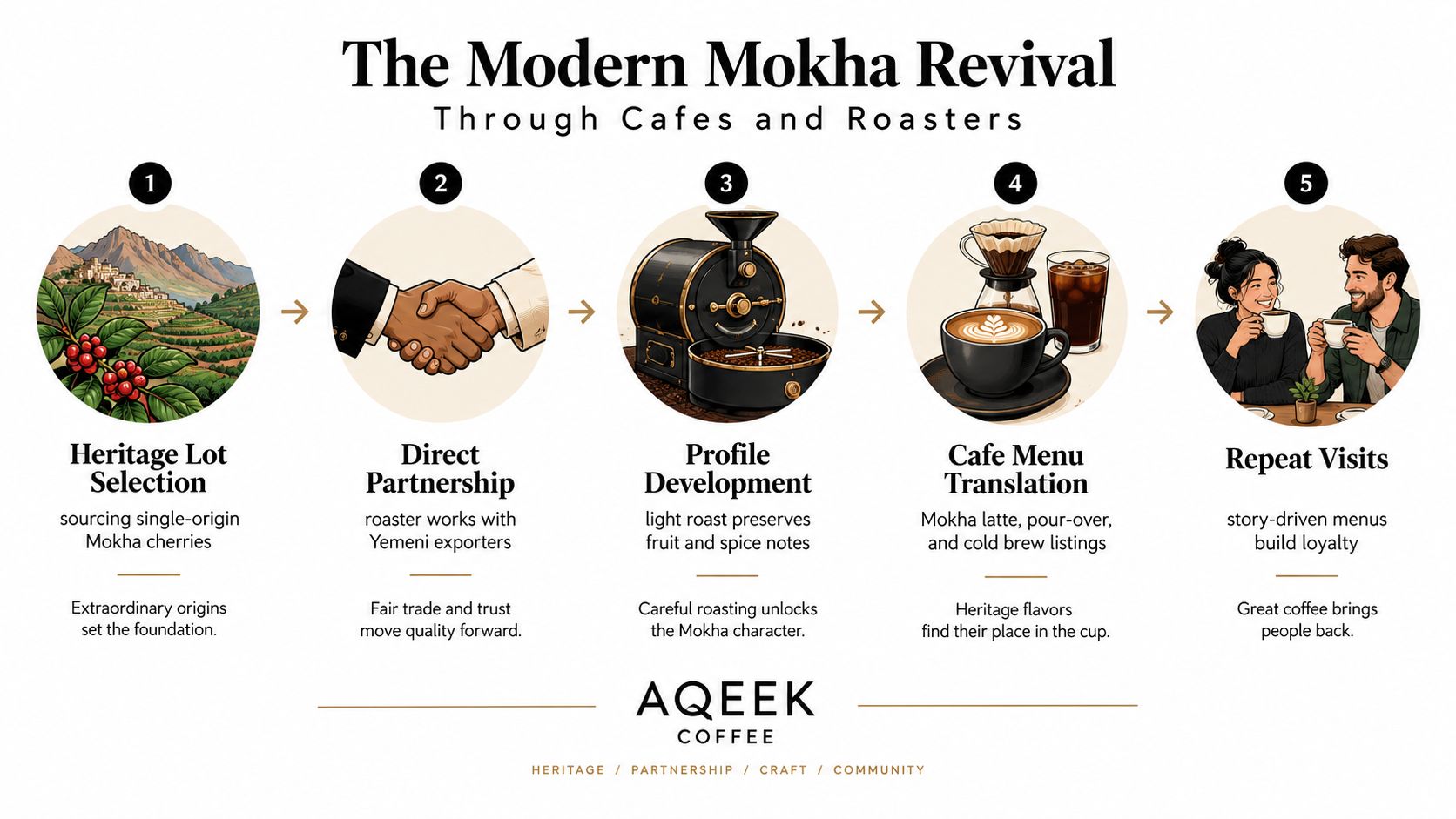
The story lands when the cup, the origin note, and the service all point in the same direction. Operators who keep that alignment can present Yemeni coffee as heritage with a job to do, not just a nostalgia piece.
Supply Chain Realities and the Future of Yemeni Beans
A roaster can fall in love with a Yemen lot on the cupping table and still lose it before the bags reach the café. Freight, inspections, route changes, and port disruption decide whether the cup ever makes it to service.
Why the route matters as much as the roast
Recent reporting on Mokha centers on conflict, displacement, and the strategic weight of the port and the Bab el-Mandeb chokepoint, which helps explain why coffee often gets pushed to the margins Asharq Al-Awsat. Buyers feel that reality fast. If a route shifts, a café cannot count on steady arrivals, and provenance claims have to hold up through delays, rerouting, and insurance constraints.
Operational discipline matters here. Buyers need verified importers, realistic lot sizes, and a backup plan for shipments that stall. A useful reference is Nexist's supply chain resilience guide, which treats continuity as something built into the system, not wished into place.
What buyers should accept
On the farm side, Yemen's coffee economy is still under pressure. Low yields, water scarcity, and competition from qat make coffee land harder to keep in production, so the supply base is tighter than many origins. That does not weaken the coffee's value. It makes planning more important.
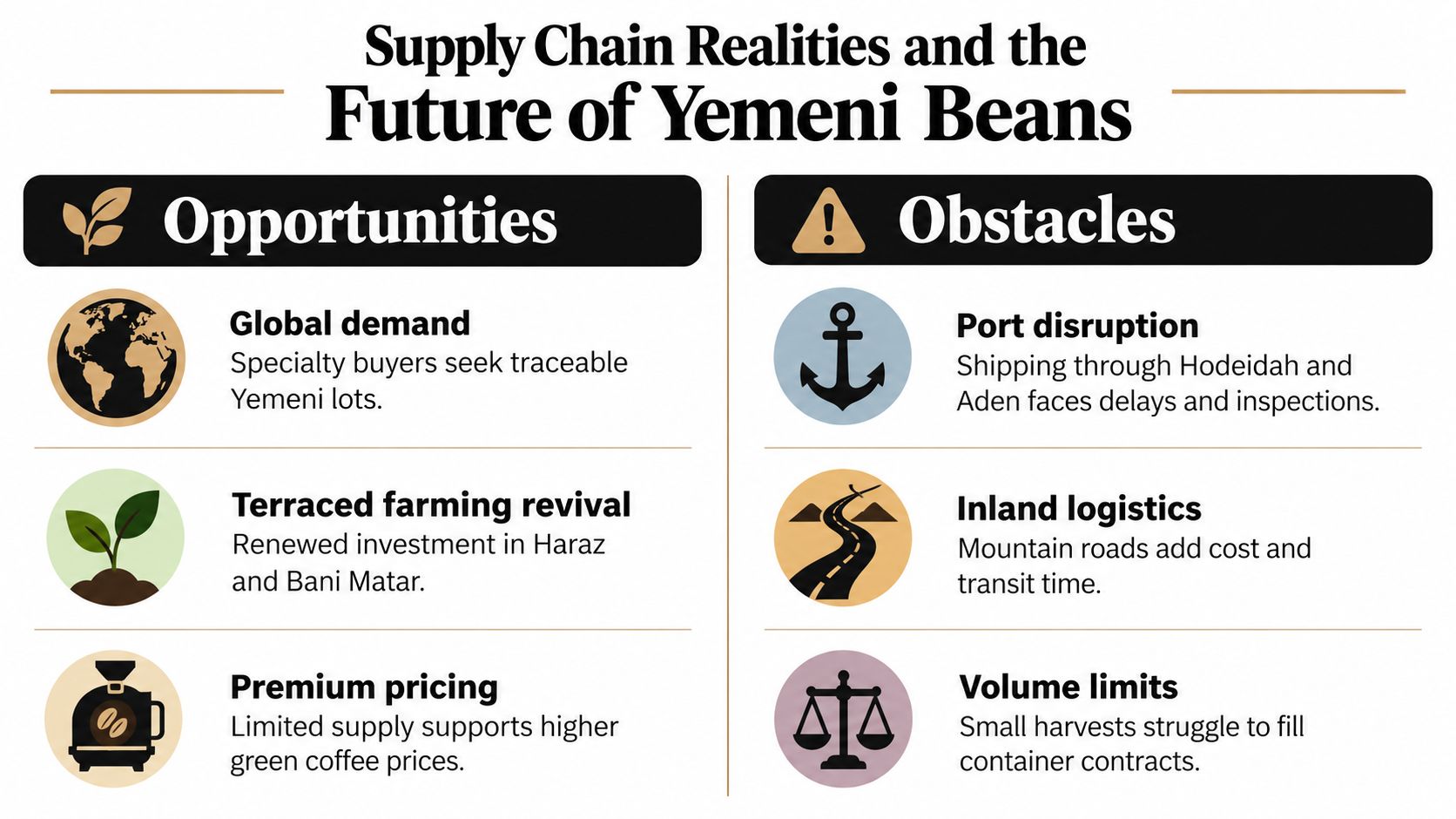
The buyers who last will balance patience with realism. Some will build longer contracts, some will source through Yemeni diaspora hubs, and some will keep Yemen as a rotating reserve rather than a daily house coffee. The common requirement is a supply chain that respects the fragility of the route instead of pretending it is stable.
Turning Yemeni Coffee Into a Cafe Strategy That Sells
At a café counter in Sana'a or a specialty bar abroad, the same moment decides whether Yemeni coffee becomes a novelty or a repeat order. A guest tastes one cup, asks where it came from, and looks to the barista for a clear answer. The program works when the answer is simple, the sourcing is traceable, and the service plan can survive a busy week.
A Monday-morning checklist
Lock sourcing channels. Start with direct-trade importers, specialty auctions, or partners that can supply traceable Yemeni microlots. If AQEEK is part of the conversation, treat it as one sourcing and café-support option among others, not as a shortcut around procurement discipline.
Protect margin from the start. Set the buying plan around realistic lot sizes, freight timing, and the number of drinks the team can push each week. Premium origin only helps the café if the glass still leaves room for labor, waste, and a healthy pour cost.
Use heritage in the menu, not around it. A concise origin note, a region name, and a clear brew method do more work than a wall of copy. Guests need a reason to order, not a lecture.
Keep partnerships local. Roasters, Yemeni diaspora bakeries, and cultural events give the coffee more than a shelf. They give it a recurring reason to matter.
For a ready-made framework, use this SOP template for Yemeni cafés to standardize brewing and service before launch. That kind of document matters because the first leak in a heritage program is usually inconsistency, not demand. One barista overextracts the brew, another short-pours the espresso, and the story loses its credibility fast.
Training should support the cup, not the other way around. A short weekly tasting keeps the team aligned on freshness, roast level, and how the coffee reads in milk or as a filter service. A simple origin brief before launch helps staff answer the same few guest questions without sounding scripted.
Good menu copy does two jobs at once, it reduces confusion and creates curiosity.
A rollout that won't break service
A 30-60-90 day rollout gives the program room to breathe. In the first month, buy one lot, write the sourcing note, and train the bar team on how to prepare it the same way every time. By day 60, tighten the prep sheet, confirm reorder points, and check whether the coffee is moving at a price that protects margin. By day 90, review the data with your importer, roaster, and store manager, then decide whether the program deserves a permanent slot or a seasonal return.
The partnership checklist is simple. Ask who owns traceability, who holds inventory risk, who updates origin information when lots change, and who fixes service issues when the coffee lands late or tastes different from the last shipment. AQEEK Coffee fits naturally into that kind of workflow because it connects Yemeni coffee identity with café support, but the larger point is broader than one brand. Yemeni coffee sells when the heritage is translated into sourcing rules, staff habits, and a menu that can hold up on a crowded bar.
