

A young roaster in Seattle opened with polished bags, a bright bar, and no story. Guests liked the drinks, but they remembered the shop only after the owner rebuilt the menu around Yemeni coffee, Mokha, and the ritual behind each cup. That's the difference between a café and a specialty coffee shop business plan with a point of view.
The Mokha Renaissance in Your Business Plan
Yemen's coffee story doesn't start in a spreadsheet, it starts with night prayers, long before cafés had line items for rent and labor. Sufi monks in the 15th century used coffee to stay alert during night worship, and the port of Mokha later gave the world the word mocha. That origin story matters because it changes the way a guest hears your pitch, and the way an investor understands your brand. AQEEK's heritage overview frames Yemen as the place where coffee was first cultivated into a beverage and first traded commercially, and that's the foundation of a differentiated café concept.
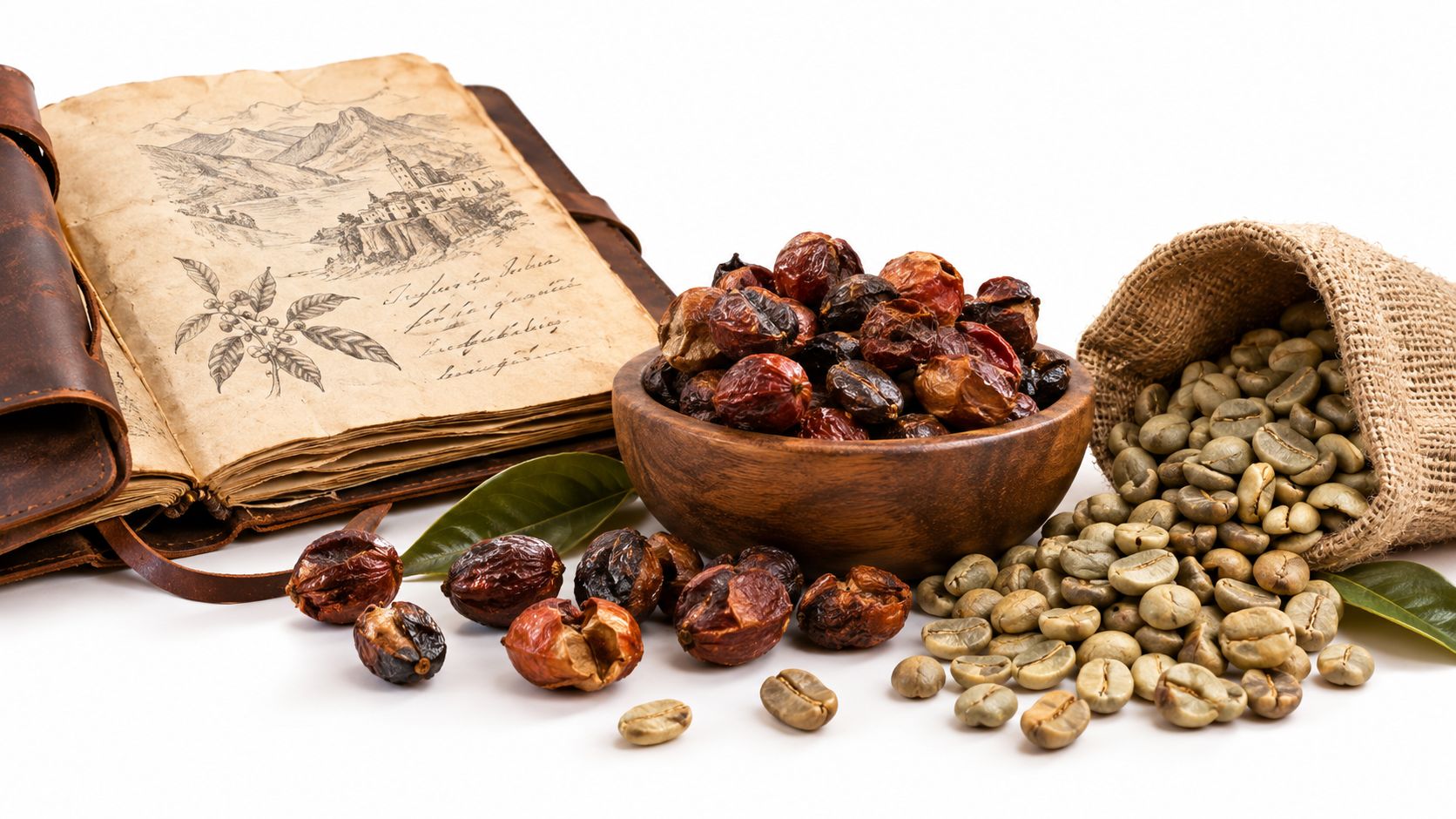
A café story people remember
A first-time owner can list drinks, equipment, and lease terms and still sound interchangeable. The owner who opens with Yemen's coffee heritage sounds different from the first sentence. That's because the product isn't just a latte, it's a bridge between a historic trade route and a modern neighborhood.
A good café story doesn't decorate the business, it gives the business its reason to exist.
The phrase Mokha Renaissance captures that shift from commodity thinking to cultural identity. AQEEK's public materials use that language to describe a revival of Yemeni coffee heritage through modern café culture, and that framing gives your plan a sharper center of gravity. It tells the reader that the shop is designed to honor origin, not borrow it as a slogan.
A strong business plan can turn that history into a visible customer experience. Menu names, wall copy, sourcing notes, and staff language all reinforce the same idea. When a guest learns why Mokha matters, the visit feels less like a transaction and more like participation in a living tradition. This Mokha revival guide is a useful companion if you want to deepen that narrative without drifting into generic café branding.
Analyzing the Specialty Coffee Market Opportunity
The market case for Yemeni coffee is strong because specialty coffee is no longer a tiny category reserved for enthusiasts. One major market estimate put the global specialty coffee market at USD 98.6 billion in 2024, with a projection to USD 167.3 billion by 2030 at a 9.2% CAGR. Another outlook estimated the U.S. specialty coffee market at USD 47.8 billion in 2024, rising to USD 81.8 billion by 2030 at a 9.5% CAGR. Those market figures tell a clear story, specialty coffee already has the scale to support premium positioning, not just niche experimentation.
Why that matters for a Yemeni-focused shop
A Yemeni concept doesn't need to win on novelty alone. It can win because the broader category already supports craftsmanship, higher perceived value, and room for stories that feel authentic rather than manufactured. When a market is this large, a business plan can justify more than a basic espresso bar. It can support origin education, retail bags, signature beverages, and a brand voice that keeps customers coming back.
Consumer behavior reinforces that logic. A 2026 market report summary said 58% of U.S. adults consumed specialty coffee in the past week, up from 2021, and another source said past-day specialty coffee drinking reached 47% in 2026 while traditional coffee was 42% for the second straight year. A separate 2026 national report from the National Coffee Association said its specialty coffee study was based on a nationally representative survey of 1,850 adults aged 18+. That kind of adoption makes repeat traffic and menu education easier to plan for.
The question isn't whether people drink specialty coffee. The question is whether your shop gives them a reason to choose your origin story over someone else's.
Turning demand into positioning
For a Yemeni shop, the market opportunity is not abstract. It becomes visible in the way you price a single-origin pour-over, explain a beverage on the menu board, and train staff to speak confidently about provenance. The demand is already there. Your job is to make the history legible, the menu clear, and the experience consistent.
Operational Excellence and Staff Training
A shop can look polished and still fail at the bar. I have watched beautiful concepts lose momentum because the team could not pull the same drink twice, or because the handoff from espresso to guest felt improvised instead of practiced. AQEEK's own materials say its team guides founders from concept to grand opening, with support that includes certified barista training, signature menu development, workflow optimization, and equipment sourcing. According to AQEEK's published materials, they have also launched 67+ coffee shops and trained 300+ teams. That operational model matters because heritage only scales when the bar can keep up.

Build the bar around repeatability
The drinks that define your identity should be the easiest ones to execute. Recipe cards, calibrated grinders, milk-steaming standards, and a station layout that keeps the most-used tools within reach all help a team stay steady under pressure. A specialty coffee shop business plan should show that craft and speed are not enemies.
The best operators teach the floor by breaking each beverage into visible steps. Espresso extraction, milk texture, cup build, garnish, and handoff belong to one process, not five separate habits. Written standards, coaching, and practice during simulated rushes turn a busy morning into a controlled service flow.
Train for the rush you expect, not the one you hope to avoid.
Use the AQEEK training lens
AQEEK's public training materials point to a heritage-plus-modern-skills approach, and the internal guide on AQEEK barista training classes fits naturally here. That matters in a Yemeni coffee shop because the barista is not only pulling shots, they are translating provenance into a guest-facing ritual. The trainer has to teach both the mechanics and the language.
The counter should run like a small stage with clear roles. One person receives orders, one extracts espresso, one finishes drinks, and one clears bottlenecks before they spread. If the station is too cramped, or the menu asks too much of the staffing level, the heritage story gets buried in the noise. A shop that treats workflow as part of hospitality can protect craft without slowing the room.
What the system should include
Written drink specs: Every signature beverage needs a standard build so flavor stays consistent across shifts.
Role-based station design: Barista, cashier, runner, and prep functions should be mapped before launch.
Opening and closing checklists: Small misses, like inconsistent dial-in or underfilled milk, create larger service problems over time.
Practice rushes: The team should rehearse morning service before the first real customer arrives.
Error review: Drink mistakes should be tracked and corrected quickly, not treated as normal.
Financial Projections and Margin Resilience
A Yemeni coffee shop cannot survive on poetry alone. It needs a financial model that respects the practical reality of rent, labor, waste, and the pressure of changing input costs. A practical plan should model labor around 25–35% of revenue, keep prime cost near 55–65%, and watch revenue per square foot closely, with specialty cafés often aiming around $400–$700 per year. Those planning benchmarks give the business discipline, especially when the brand story is strong enough to support premium pricing.
Story can help margin, but only if the menu works
Premium positioning only matters if the customer understands what they're paying for. Yemeni coffee gives you that advantage when the menu is built around origin, signature drinks, and a clear explanation of why the cup costs more. That doesn't mean inflating every drink. It means making sure the menu has enough perceived value to absorb fluctuations without forcing the brand into discount behavior.
The cleanest forecast starts with demand by daypart, then moves to staffing and sales mix. That approach is more useful than guessing monthly totals and hoping the math works out later. If the model shows a weak breakfast rush or an overbuilt labor schedule, you adjust before signing a lease.
Use the forecast to test the concept, not to decorate the pitch deck.
For owners who want a practical framework, startup financial forecasting is a helpful resource for structuring assumptions before money is committed. The key is to keep the forecast tied to real operating choices, not abstract optimism. A Yemeni café that respects its origin story still has to price for beans, payroll, and occupancy with discipline.
Building resilience into the plan
Margin resilience comes from a few decisions made early. A focused menu reduces waste, a tight labor schedule protects cash, and clear sourcing relationships keep quality from becoming chaotic. If you want the shop to last, the plan has to show how it handles expensive weeks without losing the brand's identity.
There's also a branding advantage to restraint. A café that knows its identity can do less, better. That leaves room for storytelling, retail bags, and thoughtful beverage development without turning the counter into a cluttered, high-friction menu board.
The AQEEK Approach Blending Heritage with Modern Strategy
A Yemeni coffee shop cannot survive on poetry alone. It needs a financial model grounded in rent, labor, waste, and the pressure of changing input costs. AQEEK's approach keeps the heritage story front and center while treating the café as a business with sourcing, packaging, distribution, and consulting decisions that have to work together. AQEEK Coffee presents that model as a way to carry Yemeni identity without losing commercial discipline.

Traditional café thinking versus the AQEEK model
Traditional Approach | AQEEK Model |
|---|---|
Standard sourcing, limited traceability, commodity pricing | Direct Yemen trade, full transparency, premium positioning |
Generic menu language | Yemeni heritage story built into the customer experience |
Loose training and inconsistent drinks | SOPs, simulations, and structured barista development |
Store opens as a location | Store opens as part of a broader coffee culture narrative |
A shop built on the traditional model sells drinks in a room. The AQEEK model builds a platform for origin, training, retail, and expansion. That difference matters when a lender, landlord, or partner asks why this brand deserves attention. It also changes how owners make choices, because every decision has to support both margin and meaning.
Why the heritage model scales
Heritage-led brands can grow beyond the counter because they have more than one revenue lane. Coffee bars, retail shelves, wholesale accounts, and packaged goods can all reinforce the same identity when the story stays coherent. In a crowded market, that coherence helps a shop stand apart from polished places that feel interchangeable once the drinks are served.
AQEEK's strength is that it turns story into operations. Menu development, supplier selection, packaging, and customer education all point in the same direction. A specialty coffee shop business plan shaped this way gives the Mokha Renaissance a commercial structure, so origin connects to experience, and experience connects to repeatable revenue.
Executing Your Plan From Concept to Grand Opening
Execution starts before the lease is signed. The owner who wins is usually the one who turns vision into a sequence of decisions, each one small enough to verify and important enough to matter. That means equipment, permits, layout, staffing, and menu development have to move together, not in separate silos. A useful companion for this phase is the restaurant financial planning guide, especially if you want to pressure-test the operating assumptions before opening day.
The launch path should feel boring in the best way
A strong opening plan usually has three parts. First, secure the equipment and layout that match the menu, because a beautiful machine lineup won't help if the workflow is slow. Second, build the menu around the drinks that best express Yemeni coffee, then train the team until the handoff feels natural. Third, open with a soft launch that lets the staff make mistakes privately and fix them before the neighborhood decides what the shop is.
A practical owner also keeps the community in the loop. Local partnerships, neighborhood tastings, and early education about Yemeni coffee build familiarity before the first busy weekend. That kind of engagement gives the brand a home, not just a lease.
Open with discipline, then improve in public.
Where AQEEK fits in the final stretch
AQEEK's launch support is designed for this exact stage, and its internal guide on how AQEEK can help you establish a Yemeni coffee shop belongs in any serious launch file. The point isn't to outsource the dream. It's to keep the dream operational, with the right structure behind it.
A final plan should show who owns each decision, when the team reviews progress, and how the brand will keep learning after opening day. That's how a coffee shop becomes a durable business instead of a short-lived idea. The shops that last are usually the ones that respect their heritage, train hard, and keep the numbers honest.
If you're building a Yemeni café that needs a sharper story, tighter operations, and a plan that can hold up under real pressure, AQEEK Coffee can help you shape the concept from origin to opening. Visit AQEEK Coffee to explore consulting, training, and Yemeni coffee support built for modern specialty cafés.
